The Unmatched Legacy of Bruce Lee On Screen
Few figures in cinematic history have left as profound a mark on action films as Bruce Lee. His mastery of martial arts, fused with powerful, emotionally charged acting, set new standards for fight choreography in film, inspiring filmmakers, actors, and game developers for generations. Whether facing down a crowd or squaring off against a singular formidable foe, Lee’s fight scenes are technical masterclasses packed with narrative depth. Here’s an in-depth look at the ten most legendary fights ever filmed in Bruce Lee’s movies, examining not only the choreography, but also their cultural and technical impact.
Chen Zhen vs The Dojo – Fist of Fury
The dojo scene in Fist of Fury stands as a watershed moment in martial arts cinema. Watching Chen Zhen (Bruce Lee) storm into a packed dojo, dispatching nearly every student with rapid-fire kicks and the iconic nunchaku display, shocked audiences and censors alike. It remains an influential blueprint for single-against-many sequences—with the UK famously censoring the nunchaku action for years, a testament to its intensity. The scene ends as Chen proclaims, ‘We are not sick men,’ directly referencing historic tensions between Japan and China, making this more than just a physical encounter.
Lee vs Han’s Henchmen – Enter the Dragon
Martial arts films are filled with nameless, disposable henchmen, but Lee’s infiltration of Han’s underground lair in Enter the Dragon is memorable for its stylish variety. Bruce demonstrates skills with his bare hands, a staff, and those trademark nunchaku, making short work of an ever-growing horde of adversaries. The intensity reaches its peak as Lee, shirtless and relentless, employs kali sticks—a rare weapon in cinema at the time—adding tactical realism that raised the bar for weapon choreography.
Tang Lung vs The Gangsters – The Way of the Dragon
While the plot of The Way of the Dragon involves defending a restaurant from relentless thugs, the fight behind the restaurant offers a rare blend of comedy and martial arts precision. Bruce Lee wields two pairs of nunchaku simultaneously, turning a tense standoff into a showcase of weapon mastery. Each gangster’s distinct style provides comedic beats without detracting from the technical skill on display, making this scene a fan favorite for its lighthearted energy in a story otherwise rife with tension.
Chen Zhen vs Petrov – Fist of Fury
Every martial arts film needs a showcase of pure strength versus technical skill. In the majestic garden duel, Chen Zhen faces off against the physically imposing Petrov, a character introduced by bending steel with bare hands. Despite Petrov’s brute force, Bruce delivers a fast-paced, technically rich fight that stands as one of the most beautifully choreographed in the series—setting the gold standard for David-vs-Goliath duels onscreen.
Cheng Chao-an vs Hsiao Mi – The Big Boss
Lee’s breakout feature, The Big Boss, culminates in a fight that perfectly encapsulates raw cinematic energy. After dispatching the boss’s goons, Cheng must face Hsiao Mi in a brutal, weaponized brawl. The stakes are heightened by the introduction of knives and a realistic willingness to show both hero and villain suffering physical consequences. When Cheng turns Hsiao Mi’s thrown blade against him, it sets a precedent for climactic showdowns in future martial arts films—gritty, emotional, and unforgettable.
Billy Lo vs Hakim – Game of Death
Game of Death holds a bittersweet place in pop culture history, marking Lee’s last film and featuring his now-iconic yellow jumpsuit. The fight against Hakim (the towering Kareem Abdul-Jabbar) is both a duel of strength and a real-world testament to Lee’s influence—Abdul-Jabbar was his actual student. Their prolonged duel, full of powerful blows and creative use of reach advantage, became a touchstone for modern fight scenes, and Lee’s dramatic victory remains one of the most recognized moments in martial arts cinema.
Billy Lo vs Pasqual – Game of Death
Earlier in Game of Death, Billy Lo faces Pasqual, played by Dan Inosanto—another of Lee’s real-life disciples. This encounter is noted for its extended nunchaku duel, paired with empty-hand and stick fighting, making it a technical showcase of Jeet Kune Do philosophy: adaptability and practical efficiency. Both actors flaunt expertise with Filipino martial arts weapons, a style not widely known in cinema at the time.
Lee vs O’Hara – Enter the Dragon
The emotional power in Lee’s showdown against O’Hara (Robert Wall) in Enter the Dragon is heightened by a personal vendetta, with O’Hara responsible for Lee’s sister’s death in the story. Lee’s barely contained fury erupts as the fight erupts in a tournament setting, giving audiences one of the most emotionally charged and physically intense scenes ever filmed. The moment Lee refuses to accept O’Hara’s apology—delivering a final, devastating blow—has become part of film legend.
Lee vs Han – Mirror Maze – Enter the Dragon
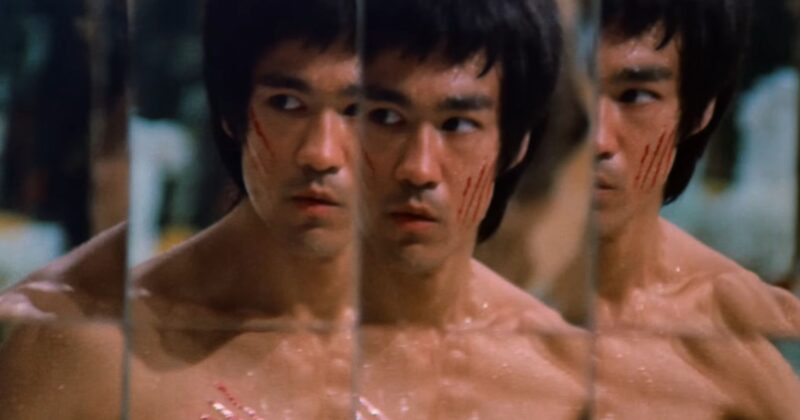
Possibly the most visually compelling scene in Bruce Lee’s oeuvre is the climactic battle in the mirror maze against Han. Utilizing reflection, suspense, and psychological tension, the sequence is as much about perception as skill. With his face scratched and body battered, Lee uses wit—breaking the mirrors to diminish Han’s advantage—to underscore his philosophy that martial arts is about adapting to circumstance. Its influence can be traced in games, comics, and action movies that use reflection or deception as narrative devices.
Tang Lung vs Colt – The Way of the Dragon
No exploration of Bruce Lee’s movie fights is complete without the epic duel between Tang Lung and Colt, played by Chuck Norris. This gladiatorial contest, staged in Rome’s Colosseum, captured the world’s imagination. Both actors were real-life masters, lending authenticity to a duel that transitions from calculated distance to hand-to-hand ferocity. The fight swings in momentum, featuring everything from roundhouse kicks to tactical groundwork, and concludes with one of the most respectful, poignant moments in martial arts cinema—a bow between warriors.
For fans of action, fight choreography, or anyone tracing the lineage of modern video game combat systems, these scenes are both time capsules and living blueprints for cinematic excellence.