The Power of Social Anxiety in Contemporary Anime
Social anxiety is a deeply personal struggle, and the latest wave of anime isn’t shying away from presenting it with raw authenticity. Animation studios are capturing these experiences not for melodrama, but to forge genuine connections with viewers who may feel the same silent unrest. It’s not just about overwrought protagonists—these series skillfully depict how social anxiety infiltrates friendship, ambition, creativity, and self-worth.
Jujutsu Kaisen 0: Embracing Fear and Redemption
In Jujutsu Kaisen 0, Yuta Okkotsu’s fear isn’t just about monsters, but the terror of hurting those close to him. After his friend Rika becomes a curse, Yuta’s guilt isolates him. At Jujutsu High, the presence of compassionate peers like Maki, Inumaki, and Panda becomes vital to his recovery. This subtle portrayal resonates: the path to healing can begin with finding a circle that truly understands you.
My Dress-Up Darling: Overcoming Judgment Through Passion
Wakana Gojo from My Dress-Up Darling hides his love of crafting traditional Hina dolls, afraid it’ll make him an outcast. Marin Kitagawa’s open admiration for his skill shatters Gojo’s invisible walls. This narrative strikes a chord with anyone who’s ever masked their interests for fear of ridicule. The evolution isn’t instant—instead, Gojo’s journey reflects real-world anxieties about acceptance, especially in subcultures like cosplay, whose mainstream embrace is still comparatively recent.
Hitoribocchi no Marumaru Seikatsu: Tackling the Impossible Task
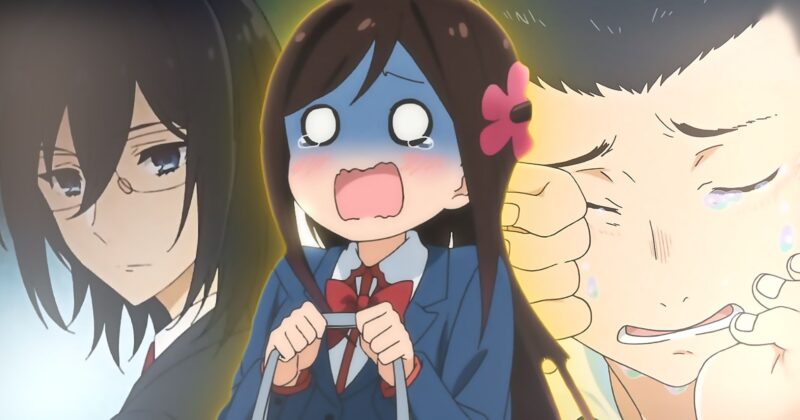
Bocchi must befriend her entire class or lose her lifelong friend—a Herculean task for someone with severe shyness. The anime deftly captures the terror that comes with each new social interaction, offering not a magical solution, but hope in the gentle reality that change is incremental. Her alliances with classmates like Nako Sunao highlight that even small victories against anxiety are worth celebrating.
My Roommate is a Cat: Healing in Unlikely Places
Subaru Mikazuki in My Roommate is a Cat embodies the struggle of retreating inwards after loss. His only companion becomes a stray cat, Haru, and through caring for her, he slowly reintegrates with the world outside. This series is a gentle ode to the healing power of animals—sometimes the simplest relationships can be the bridge back to life’s joys and challenges.
Food for the Soul: A New Take on Comfort Zones
Mako Kawai’s journey in Food for the Soul proves even those who were once social can gradually build walls out of habit or disappointment. Rather than a dramatic transformation, the anime spotlights the gradual act of seeking out safe spaces—here, a food culture club—where someone with anxiety can rediscover what brings joy without expectation or pressure.
Komi Can’t Communicate: Breaking the Silence
Shouko Komi’s extreme difficulty in communicating is presented not as a quirk, but a profound challenge. With Tadano’s patient support, she aspires to make 100 friends—a goal nearly Sisyphean for her condition. The show’s tone is compassionate, showing that even small acts, like sharing thoughts in a notebook, are victories themselves when faced with paralyzing anxiety.
Bocchi the Rock!: Finding Your Rhythm Through Community
Few anime depict the internal whirlpool of social anxiety as accurately as Bocchi the Rock! Bocchi’s exhaustion from everyday interactions leads to vivid moments of stuttering, overthinking, and longing for invisibility. Music becomes her outlet, and her bandmates turn into her support system. The progression from hiding backstage to shining under the stage lights unfolds naturally, promising viewers in similar situations that growth is not linear, but worth the hardship.
A Silent Voice: The Weight of Regret
A Silent Voice is a rarity in its mature exploration of social anxiety born from guilt. Shoya was once outgoing, but after a serious act of bullying, he faces isolation and overwhelming regret. When he reunites with Shoko, his former victim, his attempts at reconciliation and forgiveness are depicted visually by ‘X’ marks on faces, cleverly symbolizing his emotional disconnect. The story doesn’t excuse his actions, but it reveals how anxiety can grow out of one’s past mistakes, emphasizing the human desire for redemption.
These series aren’t just entertainment—they’re digital mirrors, inviting audiences to step into the shoes of those whose minds are often in silent turmoil. Animation is breaking new ground, not just in action and fantasy, but in its compassionate examination of everyday battles faced by millions.