The Simpsons Reinvents Its Iconic Opening: How One Couch Gag Reshapes Nostalgia and Pop Culture

The Simpsons’ Legendary Opening Just Got a Surprising New Twist
Anyone who’s ever tuned in to The Simpsons can recognize its legendary opening sequence—the rush home, the bustling bike rack, Bart with his ever-changing chalkboard joke, Lisa’s saxophone solo, and of course, that mad dash to the iconic living room couch. For decades, fans have watched the Simpson family crowd together as their sofa morphs into the weird and wonderful—an astronaut’s rocket, a circus act, tigers, or a wild nod to beloved pop culture. But what happens when the format you think you know is completely turned on its head?
The New Couch Gag That’s Changing Everything
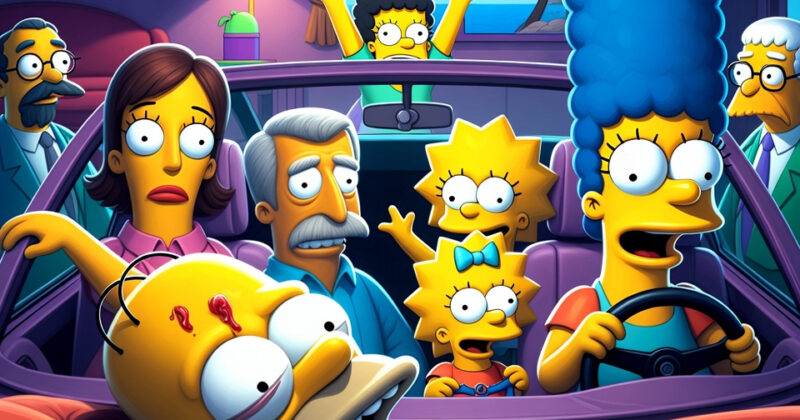
The latest couch gag, rolled out with the 800th episode milestone, delivers a punchline that doesn’t just wink at the audience—it actively deconstructs nostalgia. This scene shows Homer after being accidentally struck by Marge’s car and thrown dramatically through the living room door, echoing the updated opening sequence that’s been with us for several seasons. But it’s not slapstick for the sake of it; what follows is a satirical observation that cuts straight to the core: Homer, aching on the floor, utters, ‘Why the Hell was Maggie in the front seat?’
Re-examining Animation’s Most Famous Opening Sequence
Since The Simpsons’ earliest days, viewers have seen Maggie apparently steering from the front seat, then revealed to only be mimicking Marge with a toy wheel. In an era when child seat laws didn’t attract headlines, this was a harmless, charming visual gag. But cultural attitudes and safety regulations have shifted dramatically. Now, the sight of a baby riding up front is not just old-fashioned—it’s a glaring legal red flag. The series takes full advantage, poking fun at itself and spotlighting the quirks that decades of evolving norms reveal in one of TV’s most replayed sequences.
It’s a perfect example of The Simpsons’ genius for auto-parody and meta-commentary. The seemingly simple family commute now spark conversations about how pop culture holds a mirror to social change, intentionally or not. And for long-time fans, it becomes impossible to watch without that sly awareness: Maggie should be way in the back—unless, comically, you remember that if she aged in real time, the family’s ‘baby’ would be old enough to hold a driver’s license by now!
The Enduring Agility of The Simpsons
With each passing season, Springfield’s timeline stretches farther from its origins, requiring clever rewrites and retcons. Marge and Homer’s flashbacks update to reflect whatever decade ‘now’ is, and their economic reality—once the very picture of middle-class aspirations—would be hard to replicate in today’s conditions. Meanwhile, supporting characters have adapted (and sometimes been criticized) as society becomes more attuned to representation, diversity, and the intricacies of good satire. Notably, the show has made significant casting changes in response to long-standing debates about who should voice which characters.
There’s also a self-referential nod to a phenomenon fans call ‘Flanderization’: the way once-nuanced side characters grow more extreme over time. It’s become part of the fabric of The Simpsons’ humor. But this new couch gag, with its casual brilliance, is a reminder of how even the most entrenched traditions in animation can be critically re-examined—sometimes in a single line from a battered Homer.
Pop Culture Echoes and the Modern Simpsons
Today, The Simpsons isn’t just a cartoon; it’s a living, breathing archive of changing tastes, technology, and social context. The family started out in an era of appointment television and now stars across platforms, with digital tributes and tie-ins from Fortnite skins to endless social memes. The most recent opening joke transforms a nostalgic visual into a clever critique of time and progress, serving up a reminder that no pop culture staple is too sacred to update—or too static to joke about.
For those who grew up spotting every little detail in the iconic intro, the latest gag offers a potent mix of comedy and commentary. It’s proof that The Simpsons remains as culturally aware, sharp, and adaptable as ever—still making us look at familiar scenes in surprising new ways.