Why The Good Place Remains a Supernatural Comedy Classic Worth Watching Again and Again
The Good Place: Supernatural Comedy With Heart, Wit, and a Mind-Bending Twist
Every once in a while, a TV comedy emerges that effortlessly stands the test of time—not because it tries to keep up with current trends, but because it taps into something deeper, smarter, and more universally human. The Good Place is one of those rare gems. With its unique blend of supernatural elements, laugh-out-loud banter, and high-concept philosophy, it remains one of the most compelling, endlessly rewatchable shows available on Netflix.
A Genre-Defying Journey Begins
The Good Place kicks off with the unapologetically flawed Eleanor Shellstrop, portrayed by the brilliant Kristen Bell, who unexpectedly finds herself in the titular ‘Good Place’ after her death—a paradise where she clearly doesn’t belong. As Eleanor attempts to hide her real self and avoid being discovered as a mistake, she teams up with a loveably mismatched group: the anxious moral philosopher Chidi, the narcissistic Tahani, the hilariously clueless Jason, and the multi-talented AI assistant Janet. Together, they unravel secrets that turn the afterlife upside down.
The show’s most memorable achievement is its now-famous twist, which reinvents the story halfway through and instantly secured its spot in modern TV history. Clever viewers will catch new hints with every rewatch, making each viewing feel fresh and layered with hidden depth.
Writing That Balances Wit With Depth
Comedy can often lose its edge as the years go by, but The Good Place’s humor is built on wordplay, absurdist scenarios, and fast-paced dialogue rather than cheap cultural references. Whether it’s the show’s rules about the afterlife or the mind-bending debates about moral philosophy and non-linear time, every episode rewards both the casual viewer and the pop culture connoisseur.
While other sitcoms fade, The Good Place dares to venture far beyond punchlines. The writers, led by showrunner Michael Schur, cleverly integrate references to philosophy, real ethical dilemmas, and universal existential questions—elevating the show into far more than a typical supernatural comedy. Michael Schur’s background with series like Parks and Recreation and Brooklyn Nine-Nine is evident in his knack for mixing sincerity with satire, but The Good Place is in a class of its own with its bold conceptual ambitions.
Characters and Emotional Resonance
Fans return to The Good Place for the comfort of its characters. Beyond the humor, the show offers sharp insights into what it means to be human, including the possibility of redemption, personal growth, and the power of second chances. The emotional journeys of Eleanor, Chidi, Tahani, Jason, and Janet are just as impactful as the show’s biggest twists. By depicting the afterlife as a place for learning rather than judgment, The Good Place delivers a hopeful and endlessly comforting worldview that resonates no matter when you watch it.
Visually Distinct and Endlessly Rewatchable
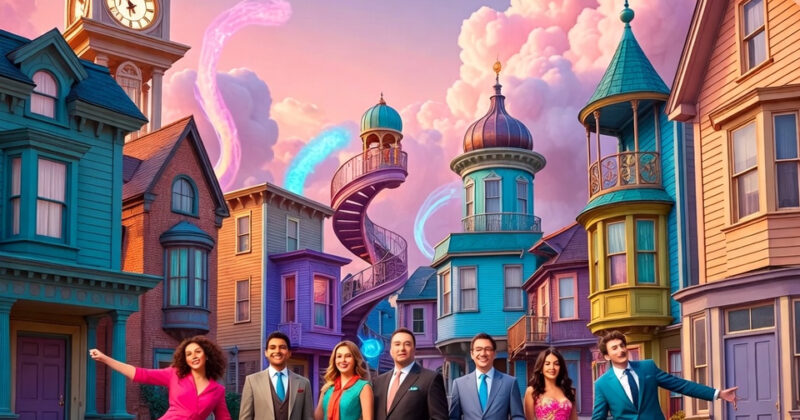
The Good Place’s visual style—a pastel-hued afterlife filled with impossible architecture and surreal humor—cements its status as a modern pop culture icon. Directors like Dean Holland, Beth McCarthy-Miller, and Morgan Sackett make sure each episode offers something visually unique, playing with the aesthetics of paradise, limbo, and cosmic bureaucracy alike.
The combination of witty writing, philosophical heart, and top-tier performances (notably Ted Danson in a role that upends his classic TV image) makes The Good Place an ideal series for those in search of comfort, cleverness, and intelligent laughter. It’s the kind of show that doesn’t just age well—it invites you to question, laugh, and discover something new every time you hit play.