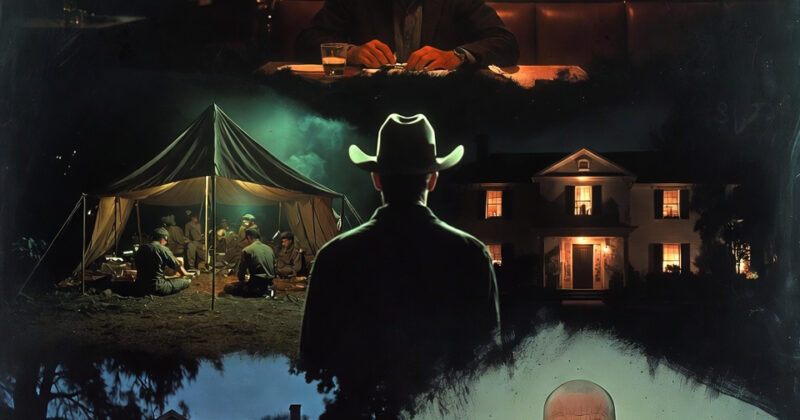
The TV Moments That Changed America: Unforgettable Scenes That Redefined Prime-Time

The Moments That Redefined Television: Pop Culture’s Most Unforgettable TV Shocks
For decades, television has been a cultural touchstone—a medium capable of collective heartbreak, euphoria, and controversy. Some episodic moments have not just captivated audiences but reshaped the very DNA of TV storytelling, setting new standards for boldness both technically and emotionally. These are the seismic episodes that became instant pop culture icons, forever quoted and dissected in living rooms, on social media, and even in university film studies programs.
‘M*A*S*H’: The Shattering Loss of Henry Blake
Airing in an era when sitcoms rarely dared tread beyond light-hearted fare, M*A*S*H stunned audiences by killing off Lieutenant Colonel Henry Blake—a beloved character embodying warmth amidst the brutality of a war zone. The show, known for its razor-sharp satire of America’s contemporary and historical conflicts, turned mainstream comedy on its head with this move. The unfiltered grief as Radar delivered the news on screen carved out a moment of raw, unvarnished emotion, forever changing viewer expectations of what comedy could dare to confront. Urban legend has it that even the cast was kept in the dark before filming the fateful reveal, maximizing authenticity. While the setting was the Korean War, the shadow of Vietnam and social unrest loomed large, striking a chord with millions dealing with real-life loss and uncertainty—the ripple effects of that groundbreaking scene are still felt in serialized TV today.
‘Dallas’: Who Shot J.R.?
Few pop culture whodunits have gripped a nation like Dallas‘ legendary “Who Shot J.R.?” cliffhanger. The immediate aftermath—a feverish summer and autumn spent speculating about the fate of the show’s most cunning antihero—turned prime time TV into a collective game. The mystery transcended fiction, with networks plastering the slogan everywhere and merchandising it to unprecedented degrees. When the answer finally aired, it drew in almost unfathomable numbers by today’s standards, proving that serialized storytelling could command the cultural conversation as powerfully as any blockbuster. It was an early turning point in demonstrating just how interactive and obsession-worthy TV fandom could become, laying the groundwork for today’s online theories and meme-driven TV ecosystems.
‘The X-Files’: The Nightmares of «Home»
The X-Files was never afraid to experiment, but nothing prepared audiences for the episode «Home». Airing at a time when network TV horror was largely atmospheric rather than explicit, «Home» crossed unthinkable boundaries—gripping viewers with twisted visuals and a storyline so disturbing, the network shelved it from syndication for years. It marked a pivot for TV horror: suddenly, prime time could conjure genuine dread at a level that previously belonged to the world of late-night cable or horror films. The episode’s legacy is clear today: it opened doors for series like Buffy the Vampire Slayer and Supernatural, which in turn inspired a new generation of genre television where the rules are rewritten with every season.
‘The Sopranos’: The Cut to Black That Left America Speechless
Every now and then, a series finale rewires collective expectations for what narrative television can achieve. The Sopranos delivered perhaps the most debated, dissected, and infamous ending of its era—a cut to black mid-scene, just as tension reached its peak in a New Jersey diner with Tony Soprano and his family. The use of Journey’s «Don’t Stop Believin'» underscored the eerie sense that life—and danger—would just go on. David Chase’s audacious willingness to offer ambiguity over closure rattled audiences worldwide, inviting endless rewatches, fan theories, and frame-by-frame breakdowns. It cemented the show’s status as a work of modern mythology—one that continues to inspire the long-form drama and interactive viewing culture dominating today’s streaming giants.
‘Breaking Bad’: The Loss of Hank Schrader in «Ozymandias»
Breaking Bad always played a masterful long game of tension and character inversion, but few moments gutted audiences quite like the execution of Hank Schrader in the series’ penultimate chapter, «Ozymandias.» It wasn’t just the tragedy of Hank’s demise, but the way the series had meticulously constructed—and then deconstructed—his heroic arc. Vince Gilligan’s plotting turned every assumption upside down, leveraging technical brilliance and emotional depth to supercharge the mid-2010s water cooler moment. The spiral of consequences from Hank’s death propelled the show into its brutal endgame, setting a fresh benchmark not just for crime drama, but for all serialized storytelling. Discover Breaking Bad’s official site for more on the craftsmanship behind this modern classic.
Each of these moments didn’t just cause shockwaves during their initial airings—they continue to ignite debate, inspire creators, and set the standard for emotional storytelling. They prove that even as viewing habits evolve, great television remains a uniquely potent force in shaping culture, memory, and the ongoing art of narrative entertainment.