Scream 7: The Franchise’s Mask Slips for the Last Time

Scream 7: The Franchise’s Struggle With Its Own Legacy
Once celebrated for its razor-sharp meta-commentary and boundary-pushing reinvention of the slasher genre, the Scream saga now finds itself gasping for fresh air. Enter Scream 7, a film that attempts to bring new blood with cultural and technological anxieties yet stumbles into the very traps it once so gleefully exposed. This latest chapter places Sidney Prescott not just in the crosshairs of another Ghostface, but at odds with the digital frontier and her own family.
A Familiar Face in an Unfamiliar World
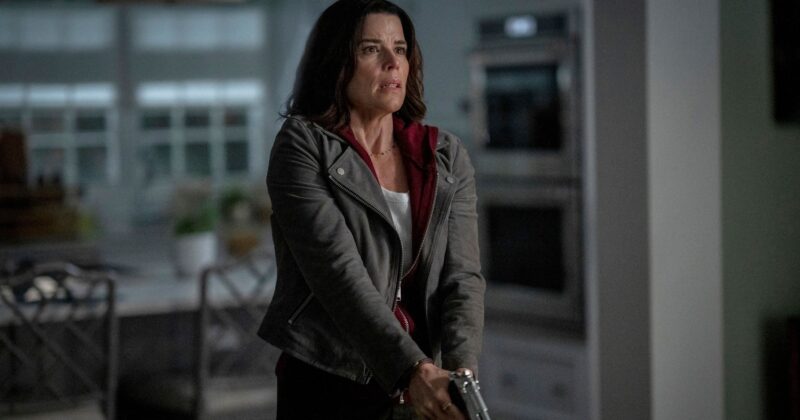
Sidney Prescott (Neve Campbell) has retreated from the endless cycle of violence, building a seemingly peaceful life in the tranquil, if artificial, suburbia of Pine Grove. Here, her world is almost surreal—a coffee shop called ‘A Little Latte,’ perky chalkboard menus, and a neighborly vibe straight from a streaming-produced drama. Her new husband, local cop Mark (Joel McHale with a wink of his signature sarcasm), and their three children should signal a final chapter of peace for Sidney, and yet, the shadows never fully lift.
The real pivot in Scream 7 is the introduction of Sidney’s teenage daughter, Tatum (Isabel May), an actress in high school theatre who bears her own inherited burdens. The generational tension between Sidney and Tatum bubbles up, but instead of deeper dives into trauma or true-crime obsession, the script trades sincere character work for surface-level arguments—an odd stumble for the franchise’s original screenwriter, Kevin Williamson.
Ghosts of the Past—And A.I. in the Mix
The series always played with the idea of past returning to haunt the present, but here, the threat leverages modern tech: FaceTime calls from a villain claiming to be a long-dead culprit, “deepfake” skills casting real doubt and dread. For longtime fans, these technological flourishes might have been a thrilling update, but the opportunity fizzles. Rather than truly exploring the horror potential in A.I. impersonation or cultural obsession with murder-mystery podcasts, the film uses them as mere window dressing.
Ghostface is, of course, back in action, but with killers whose identities become transparent too early, any surprise or tension that once defined the series is lost. The pace drags, and the film’s attempts to apologize for past missteps only highlight its narrative fatigue.
The Supporting Cast: Cameos and Thin Connections
Returning favorites like Gale Weathers (Courteney Cox) and the Meeks-Martin twins (Jasmine Savoy Brown and Mason Gooding) are shoehorned in, but never given arcs with emotional weight. Their presence feels more obligatory than organic, a patchwork designed to trigger nostalgia. Noticeably missing are the core characters played by Melissa Barrera and Jenna Ortega, their absence a flashpoint in franchise discourse for reasons outside the story—one was fired for political statements, the other walked out in solidarity. The result: legacy and new blood are both underserved.
Atmosphere, Kills, and Lysing Nostalgia
Where previous entries used satire to challenge the genre’s clichés, Scream 7 slips into self-seriousness. The carnage is more brutal and direct, yet rarely builds genuine suspense or dread. Kevin Williamson’s first time directing since the cult classic Teaching Mrs. Tingle is marked by static sequences and a lack of directorial verve. Instead of breaking boundaries, the movie seems content to recycle its old tricks, with self-references that no longer sting but instead crumble at the touch.
It raises the question for genre fans: When your story becomes the very thing it once parodied, is there anywhere left to go?
The Franchise’s Identity Crisis
The DNA of Scream has always been its ability to reinvent itself. From the original’s subversive play on horror tropes to later commentaries on sequels, reboots, and the nature of fandom, the series maintained a dialogue with pop culture and its own fluctuating relevance. In this installment, that self-awareness becomes weariness. Sidney’s character, once an agent of survival and transformation, is stripped down to a vessel for trauma, guilt, and recycled grief.
This isn’t just fatigue; it’s a genre cornerstone losing sight of what made it special. The movie’s attempts to capture lighting in a bottle—nostalgia, tech-driven anxiety, commentary on toxic fandom—fall flat, leaving old and new heroes alike adrift. Paramount’s ongoing commitment to sequels hints at financial strategy over creative vision, asking fans to return out of obligation rather than excitement.
Horror’s Future: Lessons From Scream’s Missteps
Scream 7 is a mirror for the current landscape of horror franchises: the struggle to move forward, the temptation to rely on nostalgia, and the risk of becoming what you once critiqued. For the discerning fan, it’s a timely case study in what happens when a genre innovator stalls. Is it time for Ghostface to hang up the mask—or for the storytellers to rediscover the daring spirit that once set Scream apart?
Scream 7 launched in theaters with a runtime of 114 minutes, directed by Kevin Williamson and written by Williamson, Guy Busick, and James Vanderbilt. It stars Neve Campbell as Sidney Prescott and Courteney Cox as Gale Weathers, with additional performances from Joel McHale and Isabel May.