Why Spider-Man: Beyond the Spider-Verse Needed a Major Delay – The Real Story

The Journey Behind the Delay of Spider-Man: Beyond the Spider-Verse
The anticipation surrounding the next chapter of the Spider-Verse saga has been immense, and news of its significant delay sparked debates across fan communities. Now, thanks to insights from producers and writers Phil Lord and Chris Miller, the story behind the delay finally comes into focus—with more depth and creative friction than anyone suspected.
The Challenge of a Universe Too Big
After the massive success of Spider-Man: Into the Spider-Verse and Across the Spider-Verse, expectations for the trilogy’s conclusion skyrocketed. Originally, the plan was to deliver the next film only months after the previous release—a rarity for animated blockbusters. However, as Lord and Miller dove deeper into the multiverse, they faced an unexpected realization: their story was simply too ambitious for a single film.
Lord and Miller explained that the initial script was overflowing with content, enough for two movies. Yet, when they split the narrative, the second half lacked a compelling, self-contained arc. As Miller recounts, ‘That’s not just a story arc that has a beginning, middle, and end.’ What followed was a painstaking creative process: tearing the film apart and rebuilding it, scene by scene, to ensure emotional integrity and coherence.
Story Before Schedule
Within animation, especially at the scale and innovation level of the Spider-Verse project, there’s a fine line between creative ambition and practical deadlines. While industry strikes contributed to delays, it was the need for a more resonant, meaningful story that ultimately reset the timeline. The team discovered their emotional breakthrough in the middle of the narrative: ‘When your family is broken apart by your calling, your talents, how do you put them back together? How do you have it all?’ Lord and Miller committed to exploring this question in depth, pushing the boundaries of traditional superhero arcs by making family and belonging the film’s true center.
The Pursuit of Perfection: A Filmmaker’s Dilemma
The first two Spider-Verse films set a high bar—not just at the box office, but with critics and die-hard fans alike. With Rotten Tomatoes scores of 97% and 95%, the pressure was on to deliver a trilogy finale that exceeds expectations. Lord and Miller openly admit that perfectionism drove their process: the desire not just to meet but to surpass their own creative benchmarks meant endless revisions, new technologies, and daring visual experiments. Miller puts it simply: ‘There’s no one that puts more pressure on us than ourselves, wanting to outdo ourselves each time and see things that you haven’t seen before and make it feel like something you’ve never experienced before.’
This ethos resonates among animation studios known for iterative, boundary-pushing work. Giving the artists space to fail and experiment allowed for richer storytelling and innovation in visual style—a philosophy that distinguishes Spider-Verse from more formulaic superhero offerings.
Returning Talent and What’s Next
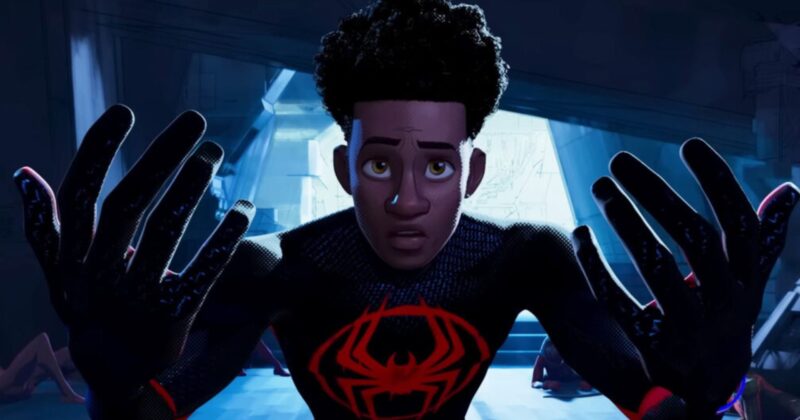
Despite the wait, the voice cast returns with star power: Shameik Moore reprises his role as Miles Morales, joined by Hailee Steinfeld, Jason Schwartzman, Daniel Kaluuya, and Marvin Jones III. Bob Persichetti and Justin K. Thompson are set to direct, and the producing team blends Hollywood veterans Amy Pascal, Avi Arad, and Jinko Gotoh with the dynamic duo Lord and Miller.
Beyond just continuing Miles Morales’s journey, the Spider-Verse films have become cultural milestones, redefining what’s possible in animated superhero cinema. This commitment to artistry, emotional nuance, and fresh visual language is why fans and critics alike continue to wait—impatiently yet faithfully—for this ambitious trilogy’s grand finale.