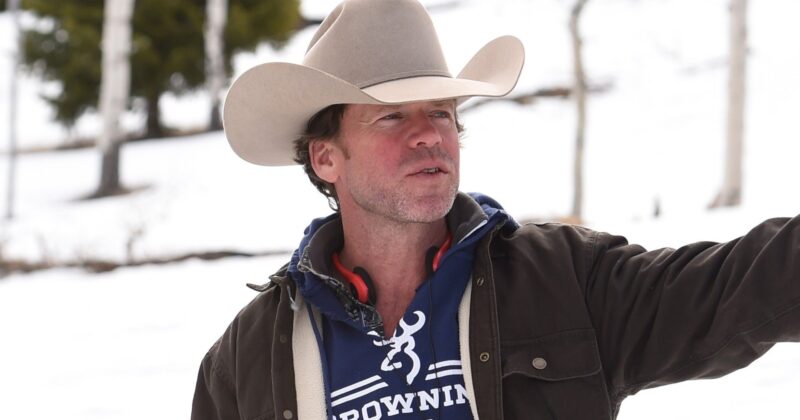
Taylor Sheridan’s Unexpected Origins: From Walker, Texas Ranger to Modern Neo-Western King
Taylor Sheridan is now a household name among fans of contemporary Western dramas, thanks to transformative series like Yellowstone and the gripping Landman. Yet, before crafting the tales that would define the modern TV Western, Sheridan’s journey started with a surprising bit-part in one of TV’s early neo-Western experiments: Walker, Texas Ranger.
Breaking Into Television: Sheridan’s Debut with Chuck Norris
It’s easy to associate Walker, Texas Ranger exclusively with Chuck Norris’ legendary roundhouse kicks, but for industry insiders, its influence on genre evolution is just as notable. Sheridan’s first on-screen appearance came as Vernon, a brash drag racer in the show’s third season. At a time when Westerns on TV were often trapped in nostalgic period pieces, Walker, Texas Ranger stood out for propelling its lawman hero, Cordell Walker, into present-day Texas. Sheridan, in what could have been a forgettable one-off, absorbed the dynamics of a neo-Western environment—one where the old codes of frontier justice collided with modern-day crime.
Walker, Texas Ranger: The Blueprint for the Neo-Western Revival
In the early 90s, televised lawmen were largely relics of the past. With Walker, Texas Ranger, viewers encountered something genuinely new: a Texas Ranger operating in the contemporary world, grappling with the same moral ambiguities and grit we see in today’s Westerns. Unlike other genre attempts, the series threaded together action, procedural drama, and Western mythos, forging a path that would influence future hits like Justified and Longmire.
Chuck Norris’ Cordell Walker was a true hybrid—a moral anchor with a martial arts edge, echoing classic gunslingers but updated for a world of SUVs and urban crime rings. While earlier shows like Cade’s County flirted with the concept, few reached the mainstream success or cultural resonance of Walker’s blend of Texas justice and 90s television bravado.
Sheridan’s Neo-Western Empire: Yellowstone, Landman, and Beyond
Fast-forward to today, and Sheridan stands at the helm of a sprawling modern Western empire. His flagship, Yellowstone, not only revitalized audience interest in frontier storytelling but expanded into a full franchise that includes acclaimed entries like 1883 and 1923. With Landman, Sheridan further proves his mastery at weaving rugged landscapes and complex morality into a format digestible for today’s streaming audiences.
Sheridan’s works echo motifs from his Texas Ranger days: flawed heroes, tangled loyalties, and the perennial struggle between law and lawlessness. His rise to dominance underscores the cyclical nature of genre TV, where young actors—once relegated to bit roles—can develop the vision and authority to reshape entire genres.
A Legacy Forged in the New Frontier of TV
It’s rare in today’s landscape to trace a direct line from a debut performance to genre-defining success, but Sheridan’s arc demonstrates how early exposure to innovative formats can inspire seismic industry shifts decades later. As streaming platforms clamor for prestige dramas and cinematic universes, no one currently straddles the modern and classic Western as confidently as Taylor Sheridan—a true architect of contemporary Western storytelling.