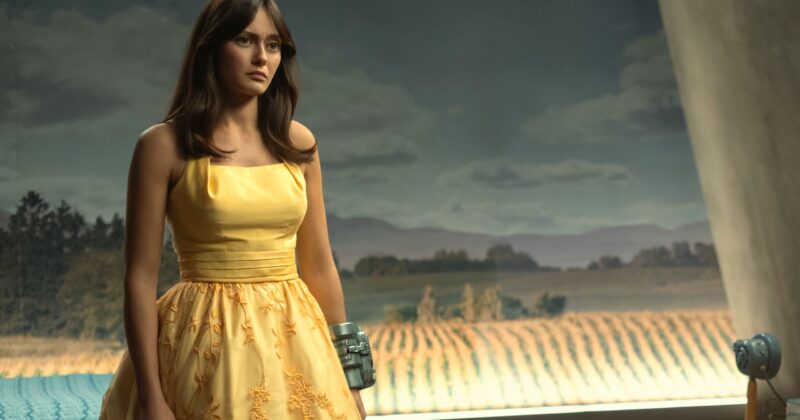
Why ’56 Days’ Became Prime Video’s Unmissable Thriller, Surpassing Fallout

The Unexpected Showdown: When 56 Days Surpassed Fallout
For weeks, Fallout reigned supreme on Prime Video, captivating audiences with its post-apocalyptic grandeur and established fanbase. But the arrival of 56 Days turned the tables in a twist worthy of TV legend, as this quiet psychological thriller soared to the top of the streaming charts in just five days, sparking conversation far beyond its modest initial buzz.
56 Days: A Psychological Labyrinth with High-Stakes Romance
What makes 56 Days stand out isn’t just its ascent but its entire premise. Adapted from Catherine Ryan Howard’s acclaimed novel, the series stars Dove Cameron and Avan Jogia as Ciara and Oliver. Their whirlwind connection—ignited in a Boston supermarket—takes viewers on a journey that blurs the line between intimacy and suspicion. The show’s narrative structure splits its timeline: viewers witness the blossoming, then rapidly unraveling, relationship, while simultaneously following detectives investigating a body found in Oliver’s apartment. The central question that hooks audiences—who is the victim, and what unfolded during those fateful 56 days?—fuels its suspense and keeps speculation raging online.
From Bestseller to Binge-Worthy TV
The show’s transition from page to screen brought changes that even fans of the novel didn’t see coming. While the book originally leverages the tension of early pandemic lockdowns, the adaptation cleverly roots the story in a present-day Boston, focusing on universal themes of trust, identity, and the complexity of modern relationships. The reworked ending and escalated psychological stakes ensure the adaptation feels fresh, even for those familiar with the source material.
The Secret Sauce: Addictive Viewing & Cultural Curiosity
Several factors contributed to 56 Days’ viral ascent. Its eight-hourlong episodes lend themselves perfectly to weekend binging, and the dual-timeline structure means each episode ends with a reason to watch just one more. The series delivers that satisfying ‘just-one-more-episode’ dopamine hit—an algorithmic sweet spot for streaming platforms aiming to maximize engagement.
Social media played a critical role in its rise. Fans and critics alike took to their feeds, debating whether 56 Days is an overlooked masterpiece or an uneven misfire. That debate, with reviews ranging from glowing to scathing, only intensifies viewer curiosity. In fact, the polarizing opinions have become part of the show’s allure: when some declare it ‘unwatchable’ and others claim it’s a ‘thrilling gem,’ audiences feel compelled to find out for themselves.
Prime Video’s Programming Pivot
56 Days also answered a hunger among viewers for something tonally different. Where Fallout offers high-concept spectacle and world-building reminiscent of top-tier genre TV, 56 Days goes in the opposite direction: intimate, dialogue-driven, and emotionally claustrophobic. This contrast resonated with subscribers looking for a slow-burn puzzle rather than pulse-pounding action, and in the current landscape—where streaming fatigue is real—such diversification matters more than ever.
Critical Reception: A Divisive, Compulsive Ride
The series sits at a middling 61% on Rotten Tomatoes, symbolizing its split with critics. Some felt the writing and pacing didn’t fully capitalize on the tension, while others praised the show’s leads—Dove Cameron’s nuanced performance, in particular, is widely celebrated for balancing innocence with simmering suspicion. For all the debate, it’s clear the show inspires strong reactions, which is always a hallmark of cultural relevance in modern streaming wars.
- Nandini Balial called out ‘dreadful’ writing and direction, finding the episodes sluggish.
- Others—like some TV insiders—noted that the cast, especially Cameron, elevated the material, transforming even mundane moments into scenes charged with uncertainty.
- Some reviewers described the series as ‘campy’ and even ‘magnificently preposterous,’ celebrating its pulp appeal rather than narrative perfection.
This spectrum of perspectives underscores why 56 Days has become essential viewing: whether you love it or hate it, you can’t ignore it. The numbers confirm its status as the most talked-about new thriller on the platform, dethroning well-established hits and capturing the zeitgeist in a way few could have predicted.