Marvel TV Before the MCU: A Wild Journey of Experimentation and Misses
The Tumultuous Rise of Marvel on Television Before Its Cinematic Revolution
Long before Marvel Studios turned its superheroes into box office giants and streaming darlings, the journey to bring iconic characters to the small screen was, to put it mildly, a bit of a rollercoaster. While today’s audiences are used to the slick effects of WandaVision or the meta humor in She-Hulk: Attorney at Law, the early attempts to translate Marvel’s legacy from page to screen often bordered on the bizarre and the budget-constrained.
Spider-Man’s Early Leap: High Hopes, Low Altitude
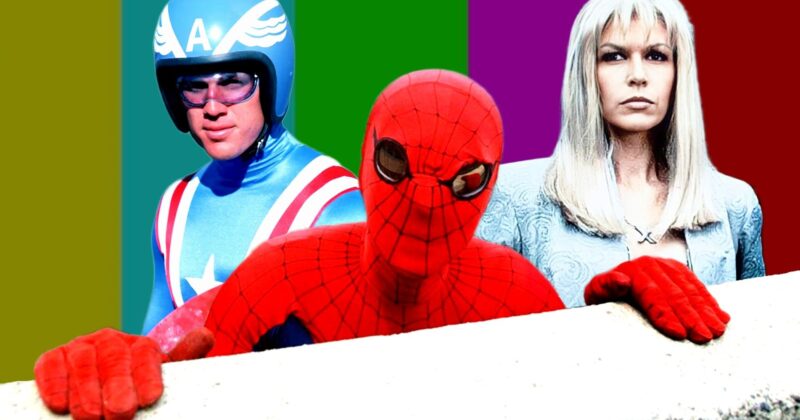
Spider-Man’s adventure into live action kicked off with the quirky «Spidey Super Stories» on The Electric Company—a series of delightfully odd shorts featuring a mute Spider-Man battling sandwich-destroying baddies. His formal debut arrived with the «The Amazing Spider-Man» TV movie. The hype was real, and its premiere became the most-watched TV event of its year. However, transferring that magic to a weekly format proved harder than sticking to a Manhattan wall. Special effects were ambitious for their era but routinely fell short, and the show’s rogue’s gallery was conspicuously empty. Instead of classic villains, Spider-Man tackled shadowy organizations and chemical companies, leaving comic fans guessing where their beloved adversaries had gone. The series lasted just 13 episodes, a striking reminder that wall-crawling doesn’t come cheap when practical effects rule the day.
Doctor Strange: The Sorcerer’s Underwhelming Debut
Marvel pushed forward, hoping that mystical magic would conjure up better ratings. Enter Doctor Strange, bringing a fresh character to TV. The production faced a strict two-week filming schedule—hardly ideal for crafting magical realms. Despite networks hoping to ride a special effects wave in the post-Star Wars era, the visual results fell flat due to meager budgets. The timing couldn’t have been worse; Doctor Strange aired opposite TV’s powerhouse Roots. The combination of lackluster production and fierce time-slot competition meant even the Sorcerer Supreme couldn’t perform miracles, and the movie faded swiftly from the cultural memory.
Captain America: An Altered Legacy on the Road
Those looking for a faithful Captain America adaptation would have blinked twice at the TV movies that bore his name. Rather than the inspirational World War II hero, this version recast Steve Rogers as a modern-day drifter who receives his powers not from the Super-Soldier Serum but from something called the «Fully Latent Ability Gain» formula. Strangely enough, his father was also Captain America. The shield looked out of place, and the costume was a far cry from the iconic stars and stripes—at least until a slight upgrade for the second installment. The storylines swerved from the existential (nuclear threats) to the trivial (Social Security check theft) so wildly that even dedicated fans struggled to buy in.
The X-Men’s Bizarre Animated Beginnings
Before the acclaimed 1992 animated series captured hearts and inspired arcade cabinets, there was Pryde of the X-Men. This pilot boasted high production value for its time and Stan Lee’s unmistakable narration, but introduced one of the franchise’s most infamous choices: Wolverine was inexplicably Australian. This odd detail has reached legendary meme status in comic circles. The rapid introduction of characters and villain factions felt overwhelming, giving new viewers little chance to breathe or grasp the emotional stakes. However, the aesthetic and style of Pryde of the X-Men would directly influence future adaptations, and its DNA can be found in the celebrated games and cartoons that would come next.
Generation X: An Ambitious Misfire
On the cusp of the X-Men’s big-screen breakthrough, Fox experimented with a live-action Generation X TV movie centered around Jubilee, Emma Frost, and Banshee. The project showcased lesser-known mutants like Skin and Mondo yet conspicuously lacked then-mainstays such as Chamber and Husk, who were swapped out for new characters due to budget and technical limitations. The casting was questionable, with some decisions seeming more convenient than clever, and the effects simply couldn’t keep pace with what audiences expected from mutant powers. The result was a watchable curio, but hardly the glowing report card Marvel needed at the time.
Looking Back: A Time of Creative Experimentation
Marvel’s early TV outings may now look quaint or even surreal, but they laid crucial groundwork for the interconnected storytelling fans enjoy today. These experiments—warts, odd accents, and all—helped define what worked, what didn’t, and what studios needed to believe in when the MCU finally assembled for its streaming and cinematic conquest.