For All Mankind: Apple TV’s Sci-Fi Epic Leaps Into a New Decade With Season 5

Alternate History Reshaped: For All Mankind Returns With Audacious New Era
Apple TV’s most enduring science-fiction series, For All Mankind, reignites its ambitious narrative with an exhilarating jump to another decade, offering fans fresh glimpses into its richly reimagined timeline. Since its inception, the show has captivated audiences by exploring a world where the Soviet Union beat the United States to the Moon, spiraling familiar history into bold, unpredictable territory.
Decade-Spanning Storytelling: Deep Space, Deeper Drama
The structure of For All Mankind is uniquely compelling, unfurling its drama across multiple time periods. Previous seasons masterfully chronicled the aftermath of the lunar race, charting the ripples as each decade transforms. Now, with the fifth season, the series lands squarely in a new era—the 2010s—where old tensions and new frontiers meet head-on, both on Earth and the windswept deserts of Mars.
The alternate history premise continues to deliver thought-provoking scenarios: what happens when global power dynamics and technological milestones play out differently, and how does human ambition shape the destiny of two superpowers amid the stars?
Exclusive First Look: New Faces, Returning Legends
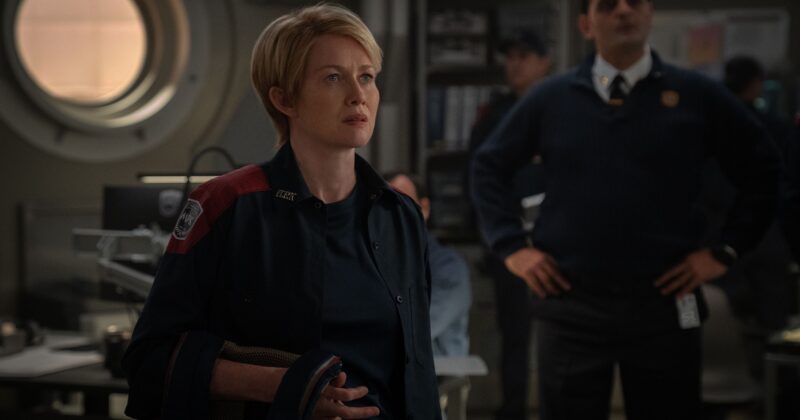
New images tease what’s to come: Celia Boyd (Mireille Enos) immersed in quiet intensity, Alex Poletov Baldwin (Sean Kaufman) donning a spacesuit and navigating Mars’ surface, series veteran Ed Baldwin (Joel Kinnaman) locked in a moment of steely focus, and Aleida Rosales (Coral Peña) caught off-guard—a visual promise of layered stories and evolving arcs. The visual storytelling bridges generations, with familiar faces aging gracefully alongside fresh characters whose perspectives and stakes deepen the ensemble’s complexity.
The show’s capacity to traverse time also refreshes its cast. Kinnaman returns as the unyielding Ed Baldwin, while Enos and Kaufman make their series debut as leading players, ensuring a dynamic interplay between established and new storylines. Meanwhile, Coral Peña reprises her role as the older Aleida, a character whose journey from youthful prodigy to seasoned engineer reflects the show’s belief in generational legacy.
Expanding the For All Mankind Universe
Season 5 marks an important milestone, solidifying the show as Apple TV’s longest-running original sci-fi. Its critical acclaim—anchored by a notable 92% critics’ score—signals its enduring quality, though it often remains an underrated gem amidst the streamer’s other hits.
Beyond the flagship series, the universe is poised to expand. The much-anticipated spinoff, Star City, will pivot to the Soviet experience, giving viewers a broader lens on the global space race. Premiering just weeks after the new season, it promises a complementary perspective, reinforcing For All Mankind as not just a show but a franchise—a rare feat in streaming drama.
Consistent Creative Vision and Cast
Behind the scenes, the stewardship of Ronald D. Moore as showrunner—with direction from talents such as Sergio Mimica-Gezzan, Andrew Stanton, and Meera Menon—ensures the continuity of its high narrative ambitions. Alongside them, returning actors like Edi Gathegi as Dev Ayesa, Cynthy Wu as Kelly Baldwin, Toby Kebbell as Miles Dale, and Wrenn Schmidt as Margo Madison round out one of sci-fi television’s most compelling casts.
The Future of Sci-Fi on Apple TV
With shows like Severance pushing boundaries and Silo heading towards its conclusion, the longevity of For All Mankind is a testament to its ability to blend technical realism with emotionally resonant storytelling. Its bold exploration of politics, technology, and the human spirit secures its place at the heart of Apple TV’s original line-up.
As the story jumps into the new decade, viewers can expect not only dazzling visuals and historical what-ifs, but also a timely reflection on the challenges and hopes that define humanity’s quest for the stars.