Legendary Nokia Symbian Phones: The Icons That Defined Mobile Innovation

The Era of Symbian and Nokia: Where Smartphones Began
Before app stores and ultra-thin flagships, a different kind of innovation ruled the mobile world. Nokia’s Symbian lineup introduced millions to features we now take for granted. These weren’t just phones—they were bold statements in tech design, rich with personality and packed with functionalities ahead of their time.
Nokia 6600: The Game Changer
For many, the Nokia 6600 opened the door to the world of smartphones. Boasting the Symbian S60 OS, it arrived with capabilities that would make any early tech enthusiast swoon. Bluetooth, infrared file transfers, a practical VGA camera, and the ability to install third-party apps—these were groundbreaking. Multimedia features meant users could transform it into a true MP3 player with more than 100 songs, setting a new benchmark for what a phone could be. The asymmetrical button layout and a jog dial made its design memorable, while its big, bright screen made it ideal for gaming—titles like Tomb Raider and Tony Hawk’s Pro Skater stunned onlookers long before mobile gaming became mainstream.
Nokia 3650: Design Revolution
The 3650 instantly captured attention with its radical circular keypad. Its large display and the ability to run graphically rich games set this model apart, while its pioneering video-capable camera made it a favorite for early adopters. The daring design and impressive battery life cemented its reputation as a device that didn’t just predict the smartphone era, it helped define it.
Nokia 6260: Flipping the Script
Distinct among clamshells, the 6260’s rotatable display created a buzz. Closed, it still allowed access to messages and basic functions—an innovation in usability. With its camera mimicking a camcorder, it became possible to shoot photos and videos in style. For music lovers, the device could transform daily commutes with quality sound output, and when paired with an MMC card, it was virtually a portable jukebox.
Nokia N91: A Music Lover’s Dream
Targeted at audiophiles, the Nokia N91 stood out for housing a full-sized mini hard disk, available in both 4GB and 8GB capacities. This enormous (for the era) storage, combined with dedicated music controls and top-tier sound hardware, made it a must-have for anyone serious about music on the go. The chrome finish and inventive slider design brought as much style as functionality—the device looked as futuristic as it felt.
Nokia N-Gage: Mobile Gaming’s Boldest Step
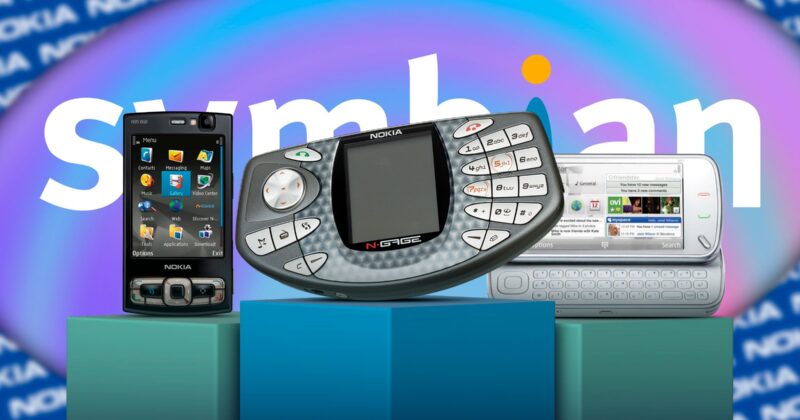
Merging phone and gaming console, the N-Gage was a jaw-dropping concept in a pre-smartphone world. Its unique format meant you could enjoy full-featured games with physical controls that resembled a handheld console. Titles such as Pathway to Glory and Asphalt showcased what mobile could achieve, blurring the line between console and phone for the first time.
Nokia E51 & Business-Class Power
Efficiency met design with the E51, a compact powerhouse geared toward productivity. The inclusion of Wi-Fi set it apart in its class, bringing fast connectivity to a mainstream audience. With support for MS Office docs, a microSD slot, and excellent build quality, the E51 quickly became essential for mobile professionals. Its successor, the E71, continued the legacy, featuring a BlackBerry-esque keyboard that kept productivity at your fingertips, while achieving surprising longevity compared to contemporaries.
Nokia N95: The Pinnacle of Multimedia Mobility
The N95 marked one of Nokia’s all-time greats: a slider with tactile, satisfying buttons, and a feature set that was nothing short of visionary. A powerful camera, excellent music playback, integrated GPS, and a robust set of connectivity options showcased Nokia’s dominance. Even today, it remains an aspirational benchmark for fans who crave device personality and functional flair in their handsets.
Each of these Symbian-powered Nokias offers a reminder: innovation in the mobile world didn’t start with touchscreens and AI assistants. It was built brick by brick by models that dared to be different—and made mobile technology what it is today.