9 Linux Distros That Redefine What an Operating System Can Be

Beyond the Mainstream: Linux Distros For the Curious and Creative
Most Linux users settle into a familiar groove: find a distro that ‘just works,’ tweak it to taste, and rarely look back. But, on the edges of the Linux ecosystem, there’s a vibrant world of invention happening—where developers are rethinking the basics of what makes an OS, driven by unique problems and radical solutions. Exploring these distributions isn’t just for hobbyists; it’s a powerful way to expand your perspective on computing and sometimes uncover unexpected productivity boosts.
NixOS: Total System Reproducibility
NixOS makes system configuration fully declarative and version-controlled, treating your OS like a piece of code you can rebuild, upgrade, or roll back in seconds. Every aspect, from installed packages to system settings, is defined in simple configuration files using the unique Nix language. Screw up your system? Just reboot into a previous generation and keep working while others are scrambling to remember which config file caused the headache. NixOS has a learning curve, but if you’re tired of unpredictable drift and config chaos, the control and clarity it offers are game-changing. Try NixOS here.
Qubes OS: Security With Ironclad Isolation
Qubes OS turns conventional security upside down by assuming nothing can be trusted—not even your PDF viewer. Its architecture is built around strict compartmentalization, running every application or activity in separate virtual machines. Your browser, dev tools, and downloads all live in isolated zones, so if malware slips in, it’s contained by design. This system can be demanding on hardware and requires some habit changes, but for journalists, researchers, and anyone with a lively threat model, it delivers unmatched peace of mind. Explore Qubes OS.
Guix System: Ultimate Auditability and Freedom
Guix System shares similarities with NixOS (including atomic upgrades and rollbacks), but doubles down on transparency and software freedom. Everything is managed and configured using Scheme, and Guix packs a focus on bit-for-bit reproducibility. That means you can verify that binaries match their source precisely—an attractive feature for privacy advocates and anyone who wants to guarantee what’s running on their machine. While mainstream ‘convenience’ isn’t the priority here, for those who prize auditability and control, it’s an eye-opener. Visit the Guix System page.
OpenWrt: Routers Unleashed
Too many routers act like mysterious black boxes. OpenWrt cracks them open, turning basic network hardware into a customizable and powerful device. With its full Linux stack, robust package system, and deep network controls, your router transforms from a forgotten appliance into a network nerve center—or even a lightweight local server. OpenWrt does demand networking know-how and a willingness to tinker, but nothing else brings this level of liberation to embedded hardware. Get started with OpenWrt.
Void Linux: Fast, Clean, and Simple
Void Linux charts its own course, ditching systemd for the nimble runit, and emphasizing simplicity at every turn. Services are easy to follow scripts in directories, boots are swift, and the package manager is both snappy and intuitive. For users who value understanding over abstraction and want a responsive OS on older machines, Void is a revelation. Learn about Void Linux.
Bedrock Linux: Ultimate Mix-and-Match
Ever wanted Ubuntu’s userland, Arch’s package manager, and Fedora’s tools—together? Bedrock Linux lets you fuse the best parts of different distros into a single, seamless environment. You get one unified filesystem, but behind the scenes, your programs pull from different sources. This “greatest hits” approach is for advanced users and tinkerers who refuse to accept ecosystem boundaries. The flexibility is unmatched—if you can handle the complexity. See what Bedrock can do.
Talos: Linux as Immutable Infrastructure
Talos is purpose-built for Kubernetes, stripping down Linux to just what’s needed for the world of cloud and containers. No shell, no traditional user space—the OS lives and breathes as pure infrastructure, managed entirely via API. This extreme minimalism minimizes attack surface, banishes config drift, and brings the «cattle, not pets» ethos to servers. For modern DevOps, it’s a compelling look at the next step in OS evolution. Discover Talos Linux.
PostmarketOS: Reclaim Your Old Smartphone
Who says your phone has to be obsolete after a few years? PostmarketOS is a lightweight, Alpine Linux-based OS dedicated to extending your smartphone’s life far beyond the manufacturer’s support window. Its goal isn’t to clone Android or iOS, but to stay sustainable and adaptable—ideal for transforming aging hardware into something usefully different. Hardware support and polish vary, but the mission of keeping devices alive for a decade is refreshingly rebellious. Check out PostmarketOS.
Alpine Linux: Small on Size, Big on Versatility
Compact, consistent, and security-minded, Alpine Linux powers much of the container-world thanks to its minuscule footprint (musl libc and busybox are at its heart). While lightweight, Alpine is surprisingly powerful in production for servers and even as a spartan desktop for those who value speed and transparency above click-and-go comfort. Its impact is everywhere behind the scenes, from containers to cloud-native microservices. Explore Alpine Linux.
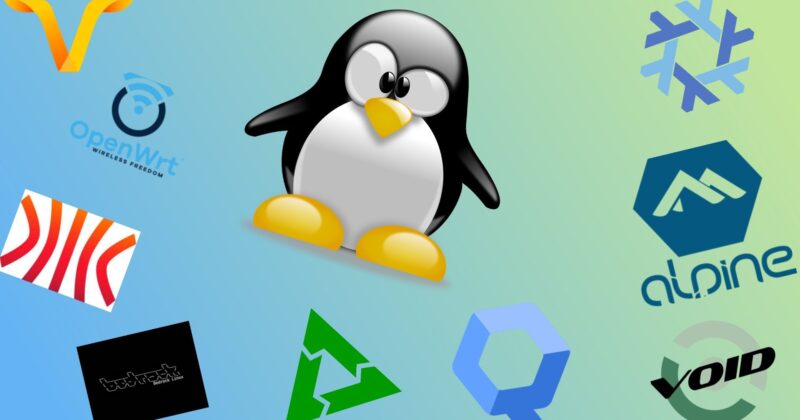
Each of these distros reflects different philosophies and pushes boundaries, representing the restless spirit of Linux invention. Whether you’re a power user, developer, or just Linux-curious, diving into these projects can inspire, inform, and maybe even transform how you think about your daily tech.