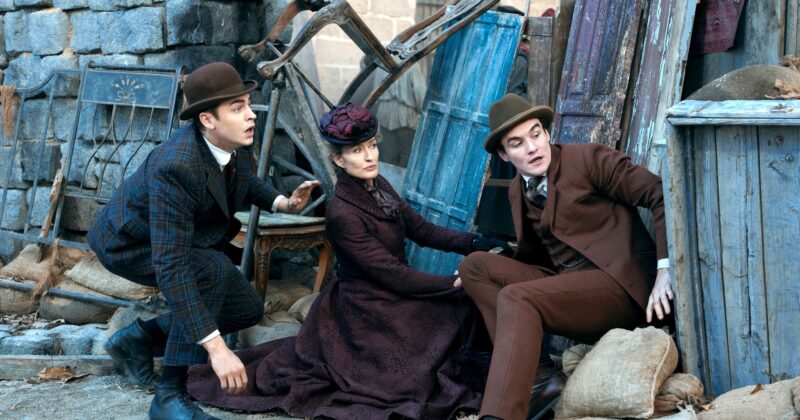
The Reinvention of Sherlock Holmes Through Guy Ritchie’s Lens
The latest take on Sherlock Holmes brings a refreshing vibe to one of pop culture’s most iconic detectives. This time, Guy Ritchie steps away from his blockbuster film adaptations and reinvents the character in Young Sherlock for Amazon Prime Video. The result is a fresh portrayal that deliberately breaks away from both the visual language established by the Benedict Cumberbatch TV version and Ritchie’s own cinematic universe.
Analog Imagination: Ditching Heavy VFX
Young Sherlock stands out with a fascinating creative choice—the decision to minimize digital effects. Where previous adaptations, especially the modern Benedict Cumberbatch series, leaned on heavy VFX to convey Holmes’ deduction sequences, showrunner Matthew Parkhill and Ritchie looked back to classic filmmaking.
Their approach? Almost all the famed ‘mind palace’ moments are achieved in-camera, using analog tricks and clever cinematography rather than computer graphics. This involves techniques like shooting over a double’s shoulder or blending shots so seamlessly that viewers are never quite sure where reality tips into Holmes’ imagination. It’s an organic, unpredictable experience, making every deduction sequence feel fresh—and keeping the audience guessing.
Throwing Out the Rulebook for Visual Narratives
One of Parkhill’s key philosophies was avoiding formulaic device. No two sequences are staged the same way: at times, viewers slip into Sherlock’s mind with a whip pan, at other times with a sound cue or brief visual trick. The intent is clear—to keep the viewer off balance, always engaged, never drifting into routine. In unique episodes, the production even experiments with pencil-drawn animation styles, thoughtfully pondering, ‘What would VFX look like if Holmes existed in 1871?’ This blend of ingenuity and restraint turns seemingly simple shots into immersive narrative tools.
From VFX-Heavy Tests to Stripped-Down Storytelling
Interestingly, the creative team initially tested a much more effects-driven style. Early tests included anamorphic lenses and elaborate post-production work, but the team deliberately scaled everything back during editing. Less became more, and the end product is striking in its simplicity—proof that storytelling and craft trump spectacle when it comes to exploring a genius mind.
A New Narrative: Young Holmes Faces His First Real Danger
This Amazon Prime Video adaptation follows Hero Fiennes Tiffin as a young Sherlock Holmes, drawn into a murder mystery at Oxford that spirals into a conspiracy. Daringly, the show doesn’t simply remix classic Conan Doyle tales. Instead, it adapts the Young Sherlock Holmes books by Andrew Lane, flipping established dynamics—James Moriarty, Holmes’ legendary future nemesis, starts off as a close friend and ally.
The underlying message: this isn’t your grandfather’s Sherlock, nor a prequel to Ritchie’s Robert Downey Jr. films. This world stands alone, offering its own take on canon and relationships.
The Artistry Behind the Lens
Ritchie, known for kinetic editing and bold style, collaborates tightly with Parkhill to ensure that every directorial decision enhances the puzzle-solving experience. Their close partnership sees classic craftsmanship take center stage, with subtle uses of VFX only where absolutely necessary. The analog aesthetic permeates both acting and production design, evoking the era while giving Holmes’ internal brilliance a tactile presence onscreen.
Broader Impact on Detective Fiction
Young Sherlock launches into a crowded field of detective series yet brings something fundamentally new—a return to practical effects, grounded storytelling, and inventive visual grammar. With a cast led by Hero Fiennes Tiffin and an imaginative creative team, this series stands poised to redefine how audiences connect with Holmes, offering a template for future adaptations seeking depth over dazzle.
The debut on Prime Video marks not just a new chapter for Sherlock Holmes, but for genre fans eager for series that blend history, mystery, and a hand-crafted cinematic style that recalls the magic of old-school detective storytelling.