Mastering Tone: How ‘One Battle After Another’ Finds Perfect Balance Between Humor and Danger

The Art of Editing Danger and Wit in ‘One Battle After Another’
The cinematic world continues to buzz about ‘One Battle After Another,’ the bold action adventure from Paul Thomas Anderson that has quickly established itself as an awards season front-runner. With Leonardo DiCaprio at the center as Bob, an ex-revolutionary fiercely protective of his daughter Willa (Chase Infiniti), the film stands out not just for its powerhouse performances but for its nuanced editorial craftsmanship.
The Alchemy of Tone Behind the Scenes
At the heart of the film’s intricate tone lies the work of editor Andy Jurgensen. Having collaborated with Anderson on critically acclaimed projects like ‘Phantom Thread’ and ‘Licorice Pizza,’ Jurgensen brings a deep understanding of the director’s style—one that refuses to let any scene settle into pure comedy or unrelenting tension. ‘One Battle After Another’ constantly shifts between danger and satire, a risky dichotomy that could fall apart in lesser hands; here, however, the editorial decisions elevate both the stakes and the laughs.
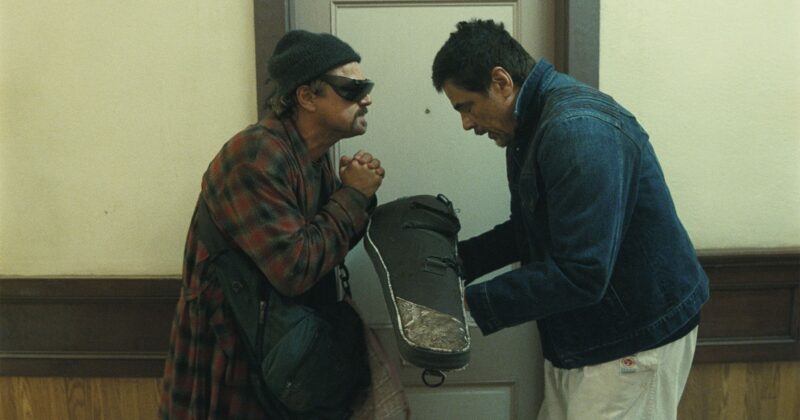
Jurgensen describes the process as a careful negotiation—each performance, especially from actors like Benicio del Toro as Sensei and Sean Penn as Lockjaw, is evaluated, and takes are meticulously chosen to build authenticity. According to Jurgensen, it often comes down to knowing when to keep a shot running to preserve that sense of reality, and when to cut at precisely the right moment to either relieve tension or inject levity.
Crafting Satire with Substance
While the film is political by design, Jurgensen emphasizes that any ideological threads serve primarily as a backdrop for its father-daughter dynamic and the evolution of its characters. The prologue alone demonstrates this approach—swiftly setting up Teyana Taylor’s Perfidia as a revolutionary whose decisions reverberate throughout the narrative. Here, multiple facets of activism and betrayal are subtly threaded through dialogue and visuals, particularly in scenes contrasting Sensei’s controlled demeanor with Bob’s fraught anxiety and Lockjaw’s outsider complexities.
Practical Effects and Editing Precision
One of the standout technical achievements in the film is the car crash sequence featuring Lockjaw. Instead of opting for excessive spectacle, the decision was made to use just a handful of practical camera angles to sustain tension. With only four carefully selected shots, the editorial team managed to shock the audience without resorting to overblown visual effects. Viewers are kept off-balance—unsure whether a character has survived a moment until the story is ready to reveal the answer.
This minimalist approach echoes throughout the film, contributing to a storytelling style that feels raw and immediate. Rather than overwhelming viewers with fast cuts or stylized sequences, Anderson and Jurgensen ensure each moment remains impactful and true to the characters’ emotional journeys.
The Power of a Single Take
Subtle performance choices also take center stage, especially in the evolution of Perfidia and her interactions with Lockjaw. The so-called Walk of Shame shot—one that survived multiple edits—says as much about her internal conflict as an entire sequence. Editing here is about restraint; pulling back when a character like Lockjaw threatens to dominate a scene, allowing those moments of vulnerability or ambiguity to breathe.
Jurgensen points out that especially with a character played as dramatically as Sean Penn’s Lockjaw, calibration is key. Sometimes, performances were intentionally toned down in the edit to save emotionally charged moments for later in the narrative, ensuring each significant gesture lands with intended gravity.
A Film That Respects Its Audience
Ultimately, ‘One Battle After Another’ is a masterclass in controlled chaos, both in front of and behind the camera. By oscillating between dry humor and perilous stakes—and letting the editorial process shape performances—the film respects its audience’s intelligence. Technical bravado aside, it is the combination of seamless editing, rich characterization, and tonal dexterity that makes this film a must-discuss for cinephiles and award prognosticators alike.