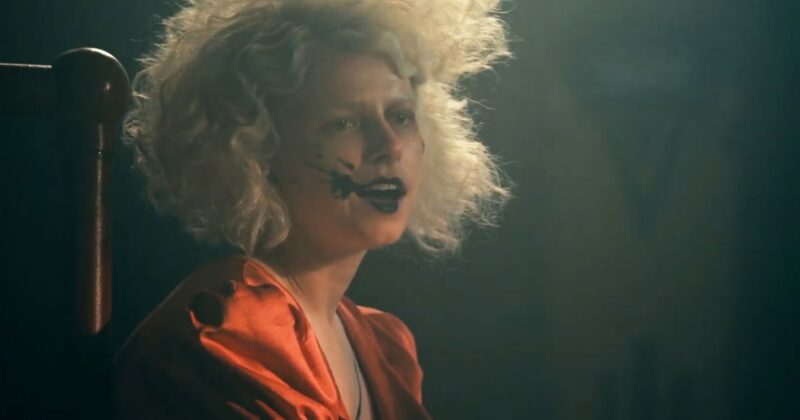
Jessie Buckley Redefines The Bride: A Dazzling Transformation in Maggie Gyllenhaal’s Bold Frankenstein Adaptation

Jessie Buckley: The Woman Behind Three Faces in The Bride!
Jessie Buckley doesn’t just play The Bride in Maggie Gyllenhaal’s electrifying reimagining of a classic monster myth—she embodies three layered roles that form the heart and soul of the narrative. Set amidst the jazz-soaked shadows of 1930s Chicago, the film injects new life into familiar gothic lore, making Buckley’s performance a masterclass in versatility and presence.
The Multiverse of Jessie Buckley: Shelley, Ida, and The Bride
At the film’s outset, audiences meet Buckley as Mary Shelley herself—the visionary creator whose haunting imagination birthed Frankenstein. Shelley’s perspective frames the story, bridging the original novel’s philosophical undertones with Gyllenhaal’s contemporary vision. This meta-layer adds a cerebral echo to each scene, reminding us that these themes of creation and identity are as relevant today as when Frankenstein was first penned.
Buckley next transforms into Ida, a young woman whose tragic fate serves as the catalyst for The Bride’s grisly rebirth. Through Ida, Buckley brings a grounded vulnerability and a sense of unfinished life, deepening the audience’s investment in what comes next.
The centerpiece, of course, is Buckley’s role as The Bride—a resurrected soul navigating a maze of memory, love, and existential uncertainty. Unlike the silent iconography of past versions, this Bride is fierce, conflicted, and achingly real. Gyllenhaal gifts her with a full backstory and emotional range, challenging the trope of the voiceless, broken partner, and Buckley meets the challenge with raw, improvisational intensity. The actor has described the process as ‘playing jazz,’ where the emotions and narratives of all three women swirl within her, sparking moments of spontaneity and genius onscreen.
Jazz, Duality, and the Monster’s Companion
Buckley’s analogy to jazz is more than just poetic. Jazz requires mastery, intuition, and the ability to pivot in the moment—much like juggling the archetypal personas of creator, victim, and monster’s beloved. The layering of voices, including those that echo unconsciously, drives Buckley to discover ‘the truth—or something that is going to crack the ceiling a little bit.’ This improvisational approach, encouraged by Gyllenhaal, becomes both technique and theme: creation, like life, is messy, unstable, and thrillingly uncertain.
The Director’s Vision: Magic, Science, and the Spectacle of Rebirth
Maggie Gyllenhaal’s directorial hands are everywhere in The Bride! She reimagines the iconic reanimation scene, blending awe and intimacy with a dash of movie magic. As The Bride is awakened under the sizzle of arc lights—a visual nod to the genre’s roots—the tension and eroticism help set the moment apart from previous adaptations. Gyllenhaal wanted it to feel simultaneously scientific and mystical, hinting at concepts that blur the boundaries between Newtonian physics and the quantum unknown.
The director’s choice to lean in on both the technical and emotional aspects of reanimation draws inspiration from both contemporary science fiction and the deep sensuality that courses through pop culture’s best monster romances. The result? An experience that feels not just like an homage, but a bold reinvention that pulses with modern creative energy.
Pop Culture Cameos and Inside Jokes
No great genre film is complete without a dash of tongue-in-cheek humor. The production even finds room for an internet-viral joke about John Mulaney, with the director playfully addressing speculation about whether the comedian auditioned for a police role in the film. Though he didn’t, the story highlights the project’s blend of earnest artistry and playful cultural self-awareness—a tone familiar to fans of clever, fourth-wall-bending cinema.
Iconic Casting & The Modern Monster Film
The ensemble delivers at every turn. Christian Bale gives Frankenstein’s Monster a brooding vulnerability under the monster’s infamous scars, while Annette Bening (as the eccentric Dr. Euphronious) injects mad science with both gravitas and glee. Jake Gyllenhaal and Louis Cancelmi round out the cast, ensuring that every performance is sharply cut and memorable.
The Bride! proves that, far from being a relic, the Frankenstein myth is a living, breathing canvas for exploration—one where gender, identity, and artistry intertwine. Guided by an award-winning director and a powerhouse lead in Jessie Buckley, this adaptation isn’t just another monster movie; it’s a dazzling cultural event that invites audiences to ponder the mysteries of creation, both on and off the screen.