The 10 Most Striking DC Comics Villain Designs: Iconic Looks That Defined Evil

Exploring the Visual Mastery of DC Comics’ Most Legendary Villains
Few fictional universes boast villain designs as instantly memorable and influential as those found in DC Comics. Across comics, animation, and cinematic universes, certain antagonists have achieved legendary status not just for their acts of villainy, but for the way their visual language has dominated panels and screens alike. What truly sets DC’s rogue gallery apart is its seamless blend of menace, theatricality, and timeless symbolism — a synergy that cements these characters in pop culture consciousness.
Perpetua: The Cosmic Matriarch
Perpetua stands as one of DC’s most conceptually ambitious villain designs. Imagined as the literal architect of the multiverse and mother to such pivotal beings as the Monitor and Anti-Monitor, her appearance broadcasts omnipotence. Ethereal, towering, and crowned with a surreal fusion of hair and cosmos, Perpetua’s stony skin and deep-glowing eyes evoke the vast, unknowable expanse of space itself. Her collar, composed of orbiting planets, doubles down on her cosmic authority. Unlike the Greco-Roman archetypes that inspire many comic gods, Perpetua is a visual bridge between Jack Kirby’s cosmic New Gods and modern high-fantasy, and her appearance has become a defining visual keystone for all cosmic-scale stories in the DC continuum.
Deathstroke: Tactical Precision Meets Supervillain Icon
The suit worn by Deathstroke (Slade Wilson) is the blueprint for every assassin-antihero that has followed. Created by George Pérez, Deathstroke’s look marries superheroic flair with pure special-ops function. The split-color mask—half orange, half dark navy—reflects both his tactical acumen and self-assured bravado. Promethium-laced body armor gives him the aura of a modern knight, while still feeling grounded and battle-worn. Across decades, while his armor and accessories have become more functional in newer iterations, the essence of Deathstroke — the imposing cowl and bold contrast — has set the standard for mercenary visual design, inspiring countless characters in comics and beyond.
Silver Banshee: Haunting Simplicity
Visually, Silver Banshee (Siobhan McDougal) is a masterclass in chilling minimalism. Dressed in a seamless black bodysuit adorned with quintessential skeletal motifs, and paired with wild, shock-white hair, she evokes the spine-chilling spirit of the banshee from Irish folklore. Her face, stark and ghostly, is engineered to mesmerize and terrify. What’s remarkable is the consistency of her design, which enables effortless adaptation from comics to animated shows like My Adventures with Superman without losing her haunting signature. In an age where character designs often become over-complicated, Silver Banshee’s is a testament to the power of focused visual storytelling.
Darkseid: Embodied Monolith of Evil
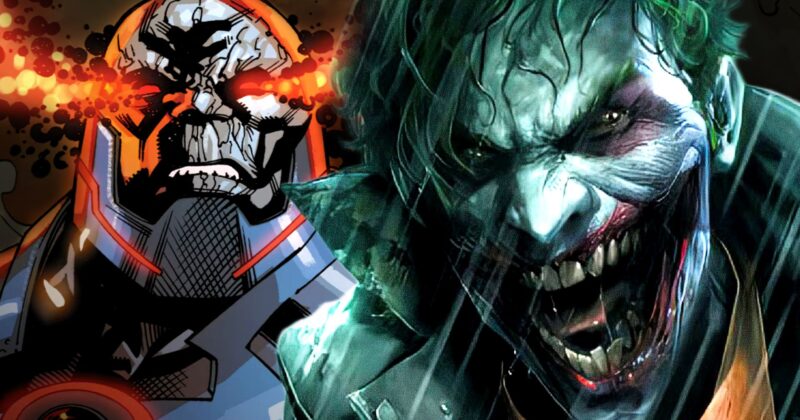
Darkseid is a lesson in imposing simplicity. The stone-skinned tyrant lords over Apokolips with a calm, unyielding menace, signified by his massive frame, cracked features and burning, red Omega Beam eyes. Rarely adorned with more than his basic armor and blue tunic, Darkseid’s very stance communicates dominance without the need for flashy gear or accessories. His default pose—with hands clasped behind his back—radiates aristocratic confidence. Few characters in the villain lexicon have inspired as many imitations; Marvel’s Thanos, for instance, draws direct visual lineage from Darkseid’s Jack Kirby blueprint. Whether in classic or modern renditions, his look remains immovable and definitive.
The Joker: Chaos in a Grin
Every era reimagines The Joker, but his terrifyingly theatrical visage remains instantly recognizable. From the deathly white skin and emerald hair to the ever-present, grotesque smile (inspired by Conrad Veidt in The Man Who Laughs), The Joker weaponizes the image of laughter itself — contorted, permanent, painful. Each new incarnation, from the ’40s Clown Prince to the nightmarish figures of recent comics, underscores how a visual theme can both adapt and persist. The Joker’s unique ability to maintain his core horror while sliding across genres and art styles is unparalleled in comics. Subtle changes — a stitched eye here, a monstrous jaw there — only deepen his legend, making every Joker era visually and culturally significant.
The Penguin: Elegance Gone Awry
Oswald Cobblepot, known as The Penguin, may not rely on superpowers, but his look is just as formidable. Cobblepot’s blend of formal gentleman’s attire — think tuxedo, monocle, and signature umbrella — is perverted into something grotesque, frequently emphasizing his birdlike features and shuffling gait. The Penguin’s visual style is deeply flexible, ranging from cartoonish and exaggerated in older comics to gritty and mob-influenced in recent live-action adaptations like The Batman. This adaptability allows him to veer from camp to horror without losing what makes him iconic: a criminal mastermind who hides monstrous ambition beneath a veneer of class.
Lobo: Intergalactic Biker Legend
Lobo is chaos incarnate, fusing ’80s heavy metal album art with irreverent, biker mythology. The Czarnian stands out with corpse-white skin, glowing crimson eyes, unkempt hair, and outfits studded with spikes and chains. Designed initially as a parody of grim antiheroes, Lobo’s look has become earnest in its popularity, with fans rejecting all attempts to tone down his unruly image. Whether wielding his chain weapon or puffing on a cigar, every detail — from leather vests to crude facial hair — amplifies his status as the cosmic outlaw nonpareil. Few characters in comics sport such a robust sense of swagger and resilience in their iconography.
Visual Influence and Legacy
Each villain here is more than just a foe — they’re milestones in visual design history. Their looks have shaped everything from blockbuster films and collectible figures to cosplays and digital games. Whether diminished to the essentials, like Darkseid’s granite posture, or adorned in intricate layers, like Lobo’s asphalt couture, these DC villains consistently set the visual bar for what it means to be both memorable and menacing. Exploring these designs offers not only a journey through artistic evolution but also a window into the ongoing dialogue between creators, fans, and the world of pop culture.