Hoppers: Mabel, Activism, and Pixar’s Boldest Villain Explained

The Unconventional Hero’s Journey of Mabel
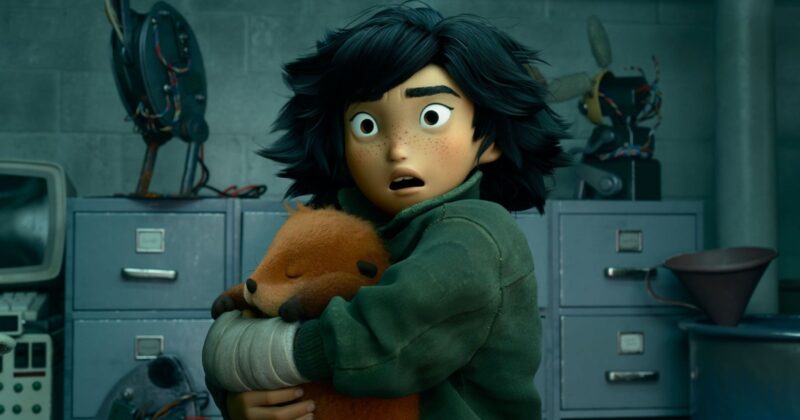
Pixar’s Hoppers stands out in the animation landscape with a lead character as unpredictable as she is determined. Mabel, a teenager fiercely protective of her local Glade, doesn’t just follow the classic hero’s path—she redefines it. When developers threaten her sacred land, Mabel doesn’t hesitate to take drastic action, hijacking a tech program to communicate directly with local wildlife through a robotic beaver interface. This decision, equal parts genius and recklessness, sets off a chain of events that fractures old boundaries, not only between human and animal but within Mabel herself. Her willingness to push past acceptable limits paints her as both protagonist and, unwittingly, a source of chaos.
Mabel’s Wild Tactics and Personal Growth
Early in Hoppers, Mabel’s chaotic approach puts her at odds with both human allies and animal kingdoms. Her impulsivity leads to transformative, though often disastrous, encounters, such as accidentally squashing the Insect Queen—a moment that sparks a dangerous conflict. These episodes force Mabel to confront the consequences of her well-intentioned, but often reckless, activism. The evolution in her character becomes pivotal: her journey isn’t about singlehandedly saving the world, but about learning restraint, tact, and—most importantly—how to collaborate effectively. Through these lessons, Mabel’s story underscores the value of balanced activism, where empathy and strategy must go hand in hand.
The Rise of Titus: Pixar’s Most Chilling Villain
As Mabel navigates her own errors, a new threat emerges: Titus, the self-inflated prince-turned-king of the Insect Kingdom. Titus’s rise is marked by a tragic accident—his mother is crushed by Mabel, an incident that sets him on a path of vengeance and power. Unlike most animated villains, Titus is chillingly methodical. After gaining control of a humanoid robot, he concocts a plan to unleash a deadly sonic weapon, exploiting the very technology meant to isolate wildlife. His goal is not just revenge, but total domination—a mirror of Mabel’s earlier, more self-centered tactics but taken to a ruthless extreme. The head-to-head between Mabel and Titus becomes a nuanced clash of ideology and ambition, reflecting how even noble causes can give rise to dark extremes if mismanaged.
Alliances and Community: The True Heart of Hoppers
The eventual union of humans and animals marks Hoppers as more than a simple eco-adventure. After Titus’s reign of terror causes disaster, including a forest fire racing toward Beaverton, enemies join forces to save their home. Here, Mabel and her former foe, Jerry—the construction-driven mayor—form an uneasy truce. Their newfound respect exemplifies one of the movie’s deepest messages: genuine change only occurs when adversaries recognize shared humanity (or animality). Jerry’s shift, moving away from destruction toward preservation, mirrors the reconciliation seen between fauna and humans. George, the beaver with a bond to Mabel, remains a symbol of this unity, even after the Hoppers program is shut down and direct communication becomes impossible.
The Role of Empathy and Practical Activism
Pixar takes a daring approach by refusing tidy solutions. Hoppers argues that anger and isolation do little to change the world—sometimes making things worse, as Mabel tragically learns. At the same time, passivity is equally dangerous; Jerry’s manipulations almost doom the Glade. The film’s solution emerges in the intersection: empathic activism. By learning to temper her passion with understanding, Mabel inspires others to act, building a coalition that neither radicalizes nor shirks from the fight. This message is echoed across multiple arcs; George’s optimism, Jerry’s charisma, and Mabel’s drive create a collective force greater than the sum of its parts.
Complexity Over Convenience: Hoppers’ Narrative Sophistication
Hoppers brings exceptional depth to the table, far beyond the surface-level tropes of many animated features. The film frames activism, not as a solo journey, but as a complicated network of relationships with shifting power dynamics, conflicting motives, and genuine risks. The tragic consequences of Mabel’s mistakes, the terrifying ambition of Titus, and the grudging collaboration with Jerry all converge to reinforce a point that will resonate with audiences invested in nuanced storytelling: True progress is messy, dangerous, and deeply collaborative.
For fans of animation, gaming, and modern narrative, Hoppers is a touchstone—an unapologetically complex film set in a world where technology, activism, and personality collide. It invites viewers to grapple with the harsh realities of leadership, sacrifice, and the persistent challenge of understanding one another, proving yet again why Pixar remains a creative powerhouse in animation and beyond.