How Marvel’s $7 Million Decision Redefined Superhero Cinema Forever

The Legendary Spider-Man Rights Deal: A Turning Point for Marvel and Film
In the late 1990s, Marvel found itself facing tough financial challenges, leading to a negotiation that would not only reshape the studio’s future but also leave a permanent mark on the superhero genre. In a move that continues to echo across pop culture, Marvel licensed the film rights to Spider-Man to Sony for just $7 million, a sum that now stands as one of the most seismic misjudgments in movie history. The consequences of this agreement are still felt deeply in how superheroes have dominated the box office in subsequent decades.
Spider-Man’s Silver Screen Revolution
The impact of Sony’s stewardship over Spider-Man can’t be overstated. The five films spanning the Sam Raimi trilogy and the two Amazing Spider-Man entries alone brought in over $3.95 billion in global box office sales. According to Box Office Mojo, Tobey Maguire’s and Andrew Garfield’s turns as the wall-crawler redefined what a superhero blockbuster could achieve, blending grounded storytelling, memorable villains, and some of the most iconic action sequences ever captured. The ripple effect went far beyond mere numbers; these films set the tone for modern superhero narratives and directly influenced a generation of moviegoers and filmmakers.
This deal not only handed Sony a financial windfall but also positioned Spider-Man as the anchor point for generational fandoms. For Millennials and Gen Z, the first exposure to Spider-Man wasn’t through comics, but through these vividly realized cinematic adventures. This era birthed iconic imagery—from the upside-down kiss to Doc Ock’s tentacled menace—that became pop culture staples, cementing Spider-Man’s place among the immortals of superhero cinema.
Sony’s Spider-Verse: Expanding the Legacy
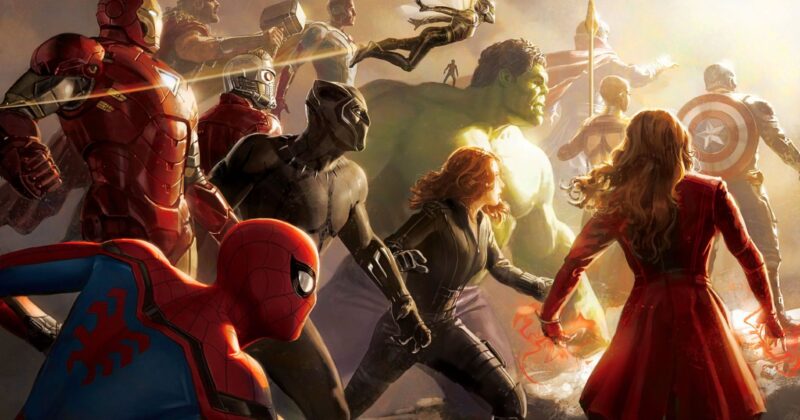
Beyond the initial five films, the Spider-Verse rapidly diverged into new territories. Sony leveraged the character’s popularity to expand the universe with spin-offs like Venom, experimenting with antihero narratives and even darker tonal shifts. The success of these movies demonstrates just how shrewd Sony’s long-term investment in Spider-Man’s rights turned out to be. In addition, crossovers and creative partnerships enabled Spider-Man to bridge worlds, as seen in Tom Holland’s appearances alongside the Avengers—despite the complex ownership dynamics behind the scenes.
Another often overlooked aspect is how this split shaped the landscape for superhero licensing itself. The Spider-Man case became a textbook example for studios on the value—and risks—of film rights, prompting Marvel Studios to aggressively retain and reacquire characters whenever possible. This recalibrated approach laid the foundation for the interconnected Marvel Cinematic Universe we know today, making the Spider-Man saga a pivotal learning moment in Hollywood’s handling of intellectual property.
Spider-Man’s Modern Identity and Cultural Resonance
Sony’s portrayal of Spider-Man didn’t just boost profits; it helped to continually redefine who Peter Parker—and his alternate variants—could be. New generations discovered the character through these films, not as a relic of old comics, but as a living hero who grew and adapted with them. The creative risk-taking is exemplified by bold entries like the animated Spider-Man: Into the Spider-Verse, which introduced Miles Morales to mainstream audiences and underscored the multiversal potential of the franchise.
Today, Spider-Man stands as more than a comic book icon—he’s a cinematic and cultural phenomenon. His journey from Marvel’s boardroom to Sony’s studios, and back to an on-screen partnership with Marvel Studios, charts the evolution not just of a character, but of the entire superhero industry. With rumors swirling about even more daring directions for the web-slinger—including potential R-rated chapters—the Spider-Man story remains at the forefront of both nostalgia and innovation, continuing to capture imaginations across screens and generations.