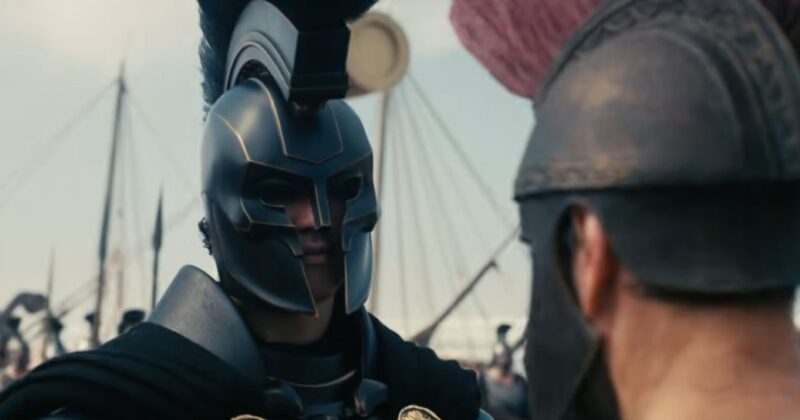
Why Christopher Nolan’s The Odyssey Must Get the Scylla & Charybdis Monster Sequence Absolutely Right

Christopher Nolan’s Epic Vision: The Challenge of Adapting The Odyssey
Few directors are as synonymous with ambitious cinema as Christopher Nolan, and his latest project takes on perhaps the most legendary heroic journey of all time: Homer’s The Odyssey. The original Greek epic is not only a massive tale, clocking in at nearly 600 pages in modern editions, but also jam-packed with adventures, monsters, vengeful gods, and deeply human dilemmas. Translating this sprawling narrative to a single, even lengthy, film requires ruthless selection: some events will inevitably be left out. But there is one criminally underrated monster moment that Nolan simply cannot ignore if he aims to do justice to this mythic odyssey.
The Essential Monsters: Why Scylla & Charybdis Matter More Than You Think
Every adaptation of The Odyssey faces tough choices about what to include. The iconic Polyphemus and the Sirens are almost guaranteed to make the cut, both for their immediate cinematic appeal and their recognizability. Trailers have teased scenes like the Trojan Horse and the aftermath of Helios’s cattle. But not every peril Odysseus faces commands equal cultural attention.
Enter Scylla and Charybdis: two monstrous forces embodying an inescapable ancient dilemma. On one side, Scylla — a nightmarish creature perched atop a jagged rock, boasting twelve legs and six ravenous heads, each lined with triple rows of teeth. On the other, Charybdis — the sentient, ever-starving whirlpool capable of swallowing entire ships and unleashing the roaring sea. Their territory forms a narrow passage where both choices mean inevitable destruction. Scylla is usually the memorable one, but Charybdis, whose whirlpool nearly takes Odysseus’s life, is just as integral to the intensity and moral complexity of this episode.
How These Monsters Test Odysseus — And Nolan’s Storytelling
Narratively, this duel of threats is more than spectacle. The encounter with Scylla and Charybdis is the ultimate test: Odysseus has advanced warning from Circe that he must choose between the two. Risk Charybdis, and the whole crew could vanish in the vortex. Brave Scylla, and he’ll lose six strong men — an unwinnable choice. The emotional punch lands not just in the monstrous visuals, but in Odysseus’s agonizing leadership decision. He chooses Scylla, withholds the details from his men for fear of panic, and must watch as they are savaged one by one. His own words: ‘the most heartrending sight I saw in all the time I suffered on the sea’ — are a reminder of the epic’s psychological stakes.
The Technical Opportunity: Legendary Monsters as Cinematic Icons
Nolan’s commitment to practical effects and immersive world-building sets audience expectations sky-high. Early reporting suggests that a full-size animatronic Polyphemus has already been built. To stay true to this high standard, Scylla and Charybdis deserve visual treatment that is both terrifying and true to Homer. Depicting Scylla as merely a hydra, or reducing Charybdis to a generic CGI whirlpool, would squander the source material’s uncanny surrealism.
Homer, especially in Emily Wilson’s acclaimed translation, describes Charybdis as an elemental force — a ‘dreadful gurgling’ that churns the sea ‘like a boiling cauldron’, with foam erupting to the rocks and the roar echoing to the ocean’s depths. The text is crying out for a film moment as memorable as any blockbuster kaiju, blending physical effects and cutting-edge VFX for a sequence that could rival Nolan’s best set pieces in tension and spectacle.
The Mythic Stakes: Beyond Monster Battles
What sets The Odyssey apart from typical adventure stories is the interplay between the fantastical and the deeply personal. Odysseus’s choice is never just about survival. It’s psychological, deeply flawed, and painfully human. He cannot fight Scylla; he must sacrifice some for the hope of saving others. In asking the audience to witness this, Nolan has the opportunity to bring a fresh perspective on ancient dilemmas — a moment that resonates with modern viewers as much as fans of mythology or literary adaptations.
Cutting or underplaying this sequence would not only disappoint purists; it would dilute the heart of The Odyssey. This story has always been about the price of leadership, the consequences of difficult choices, and the monsters — literal and metaphorical — that shape us along the way.