How ‘Masters of the Air’ Completes a Hidden Trilogy in Modern War TV

A Trilogy Hidden in Plain Sight: ‘Masters of the Air’ and Its Cinematic Legacy
What many viewers may not realize is that ‘Masters of the Air’, a recent nine-part miniseries available on Apple TV, serves as the third chapter in a quietly constructed war trilogy. This saga began with the highly acclaimed ‘Band of Brothers’, a miniseries frequently credited with propelling television into a new era of prestige drama. Its DNA is unmistakable in the bold technical ambition and intricate character work that have become hallmarks of modern epic storytelling.
‘Band of Brothers’: The Gold Standard
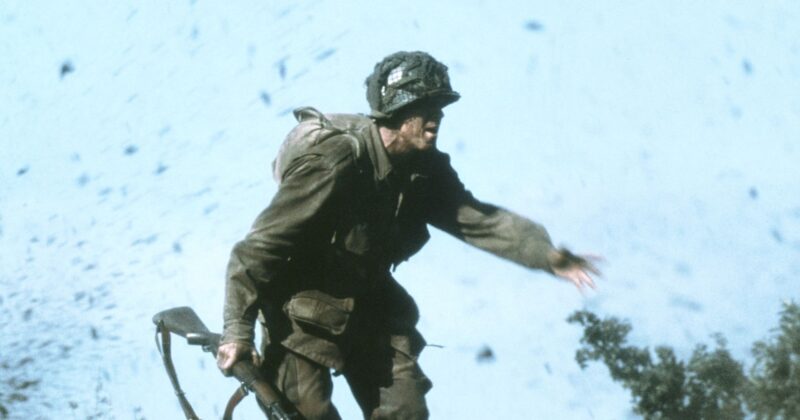
Based on Stephen E. Ambrose’s account of Easy Company from the 506th Infantry Regiment, ‘Band of Brothers’ redefined war stories for the screen. With meticulous production values, a cast that would go on to become a who’s who of Hollywood, and direction overseen by Tom Hanks and Steven Spielberg, the miniseries landed as a cultural event, comparable to the likes of ‘The Sopranos’ and ‘The Wire’. This wasn’t just a war show; it was a sweeping meditation on camaraderie and sacrifice, inspiring countless creators and spawning a wave of historical dramas that sought to capture its gravitas.
The Pacific: A Shift in Tone and Perspective
While ‘Band of Brothers’ cultivated a reputation for authenticity and emotional resonance, its follow-up, ‘The Pacific’, offered an even starker look at the costs of war. Drawing from the memoirs of Eugene Sledge and Robert Leckie, the 10-episode HBO run veered toward psychological complexity and moral ambiguity—a tone that echoed the evolution of television narratives of the era, which increasingly favored nuance and darkness. Performances from the likes of Jon Bernthal and Rami Malek stood out for their depth and vulnerability, signaling a further shift from traditional, straightforward heroics to layered personal stories.
‘Masters of the Air’: A New Lens, a New Home
Enter ‘Masters of the Air’, shifting the lens to the 100th Bomb Group of the Eighth Air Force during the Second World War. Unlike its predecessors, this series was not broadcast on HBO but became an Apple TV exclusive. Its development history is almost as dramatic as the narrative it presents—production began years before release, and its eventual move to Apple TV marked a significant break from tradition. The show’s cast is an impressive roll call, with Austin Butler, Callum Turner, Barry Keoghan, and supporting turns from Bel Powley, Ncuti Gatwa, and Isabel May, each bringing a fresh emotional charge to the storied legacy.
‘Masters of the Air’ was a substantial gamble for any platform, with a staggering $250 million budget—outstripping ‘Band of Brothers’ and even the ambitious ‘The Pacific.’ Its cinematic scale is apparent in every meticulously choreographed air battle and set piece. Nevertheless, despite a strong 85% Rotten Tomatoes score, the series faced criticism for historical liberties and a tone some critics found uneven or overtly nostalgic. The streaming landscape in 2026 is less forgiving; what felt revolutionary with ‘Band of Brothers’ now risks being seen as formulaic if not innovatively adapted for a new audience.
Nostalgia vs. Innovation in Streaming War Epics
This return to classic, linear storytelling has proven divisive among critics. Where ‘The Pacific’ embraced the complexity and ambiguity of modern antiheroes, ‘Masters of the Air’ leans into traditional homage and sweeping spectacle. Its approach evokes the era of its predecessors but in a time when audiences increasingly demand subversive, challenging narratives—the very kind popularized by series like ‘Breaking Bad’ and ‘Mad Men.’
While not without its powerful moments or compelling performances, ‘Masters of the Air’ stands as a testament to both the enduring fascination with WWII drama and the evolving expectations for prestige TV. Comparing it to its forerunners is inevitable; some will be drawn to its soaring action and star-driven cast, while others may long for the deeper introspection of earlier entries. Regardless, the completion of this unofficial trilogy marks an important milestone in television’s portrayal of war, heroism, and the ongoing dialogue between cinema and streaming in the modern age.