Star Trek: The Original Series – When Two Iconic Episodes Told the Same Story Twice

Classic Star Trek and the Allure of Historical Episodes
In the landscape of television in the 20th century, science fiction giants like Star Trek: The Original Series found a reliable creative wellspring in the «historical adventure» format. The thrill of the USS Enterprise crew thrust into the tumult of Earth’s iconic periods—often as a result of meddling with the past—became a hallmark of the franchise. One of the most celebrated examples of this trope is ‘The City on the Edge of Forever’, where a 1930s backdrop, ethical dilemmas, and time-travel consequences blended to create an unforgettable episode. Yet, what stands out in the Star Trek canon is how the series occasionally retreaded the same formulaic ground within mere weeks—most memorably with ‘A Piece of the Action’ and ‘Patterns of Force’.
Deja Vu on the Enterprise: Two Episodes, One Blueprint
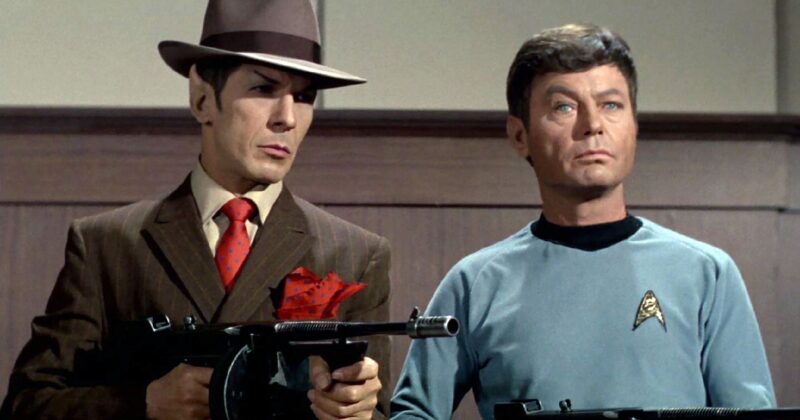
Both ‘A Piece of the Action’ and ‘Patterns of Force’ launched audiences into alien worlds copied from pivotal eras in Earth’s history. The former spins a tale of the Enterprise responding to lost contact on a planet visited decades before. Captain Kirk, Spock, and McCoy descend to the surface—only to find a culture obsessed with 1920s Chicago gangsters, all thanks to anthropology-gone-wrong by past Federation visitors. Quickly, the landing party is embroiled in a turf war, complete with tommy guns, pinstripe suits, and Kirk awkwardly explaining the non-existent card game Fizzbin to outwit the locals. The Prime Directive—not interfering—looms over every comedic maneuver as they try to save a civilization from mobster mayhem.
Not long after, fans were treated to ‘Patterns of Force’, where the narrative thread feels strikingly familiar. Here, the Federation has again lost contact with a historian dispatched to a budding planet. When Kirk and Spock investigate, they blend into a society meticulously modeled on 1940s Germany—a recreation enabled by Starfleet’s own historian sharing Earth’s most infamous chapter. Nazi iconography, authoritarian rule, and a desperate underground resistance collide as the crew races to rectify the haunting errors of historical transplantation, all while wearing period disguises to evade capture and topple a dangerously effective regime.
Comparing ‘A Piece of the Action’ and ‘Patterns of Force’
The line between homage and repetition becomes thin when examining these two episodes side by side. Both explore the dire results of the Federation’s interference—be it inadvertent cultural contamination or outright historical recreation. Disguises are donned, pithy dialogue exchanged, and the Prime Directive tested as Kirk and company struggle to set things right without further disruption. Underlying both is a potent warning: history’s darkest moments are not to be imitated, and leadership should serve the will of the people—not the echoes of Earth’s worst mistakes.
‘A Piece of the Action’ leans into farce, with Kirk’s charismatic antics and the running gag of ill-fitting gangster lingo. Its tone invites audiences to relax—even as the plot pokes fun at the sheer absurdity of interstellar mob rule. Spock, dubbed ‘Spocko’, and the infamous rules of Fizzbin, ensure the laughs keep coming, even as the social critique hums underneath.
Conversely, ‘Patterns of Force’ is anything but lighthearted. The episode demands viewers grapple with the terrifying consequences of unchecked authoritarianism and the seductive nature of organized, militaristic power. The inclusion of a well-organized resistance—paired with the revelations surrounding the planet’s ruler—brings sharp narrative tension, even as some plausibility is stretched.
The Legacy of Star Trek’s Historical Episodes
While neither episode eclipses the poetic gravitas of ‘The City on the Edge of Forever’, they both remain pivotal for showcasing how Star Trek used speculative fiction to probe humanity’s past, ethics, and recurring flaws. The juxtaposition of comedy and drama, slapstick and stark cautionary tale, would remain a template for sci-fi storytelling long after, influencing later series from Doctor Who to modern genre TV tapping into the allure of time-travel and alternate realities.
For fans, these episodes highlight the creative risks and rewards of genre television—how a well-worn formula can still surprise or provoke debate when layered with sharp characterization and relevant social context. Whether watching Kirk and Spock improvise their way through gangster rivalries or battle a dystopian echo of fascist Earth, it’s a fascinating lens on the franchise’s boldest experiments—and its occasional narrative déjà vu.