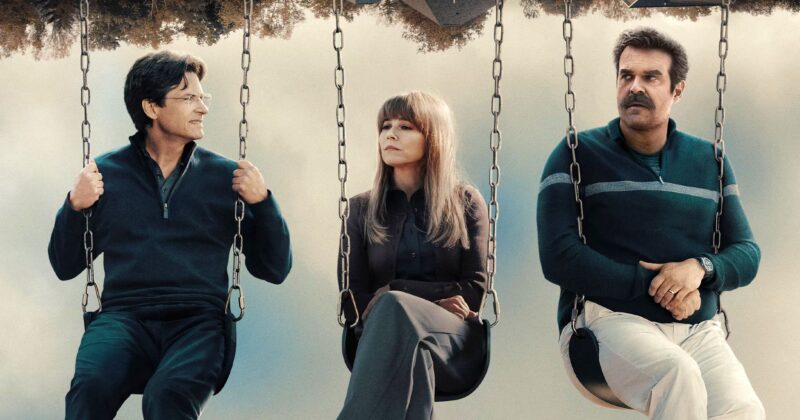
DTF St. Louis: The Twisted Reality Behind HBO’s Unconventional Love Triangle

Unmasking the Layers of DTF St. Louis: Beyond the Title
DTF St. Louis, HBO’s latest limited series, was always destined to turn heads. Not just for its suggestive title, but for the tangled, darkly comic, and surprisingly intimate story at its core. With Jason Bateman, Linda Cardellini, and David Harbour leading the cast, this show is a candid detonation of the midlife crisis cliches TV has been dining out on for decades. But in true HBO fashion, what seems brash or overt at first glance is merely the entry point into something much more layered, vulnerable, and, at times, unsettling.
The Premise: More Than Just Infidelity
Bateman, Harbour, and Cardellini play three old friends whose lives have fallen into comfortable but unsatisfying routines. When boredom finally tips into restlessness, they make a perilous leap: they join an app crafted specifically for married people searching for extramarital excitement. What begins as a secretive adventure rapidly turns into a kaleidoscope of emotion, with shifting dynamics and unresolved baggage surfacing as the trio tests both the limits of their relationships and of themselves.
Dissecting the Characters: Portraits of Modern Disconnection
David Harbour embodies Floyd, a man questioning whether love alone is enough after nearly a decade of marriage to Carol, played by Cardellini. The minutiae of marriage—like Carol’s persistent gardening attire, described as ‘umpire gear’—become triggers for unresolved dissatisfaction. But Harbour’s take on Floyd is anything but one-note. Underneath the awkward laughter is a man yearning for affirmation and belonging, even if it means venturing down emotionally treacherous paths.
The series cleverly pivots around moments like Floyd’s reluctance to leave the app, not out of lust, but for fear of disappointing his friend Clark (Bateman). Unexpectedly, Floyd feels a loyalty to the other man in his wife’s life—a detail that reframes the series’ love triangle as something far richer than melodramatic betrayal. Harbour himself points to how DTF St. Louis subverts expectations: what starts as sexual exploration soon reveals deeper desires for connection and self-potency that aren’t always about intimacy in the physical sense.
Clark and Carol: The Complications of Wanting More
Jason Bateman’s Clark unravels as a man desperate for meaningful connection, having lost the spark with his own wife. His search for significance outside his marriage is riddled with self-sabotage, and as the series unfolds episode by episode, viewers watch the consequences of his emotional mismanagement play out in real (and sometimes absurd) terms. There’s a recurring motif of missed goals: growth that never materializes because the core questions—about what really makes us happy—remain unspoken or misunderstood.
Linda Cardellini brings Carol’s internal conflict to the foreground. She’s the pivot point, coping with her shifting feelings as the affair morphs into something altogether different, before ultimately dissipating. Cardellini’s approach is grounded, addressing the realistic aftermath and ambiguity that follows rupture in a marriage—not every story concludes with clean emotional resolutions.
Jodie’s World: Joy Sunday’s Standout Perspective
Amidst the main trio, Joy Sunday’s Jodie injects a sharp blend of dry humor and raw perspective. Inspired by the off-kilter humanity seen in shows like King of the Hill—albeit with a much darker edge—her performance celebrates the weirdness of ordinary life and the complex motivations that drive each character. Sunday’s portrayal was so compelling, it reportedly led the showrunner to reconceptualize the character for a younger, fresher dynamism.
A Genre-Bending Ride Through Adult Chaos
DTF St. Louis refuses to remain boxed in by traditional love triangle tropes. Instead, it’s an exploration of adult restlessness, fractured friendships, and the strange ways our search for meaning can spiral into unexpected territory. The show crafts a modern parable on how technology and apps—originally created to facilitate discreet liaisons—wind up exposing vulnerabilities much deeper than planned.
Rather than focusing on cheap scandal, DTF St. Louis serves up nuanced performances, smart writing, and a clear-eyed dissection of contemporary relationships. It’s a timely reminder that, in an era saturated with hookup apps and digital anonymity, the messiest stories are often the most human.