The Far Side: 10 Wordless Comics That Prove Visual Humor Is Timeless

The Unmatched Art of Wordless The Far Side Comics
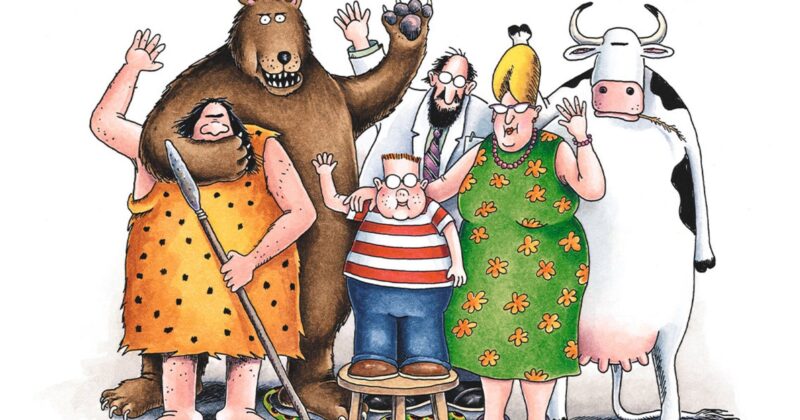
For decades, Gary Larson‘s The Far Side has captivated readers, not just by clever writing, but by images that effortlessly speak volumes. While many comic strips rely on punchlines buried in captions, Larson often lets his art alone create a universe of wit, satire, and absurdity. Wordless panels, in particular, showcase his uncanny ability to explore social norms, nature, and the quirks of humanity — all without a single line of text.
Role Reversal That Challenges the Ordinary
One of the most iconic examples flips a familiar scenario on its head: a dog gleefully driving a car, while a human leans out the window, tongue flapping in the breeze. It’s Larson at his most subversive. This comic embodies how The Far Side could summarize entire philosophies of life with just a single, surreal twist. No words, no explanation — just a pointed reminder that sometimes, seeing everyday life from the opposite perspective is both hilarious and profound.
The Playful Power of Visual Gags
Wordless strips like the notorious cow playing ‘ding-dong ditch’ are a testament to Larson’s playful approach. Using multiple panels to tell a story, he blurs the line between animal and human behavior, infusing everyday pranks with barnyard absurdity. He doesn’t just anthropomorphize; he questions the boundaries of instinct and culture while making us laugh at the pure audacity of a cow’s mischief.
Moments That Defy Explanation
Some The Far Side cartoons don’t try to deliver a punchline. Instead, they capture a snapshot that leaves readers in a state of bemused confusion. A lone man on a mower, wildly charging at a single flower, is ambiguous to the core. Is it a metaphor for obsession, an ode to chaotic energy, or just goofy chaos? Larson delights in the open-endedness, inviting readers to fill in the gaps.
Animals Outsmarting the System
Efficiency and subtext go hand in hand in Larson’s world. One classic triptych shows salmon fighting currents upstream — except for one, trenchcoat-clad rebel that opts for a shortcut on the staircase. It’s a nod to both animal tenacity and the universal desire to hack life’s hardest tasks. The joke lands with perfect subtlety, making the absence of text its own punchline.
Escalating the Eternal Cats vs. Dogs Feud
Not all wordless panels are innocent fun. Some, like the legendary segment where feline mobsters riddle a doghouse with bullets and peel off in their getaway car, push classic tropes to the brink. The familiar pets-turned-gangsters scenario becomes an over-the-top film noir parody in one chilling, hilarious image. Larson’s art is the script, leaving backstory and fallout deliciously up to the reader’s imagination.
When Absurdity Meets Subtle Dark Humor
If frogs had an award category in The Far Side, the famous panel of a frog hitching onto a plane, tongue glued to its belly, would clean up. One glance elicits laughs; a second’s contemplation introduces a tinge of existential doom — will the frog let go before takeoff? Larson’s genius is to sneak depth into the simplest set-ups, offering something to every level of reader.
The References Only Pop Culture Aficionados Catch
Larson’s gags sometimes border on genius-level obscurity. One wordless panel features a grasshopper gazing lovingly at a gramophone, a direct (but caption-free) nod to the 1898 painting ‘His Master’s Voice.’ The reference is so deep that only true pop-culture detectives will catch it on sight, yet the surreal tableau still entertains anyone, regardless of background. It’s visual humor that rewards endless curiosity.
In Every Panel, A Universe of Imagination
The Far Side’s silent comics are reminders that laughter can be universal, transcending language and generations. In the digital era, they continue to thrive as memes and references in the world of tech, media, and pop culture, proving that sometimes the best jokes don’t need any words at all. Larson’s work is not just visually striking; it’s a masterclass in timeless cartoon craft and remains essential reading for every lover of comics, technology, and the art of storytelling itself.