The Saviors: A Satirical Thriller Struggles to Find Its Edge

The Saviors: Ambitious Social Satire with Wobbly Execution
The Saviors arrives with an intriguing premise, blending social satire and thriller elements in an era hungry for sharp political commentary. Directed by Kevin Hamedani and featuring a cast led by Adam Scott and Danielle Deadwyler, the film knits together paranoia, cultural anxieties, and suburban malaise but doesn’t quite thread the needle either for biting satire or high-wire suspense.
A Premise Rooted in Paranoia
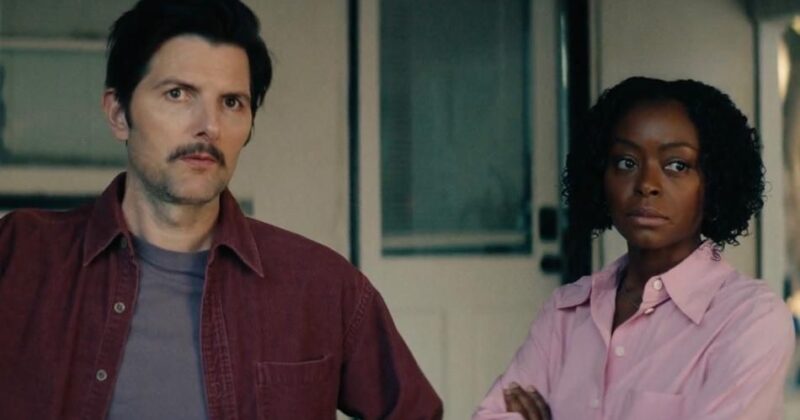
At its core, The Saviors follows Sean and Kim Harrison (Scott and Deadwyler), a couple on the verge of divorce who are forced to share their home, literally and figuratively, with strangers. Financial strains and lingering sparks of tension define their dynamic—one that oscillates between ambivalence and unresolved attraction. Their pragmatic decision to rent out the guest house serves as the catalyst for the film’s plot: enter Amir and Jahan, mysterious siblings with stories that unravel as the Harringtons’ suspicions (and mutual obsessions) grow.
Narrative and Satirical Tensions
The movie sets itself against the backdrop of contemporary American distrust. Hamedani’s storytelling leans into a mood reminiscent of early post-9/11 paranoia, evoking an atmosphere where every outsider is suspect and ordinary life bristles with latent danger. What makes The Saviors unique is its attempt to examine just how quickly even the seemingly ‘open-minded’ can succumb to suspicion and hysteria—but the film’s messaging is intentionally unsettling, sometimes even muddled.
Casting and Performances
Adam Scott, known for his deft mix of comedy and drama, creates a Sean Harrison who is both sympathetic and wildly fallible. Danielle Deadwyler brings nuance and edge, anchoring their slow-burning chemistry. Together, they manifest a believable disintegration—and a darker, co-dependent resurgence fueled by shared paranoia. Theo Rossi and Nazanin Boniadi’s performances as Amir and Jahan oscillate between endearing and cryptic, but the script doesn’t always give them enough meat to push the intrigue further.
The Satire That Couldn’t Cut Deep
There are flashes of clever writing and comic relief, particularly from Kate Berlant and Greg Kinnear, who insert moments of offbeat absurdity into the otherwise brooding environment. Kinnear’s portrayal of an outlandish private investigator, complete with anachronistic aviator glasses and a questionable wig, borrows from Hitchcock and sketch comedy alike. Yet these moments often feel grafted onto the narrative rather than rising organically from it. As the film slips between attempted suspense and attempts at lampooning American attitudes toward immigration and security, its focus blurs. For fans of sharp-witted political thrillers like Get Out or Knives Out, this lack of tonal commitment might frustrate expectations.
A Reflection of Contemporary Apprehension
Despite its flaws, The Saviors manages to reflect a fragmented social landscape where political and cultural divisions run deep. Hamedani taps into the anxiety of the moment—the fear of ‘the other’, rampant misinformation, and the fragility of liberal self-image. News reports in the film echo contemporary headlines about executive orders, protests, and Middle Eastern conflict, making the commentary timely, even as it veers towards the heavy-handed.
Genre-Bending Without Resolution
One of the film’s most significant risks is its attempt at genre-bending: part domestic drama, part social allegory, part slow-burn thriller with comic flourishes. Yet the commitment to any single mode is half-hearted, and the result is a tone that can feel diffuse. The visual nods to Hitchcockian suspense (think Rear Window), mixed with domestic intrigue in the vein of Gone Girl, set up high expectations that the story only partially meets.
Why The Saviors Resonates—Even When It Misses
Though it may not have the razor-sharp edge that it aims for, The Saviors is a fascinating artifact of its time. Its cast gives committed performances that go a long way to keeping the audience engaged, and its attempt to fuse social anxieties with dark humor is compelling, even if inconsistent. For anyone interested in contemporary thrillers and political black comedies, the film is a worthy, if flawed, watch—one that captures the zeitgeist through a fractured lens.