Why Marvel’s Bold New Storytelling Demands More From Fans

Marvel’s Shift: From Episodic Journeys to Epic Sagas
Marvel Comics is undergoing a fascinating metamorphosis in its narrative approach, stirring both excitement and growing pains within the fan community. While the publisher’s bold leap into long-range storytelling reshapes expectations, it also tests the limits of readers used to short-term gratification and fast payoffs. Behind the scenes, creators aren’t just writing six-issue arcs anymore; they’re drafting intricate multi-year sagas where each installment is a deliberate move in a much larger game.
Breaking the Mold: Comic Sagas Over Single-Issue Wins
Much of this evolution can be felt in conversations from creators like Al Ewing and Phillip Kennedy Johnson, who now openly delineate their series into ‘acts,’ reminiscent of film or theater. Ewing’s current journey with Thor and Johnson’s ongoing redefinition of Hulk signal Marvel’s intent to replace the traditional concept of a standalone ‘run’ with the structure of long-form storytelling—delivering interconnected narratives that reward patience and attention to detail.
Jed McKay’s remarkable tenure on Avengers, capped at issue #36, illustrates the modern Marvel blueprint. Instead of a series of loosely connected short arcs, McKay delivers a meticulously layered, three-year epic—a rarity in the fast-paced world of mainstream comics. Elsewhere, the reimagined Ultimate Universe has redefined continuity with equally ambitious narrative arcs, eliciting both fierce loyalty and skepticism from different corners of the fandom.
The Challenge: Can Fans Embrace the Long Game?
Comic books remain, fundamentally, a monthly medium. Each issue teases out 20–30 pages at a time, so the demands of serialized storytelling sit awkwardly against a culture primed for immediate payoffs. The tension is tangible: not every reader wants to wait months, or even years, for their narrative rewards. Deniz Camp’s The Ultimates managed to hit a sweet spot, balancing satisfying single-issue beats with slow-burn, overarching narrative twists. Other titles, like Ultimate Spider-Man and Ultimate Wolverine, have sparked debate among lifelong readers, suggesting that Marvel’s experiment in patience is still a work in progress.
Case Studies: Thor, Hulk, and the Anatomy of a Saga
This evolution is especially prominent with flagship characters. Al Ewing’s Immortal Thor stood out as a model of how each issue could feel rewarding on its own, all while quietly laying the foundation for even bigger transitions. Its follow-up, Mortal Thor, intentionally shifts gears, unfolding slowly to reset the stage for what’s next. Readers who thrived on the pace of Immortal Thor now find themselves challenged by a more methodical style—a real test of patience and faith in the creative process.
Phillip Kennedy Johnson’s Hulk run, alongside Ewing’s Thor and McKay’s Avengers, sets the tone for how Marvel’s multi-year vision plays out, forcing fans and creators alike to negotiate between immediate satisfaction and the eventual payout of narrative investment. Even X-Men and Iron Man are investing in this ambitious approach, teasing storylines destined to explode in future phases.
The Cinematic Parallel: Avengers Gears Up for Its Most Ambitious Chapter
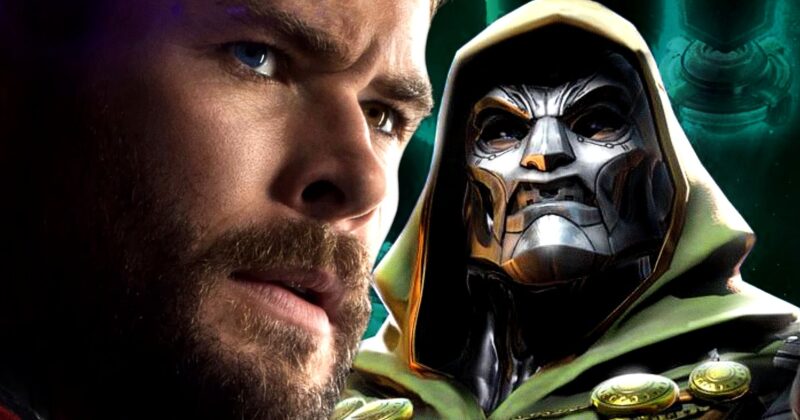
On the cinematic front, Marvel Studios mirrors this storytelling shift. The highly anticipated Avengers: Doomsday will unite icons like Chris Hemsworth’s Thor and Vanessa Kirby’s Sue Storm against the formidable Victor von Doom—portrayed by fan-favorite Robert Downey Jr. This film is not just another action romp; it marks the dawn of a new era for the Marvel Cinematic Universe, heavily influenced by the serial, layered plotting prevalent in the comics.
With directors Anthony and Joe Russo at the helm and a script crafted by Marvel veterans and comic legends, this chapter stands as testament to Marvel’s confidence in its creative vision. The expectation: audiences will follow every breadcrumb, every shift in character dynamics, and every world-changing twist across multiple entries—both on the page and on screen.
A New Pact Between Marvel and Its Audience
Marvel is clearly letting its creators take risks that would have felt impossible a decade ago. Fans are now a vital part of that equation, engaged not just in the moment-to-moment but in the grand symmetry that only reveals itself after years of loyalty. As the comics and cinematic universes prepare for unprecedented crossovers and seismic resets, readers and viewers alike are being asked to embrace a bolder, more ambitious form of storytelling—one that rewards those willing to trust the journey as much as the destination.