How Deep Space Nine Redefined Captain Kirk’s Infamous Legacy in Star Trek Canon

DS9’s Subtle Kirk Revelation That Shook Star Trek Lore
Within the vast expanse of the Star Trek universe, few figures are as polarizing or as legendary as Captain James T. Kirk. While fans adore his rule-breaking panache and signature bravado, Starfleet’s bureaucratic arms—like the notorious Department of Temporal Investigations—see only chaos trailing in his wake. This delicate balance of admiration and consternation found a new dimension in Star Trek: Deep Space Nine, when a clever narrative maneuver quietly reshaped over three decades of established Star Trek continuity.
The Day DS9 Collided with Kirk’s Timeline
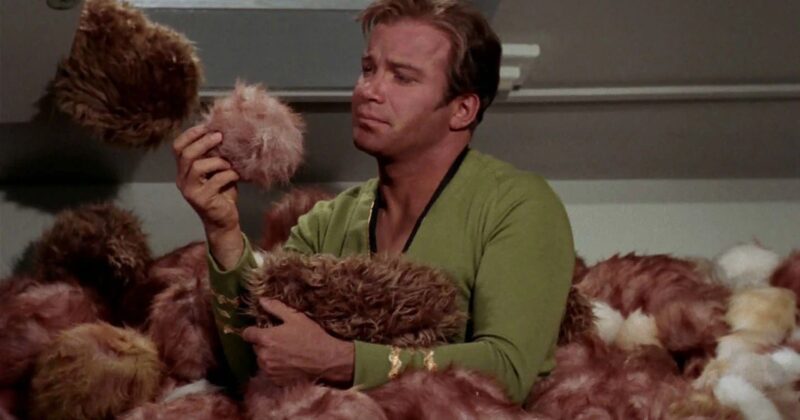
«Trials and Tribble-ations,» an ambitious DS9 episode, is more than just an affectionate nod to classic Trek. As Sisko and his crew accidentally journey back in time, boarding Kirk’s Enterprise during the events of ‘The Trouble with Tribbles,’ the lines between past and present blur. The DS9 team’s seamless interaction within iconic TOS footage enriched canonical lore, revealing unseen comedic details like Sisko and Dax covertly tossing tribbles onto Kirk, explaining the infamous fur-ball avalanche. The episode reverently blended nostalgia with new meta-context, yet it subtly upended the Trekkie record books with a revelation that left bureaucracy-loving characters—and fans—buzzing.
Kirk: Starfleet’s Worst Temporal Offender
The narrative centerpiece comes when agents from the Department of Temporal Investigations grill Sisko about his involvement with Kirk. Their audible annoyance is rooted in a shocking fact: Captain Kirk is responsible for 17 temporal violations, more than anyone else in Starfleet history. This throwaway line retroactively reframes decades of Star Trek, confirming that Kirk’s habit of time meddling isn’t a mere dramatic device—it’s a legendary headache for Federation protocol.
How Kirk Broke Time, Again and Again
These violations aren’t just theoretical. Trek history features a roll-call of Kirk’s timeline-altering adventures:
- «The Naked Time»: Kirk inadvertently invents time travel, flinging the Enterprise 71 hours into the past with an antimatter warp drive maneuver that was supposed to be impossible.
- «Tomorrow Is Yesterday»: After an encounter with a strange black star, the Enterprise materializes in the 20th century, leading Kirk and crew into misadventures with the U.S. Air Force—and a lesson in causal paradoxes.
- «City on the Edge of Forever»: An iconic dose of philosophical science fiction, where Kirk, Spock, and McCoy land in the 1930s and almost let history pivot toward a Nazi victory, saved only by a devastating moral choice.
- «Assignment: Earth»: In what feels like a proto-Trek spin-off, the crew’s legitimate time travel research crosses paths with the enigmatic Gary 7—a character that feels plucked from a parallel British sci-fi universe.
- «Yesteryear» (Animated Series): A matter of life and death for young Spock unfolds through more Guardian of Forever intervention, with Kirk embroiled in another quietly catastrophic timeline shift.
- Star Trek IV: The Voyage Home: The notorious ‘whale probe’ mission sees Kirk and crew execute yet another slingshot-inspired sun maneuver, warping back to the ‘80s and causing delightful cultural mayhem.
Temporal infractions aren’t limited to visual media; Trek novels like ‘Elusive Salvation’ and ‘From History’s Shadow’ further embroider Kirk’s timeline-meddling resume. Yet, even among the Federation’s own internal departments, a mystery lingers: are all these escapades really violations—or are some officially sanctioned, quietly swept under the rug for the greater good?
The Fandom Impact: Lore, Debates, and Meta Commentary
This DS9 episode didn’t just poke fun at time travel’s butterfly effects—it sparked widespread fandom debate about the canonicity and consequences of Kirk’s every blunder through spacetime. It also cleverly lampooned the bureaucracy endemic to Trek’s universe, characterized by the grumpy, pencil-pushing agents who keep historical tabs on the likes of Kirk. Characters like Beckett Mariner in modern Trek continue the tradition, referencing Kirk’s legacy with an irreverence that echoes real-world fan conversations.
Klingons, Tribbles, and Canonical Winks
While ‘Trials and Tribble-ations’ is a feast of visual Easter eggs and lore callouts—from Dax fangirling over the Kirk-and-Gorn fight, to Worf cryptically dodging questions about Klingon appearance changes—the true prize is how the show threads nostalgia and self-awareness. Even background jokes, like the ongoing tribble catastrophe, lend humanity and humor to Star Trek mythology, helping new generations appreciate the franchise’s layered storytelling.
For players, creators, and fans of sci-fi—whether you’ve studied the Starfleet Technical Manual or just admired the Enterprise’s sleek design on screen—DS9’s retcon is a reminder: in the world of Star Trek, every captain leaves a mark, but none has distorted spacetime, challenged temporal authorities, or inspired so much enduring debate quite like Captain James T. Kirk.