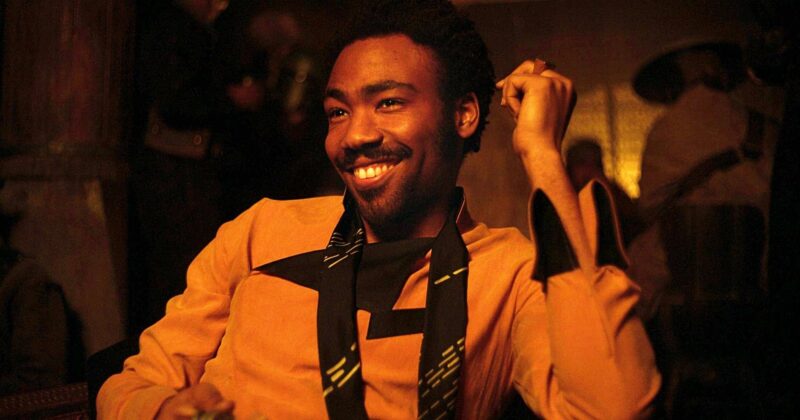
Why Lord & Miller’s Unseen Star Wars Take Is More Intriguing Than Ever After Project Hail Mary

The Genius of Phil Lord and Christopher Miller in Sci-Fi Cinema
Phil Lord and Christopher Miller have carved out a niche as directors capable of infusing enormous heart and inventive humor into blockbuster films. Their recent triumph with Project Hail Mary—a visually dazzling and emotionally rich sci-fi epic—has reignited interest in their unreleased vision for Solo: A Star Wars Story, a project that remains one of the great «what ifs» of modern pop culture.
Project Hail Mary: A Masterclass in Science Fiction Filmmaking
Watching Project Hail Mary is a reminder of what happens when a sci-fi film nails both its spectacle and character work. Lord and Miller’s commitment to visual storytelling is evident in every meticulously crafted scene. The film takes full advantage of its genre, layering thousands of VFX shots with practical effects. Their decision to build Grace’s spaceship almost entirely with practical sets and to bring the character of Rocky to life through intricate puppetry rather than exclusively CGI or motion capture, lends the film a tactile, immersive feel reminiscent of what made 80s and 90s science fiction so memorable.
The technical aptitude on display is matched by a striking use of color and lighting, especially in the later acts where hues of red, green, and purple saturate the screen. This vibrant approach stands in stark contrast to Solo’s more subdued visual palette—a film often described as atmospheric but rarely commanding the same immediate attention as Project Hail Mary’s cosmic canvas.
Yet beyond the visuals, it’s the unexpected chemistry between the film’s protagonist Grace, played by Ryan Gosling, and Rocky, a character realized by an ensemble of puppeteers, that provides the heart of the narrative. Their relationship, at turns hilarious and deeply moving, is testament to Lord and Miller’s instinctive command of both drama and comedy. The film never loses sight of the stakes, deftly balancing tension and levity much like the duo did with their acclaimed work in the Spider-Verse films.
Unpacking the Lord & Miller Approach to Star Wars
Before working on Project Hail Mary, Lord and Miller were attached to direct Solo: A Star Wars Story. Though they reportedly finished about 80% of principal photography, creative disagreements over tone and direction led to their departure, with Ron Howard stepping in to complete the released version. What’s become clear through industry insights is that Lord and Miller’s approach was drastically different, leaning deeply into improvisational humor and a more unpredictable, comedic tone.
The released cut of Solo is a polished, safe adventure that fits comfortably within Star Wars tradition, yet it occasionally hints at a wilder, more experimental film lurking beneath its surface. Insiders suggest that Lord and Miller championed actor improvisation and sought to minimize heavy-handed fan service—ambitions that, had they come to fruition, might have set Solo apart from every other entry in the saga. Their sensibility as seen in Project Hail Mary suggests a Star Wars spinoff that would have balanced rich characterization with laughter, all without sacrificing the gravity that defines science fiction’s best stories.
The Curious Fate of the «Lord & Miller Cut»
Speculation around a possible release of the original Lord and Miller cut of Solo has fizzled with time, as new waves in the Star Wars franchise have captured public attention. Still, there remains enough footage, reportedly, to piece together a substantially different version of the film—one that would likely redefine how directors could play with tone within the Star Wars universe.
The reality, however, is that interest from the powers behind Star Wars seems minimal. Lucasfilm has shown little desire to revisit Solo in any meaningful way, let alone revive an alternate cut constructed from a creative vision they abandoned. Nevertheless, as the appetite for unique, director-driven Star Wars stories grows—with fans and filmmakers alike championing bolder, idiosyncratic takes—it’s difficult not to wonder what the pairing of Lord and Miller’s comedic, character-first sensibility with the galaxy far, far away might have delivered.
Project Hail Mary has only elevated that curiosity, showcasing precisely why audiences and industry insiders continue to hope for a future in which unexpected creative risks are as valued as reverence for a beloved franchise’s legacy.