Daredevil: Born Again Voltea las Reglas del MCU con su Enlace a Thunderbolts

A New Paradigm for MCU Storytelling: Daredevil: Born Again’s Disruptive Connections
The Marvel Cinematic Universe has long thrived on its intricate web of interlocking narratives, where pivotal events reverberate across movies and series—HYDRA’s emergence impacting the Avengers, the fallout of Infinity War shaping the multiversal landscape, and crossovers that always delivered both spectacle and connective tissue. However, Daredevil: Born Again has boldly upended that tradition, setting a new precedent for how stories within the MCU might interact moving forward.
The Arrival of Mr. Charles and the Unexpected Link to Thunderbolts
One of the most intriguing elements introduced in season 2 is the character Mr. Charles, played by Matthew Lillard. Entering the room as a mysterious operator, Mr. Charles tackles the threat of state oversight on behalf of Wilson Fisk in a scene that pulses with tension. With a single phone call, he shifts political allegiances, making the Attorney General suddenly pledge allegiance to Fisk. But the true shock comes when the Attorney General references taking orders from ‘Miss de Fontaine’—none other than Valentina Allegra de Fontaine, last seen orchestrating the Thunderbolts and branding them as the new Avengers.
This is far from a superficial Easter egg. Instead, it sets up a concealed alliance between Fisk and a character deeply embedded in the power structures of the MCU. It isn’t the explosive crossover many anticipated, but it drops a tantalizing hint: the undercurrents of MCU politics and crime organizations are merging in new, unpredictable ways.
Thunderbolts, The Void, and What Wasn’t Said
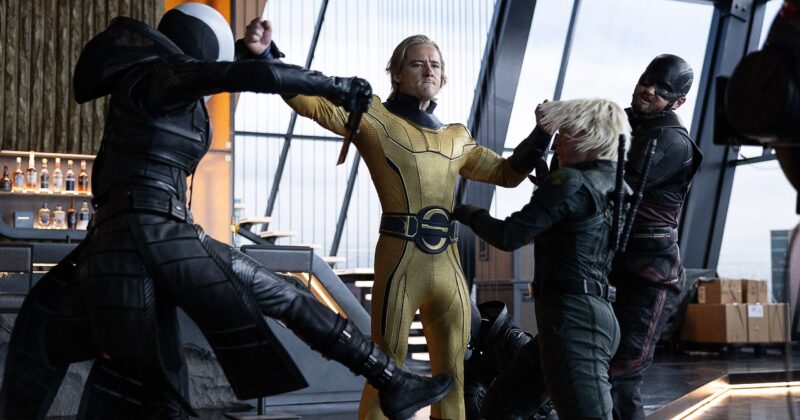
After the finale of Thunderbolts left New York shrouded in the sinister Void—weaponizing the city’s deepest traumas—most viewers reasonably expected Daredevil’s story to grapple with the aftermath in visceral detail. Yet, the latest season only offers a fleeting reference to the Thunderbolts via Miss de Fontaine, with no mention of the Void’s psychological scars or the collective memory of that event.
This absence of overt connectivity breaks what had become almost a narrative law within the MCU: major plot ramifications, especially those as city-altering as the Void, get referenced and revisited in subsequent tales. The decision to sidestep this not only shocks long-time fans but signals that new creative freedoms may be at play, allowing shows to carve distinct narrative identities without being shackled to constant callbacks.
Jessica Jones: Casual Name-Drop, Major Implications
Sparking another debate is how Jessica Jones is introduced. Rather than being cryptically teased or given a grand reveal, her involvement is alluded to in passing—Karen simply mentions that ‘Jess’ can secure the shipping manifest for the Northern Star. Within the MCU, cameos and returns usually come with dramatic buildups and orchestrated reveals; this matter-of-fact nod subverts that ritual. For those tracking the original Defenders, such casual acknowledgment feels less like fan service and more like a deliberate normalization of characters from Marvel’s more street-level canon.
An Unpredictable Path Forward
All these choices—eschewing direct fallout from Thunderbolts, low-key reintroducing major characters, and prioritizing grounded mafia intrigue—reflect a franchise more willing than ever to surprise, unsettle, and perhaps even confound long-held expectations. The crosscurrents between Wilson Fisk, Mr. Charles, and Valentina Allegra de Fontaine are sure to have deep consequences for the MCU’s shadowy power infrastructure, hinting at future confrontations where classic heroes and antiheroes may not be confined to old patterns or predictable alliances.