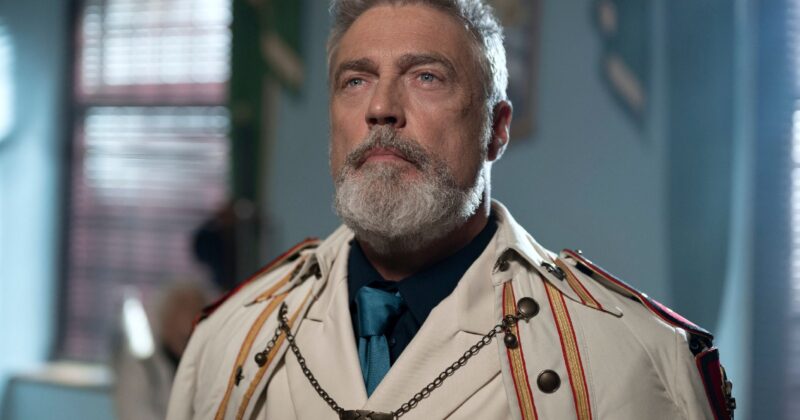
The Complex Role of Garp in Netflix’s One Piece
The arrival of One Piece on Netflix has shaken up expectations, with live-action adaptations often walking a fine line between bold reinvention and respect for the source material. One of the most fascinating pivots made so far lies in the portrayal of Vice Admiral Garp, brought to life by Vincent Regan. Rather than simply serving as a background figure, Garp is positioned at the fulcrum of justice, personal loyalty, and the messy consequences of power—beginning right from the first season and evolving in meaningful ways in season 2.
Garp’s Impact in Season 2: More Than a Lawman
While the manga and anime typically reserve much of Garp’s history for later arcs, Netflix’s adaptation chooses to synthesize and foreshadow, threading his presence through both the present era and pivotal flashbacks. In the main timeline, Garp sharpens the edge for the threats ahead—most notably by directing Captain Smoker and Tashigi to uncover the truth behind the formidable Baroque Works organization. This move instantly elevates the stakes, signalling to fans that the world of One Piece will only grow darker and more layered from here.
The Flashback That Changed Everything
Season 2 delivers a flashpoint moment between Garp and Gol D. Roger on the day of the Pirate King’s execution. Their mutual respect, built on years of fierce rivalry, is crystallized when Roger entrusts Garp with his newborn son. This is no ordinary request—it’s a fiercely personal act that sets into motion the imminent arrival of Portgas D. Ace in the next season. Notably, the casting of Xolo Maridueña has already electrified fans, promising a fresh yet faithful interpretation of this crucial character.
The exchange between Roger and Garp is especially loaded: Roger, resigned to his fate, asks his old adversary to protect his son, believing Garp’s integrity will ensure the child is not condemned for his parentage. But the gut-punch is unmistakable for fans: despite his best intentions, Garp will ultimately witness Ace facing the very fate Roger tried to forestall. When Roger says, ‘True, but I trust you won’t do the same to my son,’ the irony could not be sharper—history repeats, choices are tested, and legacies turn bitter.
Duty vs. Compassion: The Moral Knife-Twist
Garp’s arc is defined by the agony of choice. As Ace matures, he forges his own path instead of hiding from his lineage. He doesn’t just become a pirate; he rises to power with the Whitebeard Pirates, cementing his own legend. Garp defends his promise to Roger up to a point—giving Ace the space to grow outside the government’s reach—but when Ace is eventually captured, Garp’s devotion to principle outweighs personal love.
This tension is amplified by the philosophical bedrock of One Piece: freedom of choice and the price of justice. Garp believes unequivocally that a person must answer for their own actions, regardless of blood ties. He refuses to exploit his authority to shield either Ace or his own grandson, Luffy, from consequences they actively pursue. It’s a harsh worldview, one that leaves countless fans divided about whether Garp is upholding true justice or failing the people he cares about most.
What This Means for Netflix’s One Piece Universe
Netflix’s version isn’t afraid to foreshadow tragedy or court complexity ahead of time. The series doesn’t simply adapt the epic; it contextualizes it for new audiences hungry for layered motivations and difficult choices. Garp’s recurring presence threads together the generational weight carried by heroes and villains alike. His interactions, especially with Roger and Ace, ask viewers to reconsider the cost of loyalty in a world where law and family rarely coexist in harmony.
With intense casting choices, like Xolo Maridueña as Ace, and a storyline that stands firm in its portrayal of moral ambiguity, Netflix’s One Piece isn’t just reinterpreting an anime classic—it’s laying groundwork for future conflicts where characters, not just their epic powers, drive the narrative forward.