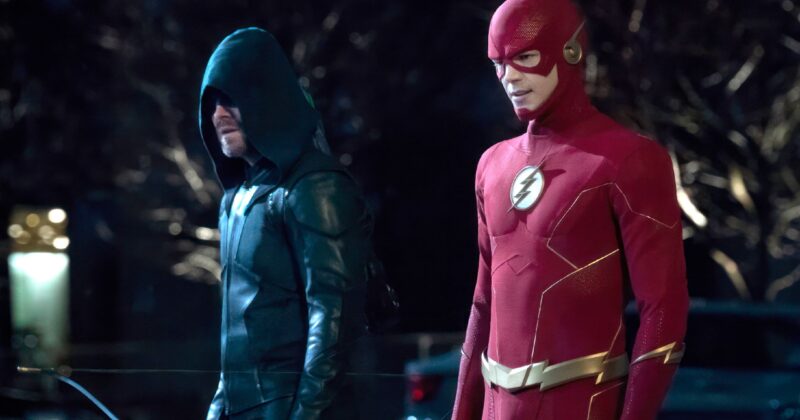
The Complex Art of Adapting ‘Crisis on Infinite Earths’
Bringing DC Comics’ legendary crossovers to life onscreen is never a small feat—especially when the storyline in question is ‘Crisis on Infinite Earths’. This monumental saga was created to untangle decades of convoluted multiverse history, compressing dozens of universes and resetting countless character arcs. Balancing such a high-stakes narrative, with its hundreds of superheroes and intricate backstories, gives any adaptation a Herculean challenge. The source event was designed as a foundational reboot; it required a deep understanding of the DC pantheon and demanded that every character beat ring true both for comic book veterans and newcomers alike.
The Animated Tomorrowverse Approach: Faithful but Flawed
The animated Tomorrowverse concluded with a three-part ‘Justice League: Crisis on Infinite Earths’ adaptation. These movies took the bold step of nearly lifting the original comic beats panel by panel, but with the Tomorrowverse’s own continuity heroes. On paper, this should have been the most accurate possible retelling. However, that devotion to accuracy became a double-edged sword. The pacing struggled—entire acts slogged through backstory, while the climactic third chapter felt overcrowded with universe-shifting moments that barely had time to land emotionally.
Animation, often a strength of DC’s direct-to-video movies, unfortunately faltered here. The visuals lacked the dynamism and gravity needed for a story with apocalyptic stakes. Fans, accustomed to the Tomorrowverse’s established character arcs, also noticed a jarring shift in personalities that undermined investment. The result? While certainly true to the comics, the animated ‘Crisis’ left audiences unmoved and proved that accuracy alone isn’t enough to capture this saga’s spirit.
The Arrowverse’s Version: A Tribute to All DC Live-Action
In contrast, the Arrowverse made bold, creative choices that resonated deeply with longtime fans. Rather than reproducing every panel, the showrunners used the DNA of the ‘Crisis’ narrative to organically fit their television universe. The stakes remained massive, but major deaths and universe reboots were tailored to characters audiences had spent years growing with. Instead of sacrificing Barry Allen’s Flash or Kara Zor-El’s Supergirl as in the comics, the focus shifted, giving Oliver Queen’s Green Arrow—whose story arc was reaching a natural endpoint—this universe-shattering moment. Cleverly, the ‘missing Flash’ prophecy, a staple of Arrowverse seasons, was resolved by giving that heroic sacrifice to the veteran Flash from the 90s series, played by John Wesley Shipp, in a brilliant meta twist.
What truly set the Arrowverse event apart was its reverence for DC’s entire live-action legacy. The five-episode crossover wasn’t confined just to Arrow, The Flash, Supergirl, and Legends of Tomorrow. It became a tapestry weaving together cameos from DC history: Smallville’s Superman, 90s Batman universes, and even surprise nods to the big screen, making the multiversal stakes feel urgent and celebratory. The event balanced nostalgia with progress, giving emotional beats real space to breathe, and honoring decades of DC adaptations outside the printed page.
‘Crisis’ Across Media: Why Connection Matters
The lesson from these two approaches is clear: when adapting something as massive as ‘Crisis on Infinite Earths,’ capturing emotional resonance and honoring character journeys is as important as multiversal spectacle. The Arrowverse embraced the medium-specific strength of the TV format—the slow build, the accumulated history—and rewarded loyal viewers with payoffs that mattered. The Tomorrowverse, while technically precise, lost the heartbeat of its characters in the scramble to check every box.
This difference is a testament to the importance of adaptation over imitation in superhero media. In a pop culture landscape where reboots and multiverses dominate, the success of the Arrowverse ‘Crisis’ proves that connecting with fans’ memories, and meaningfully using the unique tools of the medium, brings these epic stories to life—far beyond a faithful, but formulaic, retelling.