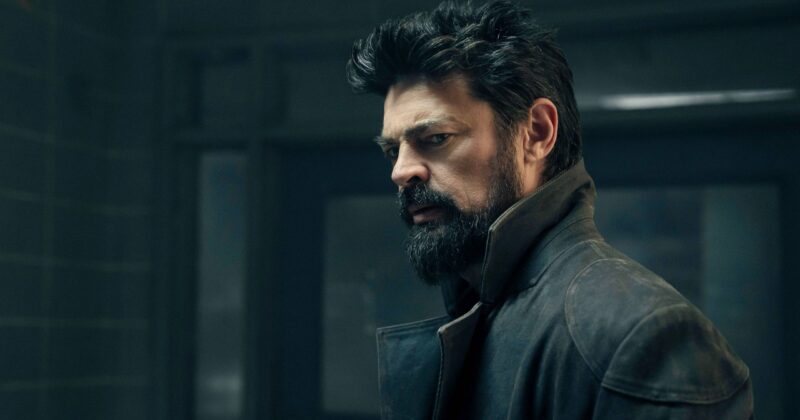
Butcher’s Descent: How The Battle with Homelander Blurs the Line Between Hero and Villain
The ongoing conflict between Billy Butcher and Homelander has long defined The Boys, shaping the show’s tension and raising the stakes with every season. But where early episodes painted Butcher as a vengeful anti-hero driven by the pain Homelander caused, recent developments take this transformation to its darkest point. The once rigid line separating Butcher’s motives from Homelander’s cruelty has all but vanished, making Butcher nearly as unpredictable as the antagonist he swore to destroy.
From Vengeance to Ruthlessness: Butcher’s Moral Decline
Butcher’s journey was never about sainthood. As the self-appointed punisher of Vought’s supes, he always skirted gray morality, especially when facing threats to his team or personal revenge. The new season elevates this arc, showing Butcher crossing lines that few thought he would dare. His decision to confront — and ultimately appear to kill — his dying father encapsulates this chilling evolution, a scene echoing the kind of cold retribution usually reserved for Homelander. Butcher’s father, long a source of trauma and resentment, becomes the target of his wrath rather than an opportunity for closure or forgiveness, placing him firmly on a path of no return.
Butcher’s lies are also piling up. Instead of honesty with allies like Sameer Shah regarding the truth behind Victoria Neuman’s death, Butcher weaves deceptions that erode trust and push him closer to Homelander’s modus operandi. The earlier seasons showcased his readiness to sacrifice his own morality for what he saw as the greater good. Now, every choice is steeped in self-preservation and singular focus, pushing even his closest friends to the margins.
Behavioral Parallels: Butcher Adopts Homelander’s Playbook
From the outset, The Boys intentionally mirrored elements of Butcher and Homelander’s backgrounds. Both scarred by childhood trauma, their vendettas have shaped the paths they walk. Homelander’s own backstory — growing up in a laboratory, ultimately killing those he deemed responsible for his suffering — strongly parallels Butcher’s final confrontation with his own father. The narrative carefully blurs their distinct motivations, inviting viewers to consider at what point the quest for vengeance corrupts the hero entirely.
Butcher’s willingness to endanger, manipulate, or even dispose of his team is no longer just a theoretical risk; it’s an immediate threat. The virus weapon, once a means of justice, is now a tool of indiscriminate destruction. Butcher barely distinguishes between those in his path and those on his side, as seen in his treatment of Starlight, Ryan, and even Hughie. With his use of Compound V, Butcher embraces the very powers he once loathed, signaling the ultimate moral compromise: ‘if you can’t beat them, join them.’ It’s a transformation that shows just how far he’s fallen into the villain’s shadow.
Implications for The Boys: Allies at Risk, Stakes at An All-Time High
With Butcher’s attitude increasingly dictatorial and his strategies reckless, every alliance is in jeopardy. He might not yet execute his own team for minor failures (a chilling echo of how Homelander treats the Seven), but the possibility feels more real than ever. The team’s internal trust is fraying: Ryan remains missing, Hughie is wary, and most of America hunts Butcher as a fugitive. These fractures make the group even more vulnerable, and with new supes entering the narrative, Butcher’s zero-tolerance approach makes every episode unpredictable.
The intensity ratchets up whenever Butcher faces new threats. His near-fatal confrontation with Cindy, one of the show’s more formidable supes, is a stark reminder: anyone, ally or enemy, is expendable in his pursuit of Homelander. This ruthlessness extends to potential conspiracies within the Boys themselves. If Butcher even suspects betrayal, his response is swift and merciless.
For fans keeping score, here’s how The Boys stacks up on Rotten Tomatoes, underscoring its ongoing critical acclaim and audience intrigue:
- Season 1: Critic Score 85%, Audience 90%
- Season 2: Critic Score 97%, Audience 83%
- Season 3: Critic Score 98%, Audience 72%
- Season 4: Critic Score 92%, Audience 54%
- Season 5: Critic Score 98%, Audience 81%
No Turning Back: Butcher’s Comic Roots Reshape The Narrative
Butcher’s evolution raises unresolved questions about the show’s endgame. While the series has diverged from its comic book origins, Butcher’s path closely resembles his printed counterpart, who ultimately becomes the primary antagonist. The possibility grows stronger that even if Homelander falls, Butcher won’t be satisfied until every supe is wiped out — regardless of the collateral damage or personal cost. This dynamic sets up a potential finale not of heroism, but of terror and heartbreak, where Butcher emerges as the very monster he sought to destroy.
As these shockwaves ripple through every relationship — Starlight’s alliance, Kimiko’s loyalty, Mother’s Milk’s faith — the show refuses to let its protagonist off easy. Butcher is now the most volatile element in a world already teetering on the edge. His intimate connection to the Boys, far from being a safeguard, makes his transformation all the more chilling and personal for fans — and a harrowing blueprint for the show’s next chapters.