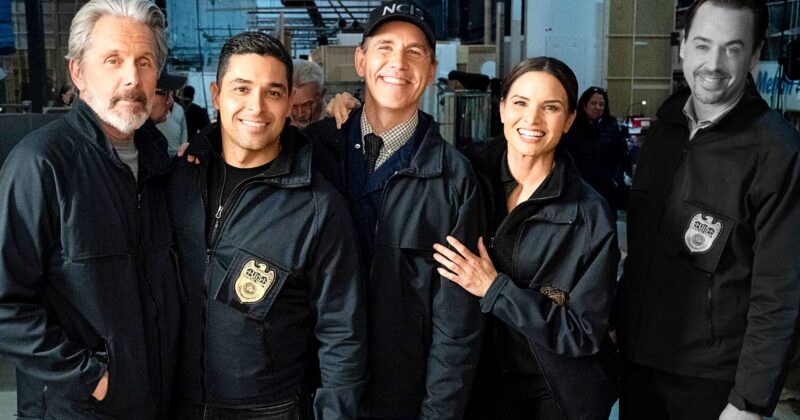
NCIS Reinvents Its Future: How the Show Is Preparing for Timothy McGee’s Exit

NCIS Faces a Turning Point: The Looming Departure of Timothy McGee
NCIS stands as a cornerstone in television, captivating audiences for years with its blend of procedural grit and character-driven storytelling. Now, as the series enters a new chapter, it faces one of its most significant transitions yet: preparing for the likely exit of its longest-serving team member, Timothy McGee.
After Vance: Filling the Void and Power Shifts in the Agency
The recent narrative and production milestones in NCIS signal a rebirth for the franchise, especially following the sudden death of Director Leon Vance. His departure after nearly two decades creates a power vacuum that permeates the agency, but it also opens a pathway for major shifts. The show’s leadership acumen is clear—understanding that the Major Case Response Team (MCRT) thrives best with empowered support rather than micromanagement. All eyes naturally turn to McGee, whose extensive history and evolving leadership have positioned him as the frontrunner for Vance’s seat.
Curtis Hubley’s Return and the Seeds of Change
In a pivotal recent episode, the team’s investigation into a ship curator’s mysterious death brings a familiar face back into the fold: Curtis Hubley. This marks Curtis’s first appearance in the new season—and his technical prowess allows him to step in seamlessly. It’s an intriguing move since, while he’s not an agent, his return is more than just filling in; it’s a calculated play to ensure operational continuity once McGee shifts into a leadership position.
Curtis isn’t a direct replacement for McGee. As a tech operator rather than a field agent, his role is to supplement, not supplant. However, introducing him—and other well-established supporting characters like the Tony DiNozzo Jr.-coded Dale Sawyer—hints at a strategy to gradually evolve the team’s roster while giving audiences familiar personalities to rally behind. This rotation allows time for the showrunners to find the right fit for the next core MCRT member without abrupt disruption.
Why McGee Is Poised for Leadership—and What That Means for MCRT
It’s no secret among fans that McGee’s trajectory has felt stalled, in part due to his earlier reluctance to take on supervisory roles. After being passed over for Deputy Director, the character reached a crossroads. His skill set, institutional knowledge, and steady approach make him the obvious candidate to inherit Vance’s legacy and steer NCIS into its next phase. Past storylines have even seen team members—and the late Director Vance himself—acknowledge McGee’s talent for leadership.
But for the series, his promotion is much more than a character arc; it’s a delicate operation. McGee’s move upstairs will profoundly alter the team dynamic, challenging the writers to maintain authenticity while recalibrating relationships. Fans have seen what happens when beloved leaders leave—think of the seismic shift after Mark Harmon’s Gibbs stepped away—and this time, expectations are even higher.
The Strategy: Familiar Faces, Fresh Dynamics
Rather than rush to a decision, the producers are opting to spotlight familiar yet secondary players, cycling them through critical episodes to gauge who can blend technical skill with the emotional intelligence core to the MCRT’s bond. This approach also leverages nostalgia, letting longtime viewers watch side characters step into new light and hint at future mainstays.
This future-proofing means NCIS can honor its roots while embracing reinvention—delivering a delicate balance of comfort and novelty that fans love. The movement is also a masterclass in franchise longevity: keeping the world evolving without losing the essence that makes it unique in a crowded procedural landscape.
NCIS: A Legacy of Adaptation and Resonance
With each season, NCIS demonstrates a remarkable ability to adapt, using real-time casting decisions and narrative pivots to keep the show relevant. As the series gears up for a McGee-led era, it skillfully primes both the audience and its ensemble for change—an approach that cements its place in television, much like enduring hits from the MCU or classic police dramas that reset themselves through bold, human-centric transitions. Whether McGee ultimately takes the helm or the writers introduce new surprises, the show’s commitment to character-driven evolution ensures its legacy will endure far beyond the next big exit.