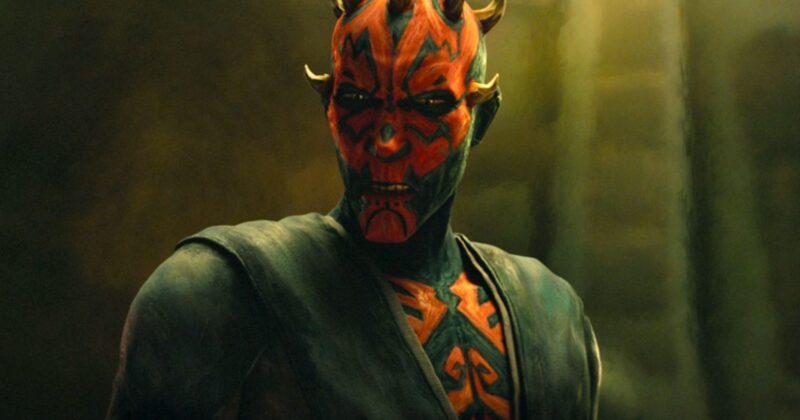
Maul – Shadow Lord: The Empire Emerges as the Real Threat in Star Wars’ Bold New Animated Series

Maul’s Ascent and the Shadow of the Empire
Star Wars: Maul – Shadow Lord continues its audacious journey into the dark underbelly of the galaxy, pushing the boundaries of what a Star Wars protagonist can be. The third and fourth episodes thrust viewers deeper into Maul’s relentless pursuit of power, as he navigates the chaos of the Outer Rim while skirting the watchful gaze of the Empire. These chapters pick up immediately after his violent takeover of Pyke leadership, revealing a Maul who is every bit the calculating tactician—and not merely the outlaw villain fans met in animation and comics past.
Pyke Power, Imperial Intrigue
Upon assassinating the Pyke Syndicate’s leader, Maul inches closer to securing his position as a criminal mastermind. But the real storm brews as he earnestly tries to recruit Devon, one of the new Order 66 survivors, as his apprentice. Devon’s arc is handled with care, reflecting the ongoing trauma and ambivalence that many Jedi felt after the fall of the Order. By challenging Devon to embrace not just her power but her rage, Maul walks the line between manipulation and mentorship—much like classic Sith Lords, but with a nuanced angle this series expertly explores.
Meanwhile, enforcement agent Lawson, and Daki (Devon’s master), are determined to halt Maul’s criminal rise. The episode escalates rapidly: Janix’s authorities collide with Maul’s syndicate, leading to chaotic blaster battles, a stunning lightsaber duel between Maul, Daki, and Devon, and an act of betrayal from the protocol droid Two-Boots. However, the true shift in tone arrives with the Imperial March echoing as a Star Destroyer looms over Janix’s skyline—the Empire has entered the fray, altering the balance of power and narrative direction instantly.
The Empire: An Enemy to All
Intriguingly, the arrival of the Empire complicates the hero-villain dichotomy. Although Maul remains a ruthless power-seeker, the Empire’s fascist grip poses a threat to both him and those who would otherwise pursue him. Maul is far from ready for open conflict with Imperial might, preferring the shadows as he lays the groundwork for his criminal empire. Lawson, on the other hand, fears the loss of control and the iron-handed justice that comes with Imperial occupation. For the first time, Maul and Lawson share a reluctant common enemy—a masterstroke in storytelling that blurs the boundaries of Star Wars morality and alliance.
Devon’s Choice and Maul’s Unfinished Business
Maul’s persistent efforts to sway Devon are met with complex results. In a bold confrontation, Maul presses Devon to wield her anger to survive, demonstrating perhaps rare restraint by sparing her, signifying a longer game at play. Devon, ultimately, chooses allegiance to her master Daki—at least for now. But the seeds of doubt are planted: Maul has shown her the cracks in the Jedi narrative, hinting at his potential role not just as a villain, but as an anti-hero challenging the systems that shaped him—and her. Maul’s mentorship methods unmistakably echo the manipulations of Darth Sidious while adding fresh tension drawn from his outsider status among both Sith and Jedi legacies.
What’s Next for Maul and Janix?
With the Empire now active on Janix, the stakes have risen sharply. The trailers tease imminent confrontations with Imperial Inquisitors—specialists in hunting Force-sensitives—which could force unlikely alliances and further cement Maul’s place as a multifaceted protagonist. Should Maul succeed in recruiting Devon, and perhaps ally with Daki, he could destabilize the Empire’s hold on Janix, furthering his own ambitions and peeling back new layers of resistance lore. These possibilities are tantalizing for longtime fans and newcomers alike: every encounter between Maul, the Empire, and Order 66 survivors is loaded with potential for fresh Star Wars myth-making.
Technical Craft & Cultural Impact
The animated format, coupled with dark, atmospheric direction and voice performances—especially Sam Witwer as Maul—give the show an energy and depth reminiscent of The Clone Wars and Rebels, but layered with even more mature philosophical undertones. The moral ambiguity and shifting power dynamics enrich Star Wars’ serialized tradition, situating Maul not as a simple antagonist, but as a disrupter whose journey could redefine the franchise’s future approach to antiheroes.
As Star Wars: Maul – Shadow Lord moves forward, its exploration of power, allegiance, and identity in the galaxy far, far away continues to set new standards for animated sci-fi. For those seeking high-stakes political drama and complex character evolutions, Maul’s latest chapter has more than delivered.