Slanted: A Razor-Sharp Body Horror Satire That Twists High School Tropes and Identity

Slanted: When High School Transformation Becomes Literal (and Terrifying)
Every generation gets its defining high school movies, but few dare to morph the coming-of-age template into a haunting flesh-and-blood dissection of the American Dream like Slanted does. Writer-director Amy Wang reimagines the age-old struggle to fit in through a body horror lens, taking familiar beats from classics like Mean Girls and remixing them with the disturbing social commentary seen in films such as The Substance and the razor-edged satire of Jordan Peele’s work.
The Plot: Chasing Acceptance at All Costs
Slanted follows Joan Huang (Shirley Chen), a Chinese immigrant who has spent a decade navigating the minefields of an American suburb. An opportunity for social elevation appears when prom queen rival Olivia Hammond (Amelie Zilber) lands a spot in a superhero TV show and bows out of contention. For Joan, who has always felt like an outsider in her predominantly white school, this is more than just a popularity contest — it’s a shot at belonging.
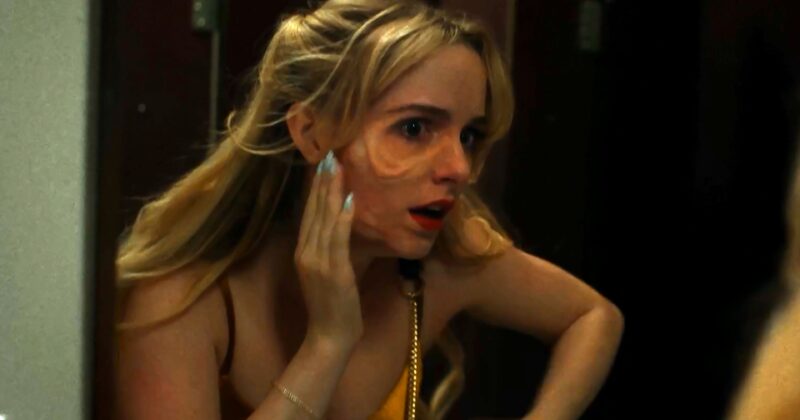
The twist comes courtesy of Ethnos, an enigmatic clinic offering ‘ethnic modification’ surgeries. After witnessing Ethnos’ founder transform himself from Indian-American to white, Joan succumbs to the pressure and lets the clinic turn her into Jo Hunt (Mckenna Grace) — a white American teenager. What follows is a dizzying spiral: Jo’s new life brings acceptance, but horrifying side effects and deepening isolation loom just beneath the surface.
Body Horror Meets Social Satire
Where Slanted elevates itself above conventional teen fare is in its fearless use of body horror to explore assimilation and the cost of the American Dream. Wang’s practical effects—far from the digital sheen so common in modern horror — deliver moments that are equal parts grotesque and darkly funny. Expect sequences that echo ‘90s karaoke videos with ironic musical numbers about the ‘joys’ of whiteness, and twisted montages as Ethnos erases cultural identities with clinical precision.
The satire targets everything from the performative patriotism of American suburbs to the deeply internalized racism experienced by immigrants seeking approval. The opening shots, featuring storefronts with names like Freedom Beans and murals of blonde women in stars-and-stripes bikinis, instantly set the tone: the pursuit of acceptance can turn farce into nightmare at any moment.
Performances and Technical Craft
Shirley Chen delivers a devastating turn as Joan, perfectly capturing the crushing weight of never feeling enough, both at home and at school. Mckenna Grace brings nerve and nuance to her portrayal of Jo, oscillating between uneasy impostor and growing self-assurance, only to unravel when the surgery’s psychological and physical prices become too steep. The supporting cast—especially Vivian Wu and Fang Du as Joan’s torn, blue-collar parents—transform the family drama into a series of heart-wrenching confrontations about culture, identity, and love.
Visually, Wang’s direction pops with both color and unease. The film’s practical effects stand out, channeling influences from cult horror to the surrealist set pieces of Boots Riley, but filtered through the lens of lived immigrant experience rather than outsider observation.
High School Movie Tropes Turned Inside Out
The film navigates familiar territory—prom queens, cliques, the hunger to fit in—with a sense of self-awareness that smartly updates the genre. Instead of parodying typical ‘mean girl’ moments, it asks what it means to literally erase part of yourself to join them. Scenes in which Jo tries to ascend the social ladder while hiding her surgical origins bring playful awkwardness that quickly turns to existential dread as her sense of self unravels.
Slanted in the Landscape of Modern Body Horror
Slanted sits comfortably alongside recent horror such as The Substance and the work of Nia DaCosta or Justin Simien, with its focus on the dark, irresistible allure of transformation. Instead of centering on violence or spectacle, it digs deep into the psyche, using body horror not as a punchline but as a lens to expose hard truths about assimilation, race, and what it costs to belong in modern America.
Should You Watch?
With a tight runtime and a bold, uncompromising vision, Slanted isn’t afraid to make its audience squirm for the right reasons. While some late-game plot turns experiment more than they land, the film’s commitment to wit, discomfort, and razor-sharp commentary marks Amy Wang as a filmmaker to watch. For those invested in the intersection between genre cinema and biting social satire, Slanted is a must-see.