How Michael Keaton’s Batman Shattered the DC Multiverse Timeline

Michael Keaton’s Return as Batman and the Chaos It Unleashed in the DC Multiverse
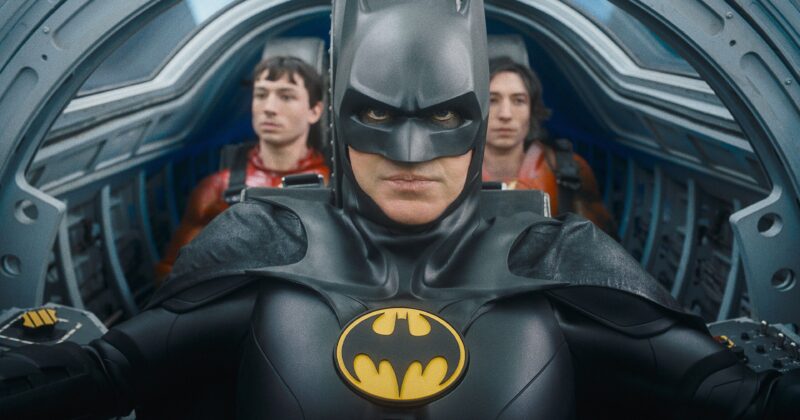
Michael Keaton picking up the cape once again in The Flash wasn’t just fan service; it was a seismic event that rattled decades of DC continuity. For those who have followed Batman through every cinematic iteration, the return marked a moment as iconic as it was bewildering. Keaton, whose portrayal in Tim Burton’s beloved Batman films redefined the Dark Knight for a generation, stepped back into the shadows—only for his comeback to fracture what little connective tissue remained between the franchise’s divergent timelines.
The End of the Burton-Schumacher Era
Tim Burton’s and Joel Schumacher’s Batman phases weren’t exactly paragons of consistent storytelling. Each film was supposed to share a single continuity, even as actors changed repeatedly—Keaton handed off to Val Kilmer, who then made way for George Clooney. Subtle nods, like Pat Hingle and Michael Gough reprising their roles throughout, initially suggested some common thread. But The Flash torpedoed that tenuous link by foregrounding Keaton and ignoring the existence of Batman Forever and Batman & Robin. Even more confounding was Clooney’s Batman cameo in The Flash, which countered decades of assumed narrative continuity and left audiences wondering if any overarching story still held water.
The upshot? The supposed quadrology now reads less like a continuous saga and more like parallel universes having increasingly awkward conversations over coffee. For longtime fans, the interplay between nostalgia and narrative dissonance shows just how fluid comic book movie canons have become.
The Comic Book Solution: Batman ‘89
When Hollywood walked away from Burton’s vision for a trilogy, DC Comics stepped up with Batman ‘89. Scripted by Sam Hamm, who worked on the original 1989 film, the comic series continued Burton’s story with the dark surrealism and gothic visuals that made the first two films legendary. With Michelle Pfeiffer’s Catwoman, a potential Robin Williams Riddler, and Marlon Wayans cast as Robin, the comic stitched together threads from abandoned scripts, refusing to let Burton’s narrative fade quietly.
For purists, Batman ‘89 offers a direct sequel to the Burton films, untethered from the multiverse chaos that the cinematic universe would later unleash. It’s a fascinating what-if that manages to preserve the Tim Burton aesthetic and atmosphere within its own bubble.
Chronological Madness and the Bat-Verse Web
Trying to trace the chronology of Batman’s cinematic universe is a journey fit for Gotham’s Arkham Asylum. Schumacher’s and Burton’s films already made for a jumbled saga, but Hollywood didn’t stop there. Halle Berry’s Catwoman film, intended to be a spin-off starring Pfeiffer, only added to the confusion by retaining visual Easter eggs from Batman Returns, leaving fans to debate whether it belongs to Burton’s universe or some narrative offshoot.
The Arrowverse muddied the waters further with the Crisis on Infinite Earths crossover, where Kevin Conroy’s grizzled Bruce Wayne drives a Batmobile uncannily similar to Keaton’s, teasing fans with another possible connection. Each new reboot, cameo, or Easter egg adds another layer to the conspiracy-wall of Bat-lore—one only the most dedicated fans even try to untangle.
Keaton’s Brief Brush as the DCEU’s Batman
Just as it seemed Keaton might step in as the core Batman for the mainline DC cinematic universe, plans changed again. Early industry chatter suggested two mainline Batman storylines: one for Robert Pattinson, the other possibly for Keaton. Hopes ran high when The Flash teased his involvement, but with the conclusion of Zack Snyder’s era and James Gunn ushering in a new vision, Keaton’s run ended as abruptly as it returned. It’s a reminder that, in the world of DC’s shifting multiverse, even the most legendary Batmen are subject to the whims of creative direction and industry overhauls.
Each new project—whether comic, film, or TV event—continues to reshape and reframe how we understand the Batman legacy in the pop culture multiverse. More than a mask, Keaton’s cowl now symbolizes an era where canon is as flexible and ever-changing as the heroes who wear it.