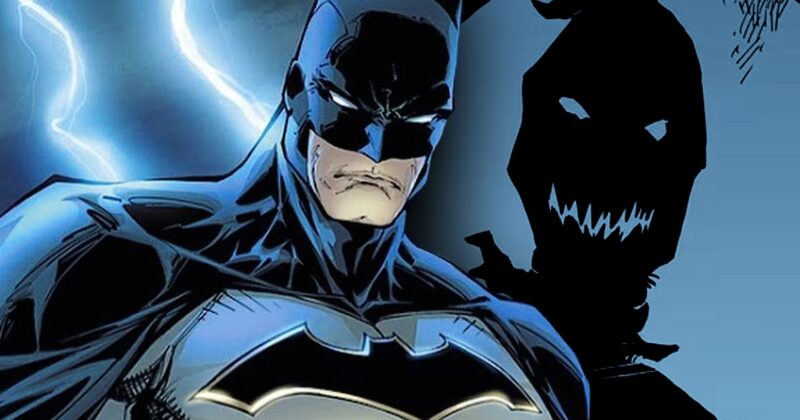
The Scarecrow Redesign: Batman’s Villain Reborn as Nightmarish Horror Icon

Scarecrow’s Most Terrifying Mutation Yet
The world of Batman has always thrived on reinvention, with each new era daring to push the boundaries of what Gotham’s rogues can become. However, few redesigns ignite the fandom’s collective imagination quite like the latest transformation of the Scarecrow—a staple of psychological horror within the Batman universe. Artist Mark Spears, with a newly released variant cover for Absolute Batman #19, has unleashed a vision of Dr. Jonathan Crane that is less comic book villain and more pure nightmare fuel.
The Making of a Horror Show: Spears’ Absolute Vision
This isn’t the Scarecrow of burlap masks and straw-filled limbs. Through Spears’ lens, Scarecrow re-emerges as a grotesque, patchwork corpse, lips torn away to reveal an eerie rictus grin, and button eyes stitched into rotting flesh. It’s a design that feels disturbingly tactile—almost cinematic in its level of realism. Perched on his shoulder, an ominous crow hints at macabre deeds to come, echoing the twisted science that birthed other monstrosities inside Arkham’s infamous M facility.
Inside the Absolute Continuity: Horror as a Central Theme
The Absolute Batman continuity has quickly gained acclaim not just for storytelling, but for giving Gotham’s villains a monstrous edge. Scott Snyder and Nick Dragotta have embraced the horror undertones of the Batman mythos, reimagining each foe as something born from nightmares—Scarecrow’s redesign heads this charge. Gone is any trace of cartoonish villainy; what remains is a doctor consumed by his own experiments, a predator among monsters who has quite literally restructured himself into an avatar of fear.
A Legacy of Reinvention: Why Scarecrow Redesigns Matter
While Spears’ vision is instantly iconic, Scarecrow boasts a legacy of haunting reinterpretations. Early iterations from Bob Kane and Bill Finger defined him as Gotham’s walking phobia—arms rigid, visage ghostly. Tim Sale’s work in The Long Halloween turned the character into a warped ghoul, while Dustin Nguyen’s depiction recast Crane as a child-snatching terror shrouded by a burlap sack. Jorge Jiménez’s recent helmeted incarnation leaned into the urban legend vibe—stalking silence and empty-eyed malevolence.
The character continues to thrive across media, each adaptation ramping up the terror: Bruce Timm’s Batman: The Animated Series introduced subtle, unsettling features, while later animated and live-action iterations—like Batman Begins and the Arkham games—experimented with hallucinatory transformations. The Scarecrow in Injustice 2 emerges as a towering creature, realized through the eyes of his fear-gas victims. Yet, none of these rival the visceral, almost physical disquiet triggered by Spears’ Absolute take.
What Makes the Absolute Scarecrow Essential
This latest evolution cements Scarecrow as the franchise’s premier horror presence. The new design places him at the forefront of villainy, not with brute force or elaborate schemes, but by embodying primal fear itself. This resonates with long-time fans while offering new readers a bold re-entry point into the mythos, proving how essential a daring visual reimagining can be to a character’s relevance in pop culture.
Upcoming Release and What to Expect
With the debut of Absolute Batman #19 on the horizon, anticipation is high to see just how deep this iteration of Scarecrow’s madness runs—and how far the creative team will lean into these horror elements. For horror and superhero aficionados alike, this promises not just unsettling visuals, but a deepening of the dark, psychological themes that make Batman one of the most enduring icons in comics and modern storytelling.