How Monarch: Legacy of Monsters Is Reinventing the Godzilla Universe with Its Biggest Twist in Decades

Monarch: Legacy of Monsters Explores a Groundbreaking Twist for the Monsterverse
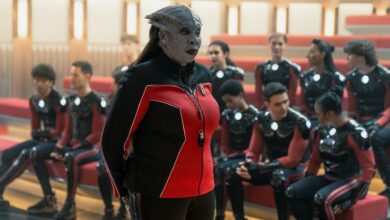
Apple TV’s Monarch: Legacy of Monsters isn’t just an ambitious expansion of the beloved Monsterverse—it’s now playing with ideas the Godzilla franchise hasn’t seriously explored in decades. With the introduction of Isabel Simmons, portrayed by Amber Midthunder, the series dives into a narrative direction that even long-time fans may not have expected: the real possibility of rewriting history itself.
Isabel Simmons: A New Legacy and a Bold Plan
Revealed as the second daughter of Walter Simmons—the corporate mastermind behind Apex Cybernetics and Mechagodzilla in Godzilla vs. Kong—Isabel enters the stage with a complex legacy. Unlike her late sister Maia, Isabel’s ambitions are layered. She claims independence from Apex’s destructive agenda, yet her association with known Apex operative Trissop suggests a web of secrets not yet untangled. What truly differentiates her is her knowledge of the Axis Mundi and its mysterious relationship with time—a power she intends to harness to undo the Monsterverse’s foundational cataclysm: G-Day, the fateful clash between Godzilla and the MUTOs.
Her mission isn’t just bold—it’s outright dangerous for the very fabric of this cinematic universe. After all, using time-warping pathways to change a pivotal disaster risks spiraling consequences, not only for the Titans but for every living character in the Monsterverse. Episode clues link her scheme to the theft of Titan X’s egg—an artifact she suspects could trigger a chain reaction reversing G-Day if inserted into Axis Mundi’s time currents.
The Heisei Parallels: Godzilla’s History of Time Travel
Time travel isn’t an entirely new concept for Godzilla fans. The influential Heisei film Godzilla vs. King Ghidorah once put humanity’s hand on the timeline, resulting in dramatic—even catastrophic—unexpected results. In that narrative, the anti-Godzilla plot backfires, not only birthing King Ghidorah but also creating a more vengeful and dangerous Godzilla, who would shape the darker tone of the series throughout the 1990s.
That film taught both characters and audiences that the law of unintended consequences rules when the past is altered. It warns: attempts to erase monsters from existence often create new threats altogether. That’s precisely the precipice where Monarch: Legacy of Monsters now stands, channeling historic franchise lessons in a high-tech, character-driven storyline.
Time Manipulation in the Monsterverse: What Makes Monarch’s Approach Unique?
While earlier films leaned into sci-fi spectacle, Monarch’s approach is nuanced and laden with intrigue. The interaction with Axis Mundi—a realm where time doesn’t behave as it should—has already allowed characters like Lee Shaw to interact across eras. But the stakes escalate with each experiment. If the showrunners push the time manipulation arc further, the Monsterverse risks multiplying its threats: unleashing new Titans, resurrecting old adversaries, or rewriting character destinies throughout the franchise.
Isabel’s quest to avert G-Day isn’t just about erasing a disaster; it’s about challenging the very core of Monsterverse mythology. With Titan X’s egg now a wildcard in this high-stakes gambit, what might seem like a noble attempt could birth the next great catastrophe—or titanic villain—for future seasons.
What This Means for the Future of the Monsterverse
Fans and theorists have plenty to chew on. Could Monarch’s experiments with time create more formidable monsters, set up new showdowns, or even fracture the alliance between humans and Titans? With the show’s creators drawing inspiration from the franchise’s rich legacy yet innovating with present-day technology and storytelling, Monarch is poised to redefine what’s possible within giant monster mythology. One thing is certain: with time travel back on the table, no piece of history or legend in the Monsterverse is truly safe anymore.