Why Cyclops Will Never Be Marvel’s Perfect Superhero – And That’s What Makes Him Great

Cyclops: The Reluctant Commander of the X-Men
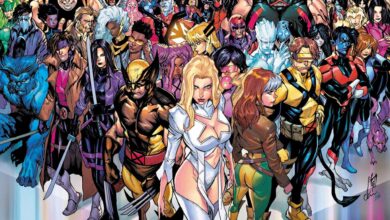
Marvel’s universe overflows with iconic leadership types, from the shining ideal of Captain America to the storm-forged will of Black Panther. Yet among these legends, Scott Summers — better known as Cyclops — stands apart, not for being the most beloved, but for embodying the paradox at the heart of mutant heroism. While he’s long been recognized as a master tactician and the X-Men’s field leader, Cyclops openly acknowledges something most comics shy away from: he is not the best superhero. His reason? The world never let him choose what he could become.
Cyclops Forged as a Soldier, Not a Symbol
Every superhero’s journey is colored by circumstance, but Scott Summers’ story is unique in the way it blurs the line between heroism and duty. In a pivotal moment recently, Cyclops is stripped of his visor, quartz glasses, and any lifeline to the X-Men. Left fighting alone, he controls his devastating optic blasts with nothing but a makeshift blindfold, forced into survival mode against a relentless enemy. It’s in this exhausted state that Scott faces an uncomfortable truth: he has never truly functioned as a superhero in the classic sense. Instead, Cyclops has been shaped — and sometimes warped — into a soldier, locked in a perpetual war for the mutant race’s survival.
Unlike the vibrant, public-facing heroics of the Avengers or the contagious optimism of Spider-Man, Cyclops’ leadership style is almost surgical — pointed, relentless, and devoid of spectacle. Every decision he makes is an equation balancing the lives of his team against existential threats. In comics and on-screen, his seriousness sometimes alienates the casual fan, but for those who value layered character design, Cyclops’ burden is one of the most compelling aspects of X-Men canon.
Heroism by Circumstance: Cyclops vs. Captain America
The comparison between Cyclops and Steve Rogers isn’t just academic — it gets to the core of superhero leadership in pop culture. Steve Rogers chose to step into danger, volunteering for the Super-Soldier program with a sense of purpose rooted in optimism and an unwavering moral compass. He became Captain America not out of desperation, but out of hope, his shield a symbol that invites unity.
Scott Summers, however, never had the privilege of that choice. From the moment his mutant powers manifested, he became a target for discrimination — forced to see everyone, even himself, as a potential threat. His optic blasts are a constant reminder that even his vision is a weapon. Every public appearance, every command, is colored by this defensive stance. The world didn’t allow Scott to be a simple hero – it made him a protector by necessity.
The Complexity of Leadership Among Marvel Icons
When comparing team leaders across Marvel’s multiverse, it’s impossible to ignore the different philosophies that shape their command:
- Captain America: Leads with integrity and inspiration, always seeking the brighter future.
- Cyclops: Tactical above all, cutting through chaos with cold, mathematical decisions.
- Reed Richards: Treats the Fantastic Four like a scientific experiment in action.
- Doctor Strange: Reluctantly guides others, manipulating the mystical unknown.
- Star-Lord: Outmaneuvers threats with bravado and underestimated smarts.
- Captain Marvel: Employs military precision, rallying the Avengers like a general on the battlefield.
- Black Panther: Enforces his will through duty and the resources of a nation – a sovereign as much as a soldier.
No other leader in the Marvel universe embodies the role of endangered minority quite like Cyclops, forced to weigh every risk against the survival of his people. Meanwhile, Rogers can step out of his uniform and still see a world worth believing in. Scott’s life—his brand of heroism—is survival, not spectacle.
If the World Had Been Kinder: The Hidden Potential of Cyclops
Fans have often speculated what Cyclops might have become in a world without constant persecution. Strip away the threats, and underneath the visor you’ll find a man who loves order, symmetry, and the quiet satisfaction of solving technical puzzles. In another timeline, Scott Summers might have flourished as a mathematician or aviator, finding fulfillment in precision instead of conflict. But the Marvel world is rarely so forgiving, and Scott’s journey has been one of hardened necessity.
Cyclops Throughout Pop Culture: Films, TV, and Games
Cyclops’ evolution has played out not just in comics but across decades of media: from the original X-Men film franchises, including cult hits like Days of Future Past and the much-anticipated Deadpool & Wolverine crossover, to animated favorites such as X-Men: The Animated Series and the new X-Men ’97. His complex personality also shines in video game entries like Marvel vs. Capcom and the beloved X-Men Legends series, where his strategic abilities are put to the test in every level.
Cyclops is rarely accused of being the most charismatic leader, but in a universe where survival is always at stake, his relentless focus makes him indispensable. He is a hero forged by necessity, defined by sacrifice, and endlessly relevant in the evolving landscape of superhero media.