Dan Levy’s ‘Big Mistakes’: Familiar Flavors, Fresh Comedy, and the Shadow of Schitt’s Creek on Netflix

Dan Levy’s Return: Can Familiarity Be a Double-Edged Sword?
When Dan Levy launched into the comedy stratosphere with his first major project, few could have predicted just how much Schitt’s Creek would define both his creative voice and expectations for all future work. Now, with the release of his latest Netflix original, Big Mistakes, Levy faces the daunting task of balancing nostalgia with the necessity for novelty—a challenge every established creator must eventually confront in streaming’s ever-crowded landscape.
Schitt’s Creek Echoes: Characters and Chemistry Recycled
From the opening scenes, Big Mistakes radiates the DNA of Schitt’s Creek: exaggerated family drama, razor-sharp banter, and a cast that manages to be simultaneously insufferable and oddly endearing. Once again, we meet a family that can barely tolerate being in the same room together, where emotional walls are permanent fixtures and every sincere moment is wrapped in at least three layers of sarcasm.
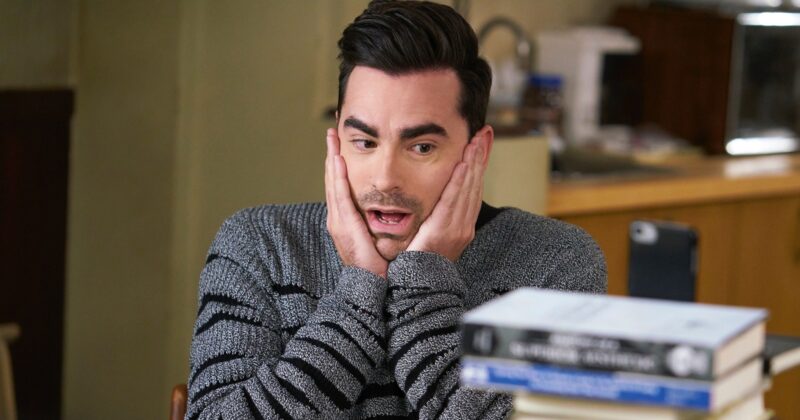
Levy and Laurie Metcalf helm the new dysfunctional clan as Nicky and Linda—characters who borrow overtly from the patterns set by David and Moira Rose. Their conflicts have a rhythm familiar to Schitt’s Creek fans: rapid-fire exchanges, self-absorbed worldviews, and the kind of theatrical conflict that makes for delicious, if at times exhausting, viewing. This similarity brings comfort—like slipping into your favorite sitcom sweater—but it also draws criticism for its lack of risk.
The Comedy: More Than Family Feuds?
If the show’s recycled family tropes weren’t enough, Big Mistakes doubles down by mirroring Schitt’s Creek in its comedic tone. The humor here is deeply character-driven and, again, built around flaws and impulsivity: Nicky’s short fuse and Morgan’s impulsiveness form the backbone of many outlandish gags, from misadventures like digging up the wrong grave, to expertly timed zingers from Linda’s critical persona.
However, there’s a twist: Big Mistakes injects an absurd criminal subplot, trying to stake territory outside the pure sitcom format. It’s a gamble, but one not executed with enough distinction, causing echoes of David’s distinctive snark to bleed into Nicky’s supposed new voice. The comedic rhythms between Levy’s characters often feel indistinguishable, and the show risks being dismissed as a clever retread rather than a bold reinvention.
The Shadow of Success: Why Nostalgia Bites Back
Unavoidably, the close parallels spotlight the gap in storytelling quality between the two series. Big Mistakes feels weighed down by its convoluted plotting, diverging from the tight, emotionally resonant writing that made Schitt’s Creek a critical darling. There’s a palpable sense that this latest outing is leaning too hard on nostalgia without recapturing the heart that defined Levy’s first hit.
Yet, for viewers seeking comfort food TV—series that echo their past favorites but freshen them with new faces and slightly more chaotic stakes—this might be exactly what they crave. Those hoping for a genre-defining leap, however, will find the creative recycling hard to overlook.
Season 2: The Opportunity for Distinction
The path forward lies in evolution, not repetition. Netflix viewers eager for fresh comedic adventures will want Big Mistakes to lean into its criminal absurdity rather than resting on sitcom laurels. Letting the family’s dynamic be one spice in the blend, not the whole flavor, could help the series break out of its predecessor’s shadow. Characters like Yusuf, whose singularity shone this season, deserve more screen time to shift the energy and inject unpredictability.
Equally important is retooling Nicky’s persona, carving a sharper distinction between him and the iconic David Rose. Such a subtle recalibration could invigorate the show’s dialogue and storytelling mechanics, rewarding loyal fans while inviting new ones to join the ride.
Big Mistakes, for now, stands at the crossroads of comfort and creativity. With a few smart moves, it could yet mislead its critics and chart a peculiar, winning course all its own.