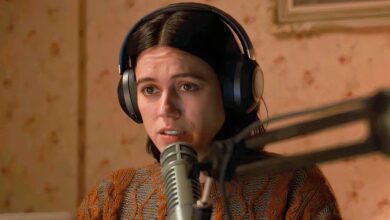
How ‘The Witch’ Redefined Modern Horror and Inspired a New Generation of Filmmakers
The Horror Movie That Shook Stephen King: A Decade of Cinematic Fear
It’s rare for any horror film to earn the kind of praise that transforms careers and cements a studio’s legacy, but ‘The Witch’ accomplished both. When the undisputed master of horror, Stephen King, declared the film ‘scared the hell out of me,’ the world took notice. King’s endorsement has boosted countless projects before, but his reaction to Robert Eggers’ directorial debut signaled a new era for the genre.
Atmospheric Storytelling and Historical Authenticity
What set ‘The Witch’ apart immediately was its meticulous dedication to historical realism. Every frame, costume, and haunting whisper placed the audience deep within a 17th-century Puritan nightmare. The dialogue draws directly from period texts and records, immersing viewers in early modern English with an intensity rarely seen in horror cinema. The result is a film that feels lifted from the pages of Nathaniel Hawthorne, yet pulses with an anxiety and brutality that’s unmistakably contemporary.
Rather than relying on cheap scares, Eggers crafts an environment heavy with dread. The vision of isolation, suspicion, and religious paranoia becomes a breeding ground for the psychological horror at the core of ‘The Witch’. The supernatural takes on an uncertain, nearly invisible form, turning simple shadows and worried glances into vehicles of terror.
Paranoia and the Power of Unseen Fear
Unlike typical entries in the genre, ‘The Witch’ is fueled less by visible threats and more by the erosion of trust inside a fragile family. Anya Taylor-Joy’s breakthrough performance as Thomasin anchors the story, as every member of her family tumbles into mutual suspicion. Fear of witches is just the surface—Eggers is far more concerned with what happens when humans are separated from society, plagued by their own doubts and the oppressive wilderness.
Moments of explicit horror, like the infamous baby-in-the-woods sequence, are unforgettable. Yet, it’s the suffocating uncertainty—whether the devil is truly in their midst or merely in their minds—that drives the film’s power. The iconic line, ‘Wouldst thou like to live deliciously?’ has become shorthand for the seductive allure of abandoning societal constraints, both terrifying and liberating. Every interpretation is left in the hands of the audience, mirroring the terror experienced by the characters themselves.
Folk Horror Revitalized for a New Era
Folk horror had been a genre touched on occasionally before, but ‘The Witch’ unlocked its potential for a contemporary audience. By rooting its narrative in folklore and superstition, the film offered something distinct from urban legends or haunted house tropes seen in recent decades. Its commitment to authentic period detail reignited interest in stories set outside familiar modern backdrops, sending fans on a journey into the dark corners of shared cultural fear.
The film’s influence stretches far beyond its own impressive run. It opened the door for a new wave of horror creators, many of whom now explore atmospheric, psychological, and folk-inspired terror instead of relying on convention. Fans of ‘Hereditary’ or ‘Talk to Me’ will instantly recognize the DNA they share, tracing their thematic courage directly back to Eggers’ film.
A24’s Defining Moment in Horror
The Witch wasn’t just a revelation for audiences and critics—it was also a landmark for A24 as a distributor and tastemaker. Before its release, A24 had quietly assembled a catalog of indie titles, but this film marked the start of their reputation as the home of sophisticated, boundary-pushing horror. The term ‘elevated horror’ became associated with movies that, like ‘The Witch’, combined genre thrills with subtext, atmosphere, and bold art direction.
Since then, A24 has gone on to champion titles that challenge and reinvent horror, working with visionary directors like Ari Aster (Hereditary) and Jane Schoenbrun (I Saw The TV Glow). Yet, it’s ‘The Witch’ that remains an unmistakable cornerstone, a film referenced whenever conversation turns to the best horror of the modern age.
Legacy and New Projects From Robert Eggers
Robert Eggers has since expanded his filmography with acclaimed works that push genre and period boundaries, cementing his status as a director unafraid to blend technical precision with bold storytelling. Fans eagerly await his latest, ‘Werwulf’, set to deepen his exploration of myth, terror, and the primal forces that drive human nature.
Even among the packed catalog of 21st-century horror, ‘The Witch’ continues to cast its spell—its style, ambiguity, and sheer nerve inspiring a generation of filmmakers and redefining what it means to be scared in the cinema.