Redefining the Legacy of the Big Three Anime Villains
For decades, One Piece, Naruto, and Bleach have stood as pillars of shonen anime, each defining entire generations with their unforgettable characters, intricate storylines, and epic battles. Often grouped as the “Big Three,” these series dominated anime culture throughout the 2000s and 2010s. While Naruto and Bleach concluded their stories years ago, One Piece continues to push boundaries, culminating now in a remarkable moment that reshapes how fans view the ultimate antagonists of these legendary series.
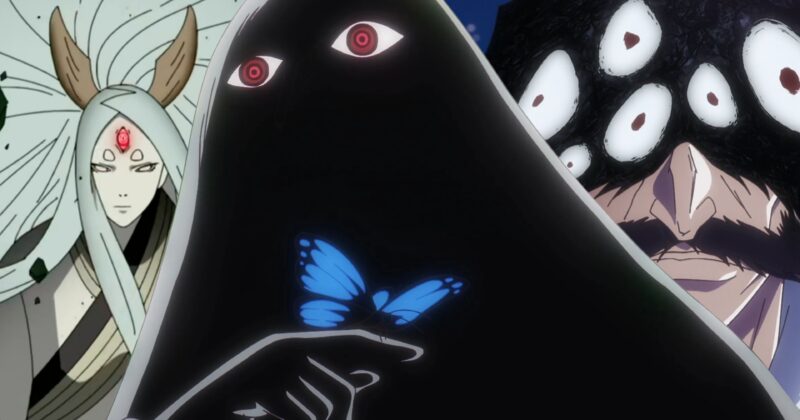
Though comparisons have long been drawn between these titles, a key point of discussion—how their final villains made their grand entrance—had remained incomplete. One Piece’s secretive final villain, Imu, only fully revealed himself recently; now, with the latest chapters showcasing his form and power in all its terrifying glory, fans can finally place him alongside Naruto’s Kaguya and Bleach’s Yhwach with fresh eyes. The impact is profound, marking a new pinnacle in villain introductions.
Comparing the Final Villains’ Entrances
Looking back at the Big Three’s ultimate antagonists, each brings a distinct flavor to their story’s climax. Starting with Naruto, Kaguya Otsutsuki’s debut was visually striking—a divine figure of immense power who overwhelmed even Naruto and Sasuke after their most recent upgrades. Despite her imposing presence, her introduction sparked debate due to limited foreshadowing and a controversial narrative pivot that elevated her over Madara Uchiha, arguably the series’ more compelling and thematically rich villain. The abruptness of her role and the awkward exposition about her connection with Black Zetsu undermined her debut’s impact.
In contrast, Bleach introduced its final adversary, Yhwach, amid an intense and strategic shift—the Wandenreich’s invasion of Soul Society. Although Yhwach’s initial appearance largely involved commanding his subordinates and showcasing his ruthlessness by killing key characters, his aura of menace was undeniable. The threat he posed was immediately solidified by the devastation wrought upon Yamamoto’s forces. Yhwach’s calm yet commanding presence threaded perfectly into Bleach’s narrative, setting the stage for what would become a relentless and climactic showdown.
Then there’s One Piece, whose long-running mystery surrounding Imu finally unfolded spectacularly. The enigmatic silhouette that teased fans for years emerged in chapter 1180 as a figure steeped in darkness and malevolence, embodying the ultimate authority behind the world’s shadows. Imu’s design alone conveys a demonic, inscrutable force, but his actions go far beyond mere visuals. Effortlessly subduing iconic powerhouses such as Zoro and Sanji, as well as formidable giants on Elbaph, Imu reestablishes himself as a proactive and commanding villain who swiftly recaptures control amid chaos. This blend of devastating power and eerie composure ensures Imu’s debut as the most impactful among the Big Three’s villains.
Technical Craftsmanship and Narrative Execution
Part of what makes Imu’s reveal so effective is how it seamlessly balances dramatic tension with consistent storytelling. Over two decades, One Piece has expertly built anticipation through subtle teasers and world-building elements that laid the groundwork for this moment. The pacing of Imu’s introduction respects the audience’s investment by paying off years of mystery and speculation, making his appearance not just shocking, but narratively satisfying.
Moreover, the visual presentation excels, utilizing detailed character design and dynamic paneling that imbue every scene with gravitas. Unlike Kaguya, whose sudden appearance felt disconnected, or Yhwach, who leaned heavily on the backdrop of invasion for impact, Imu stands as an independently compelling figure. His menace is communicated through both his chilling aesthetics and his tactical decisiveness, elements that heighten the stakes for the saga’s final chapters.
What This Means for One Piece’s Legacy
With the series now firmly in its concluding saga, Imu’s commanding debut promises a crescendo fitting for one of the most beloved franchises in anime history. The transition from mystery to active menace reenergizes the narrative’s final arc, offering rich potential for character confrontations and thematic resolutions. This moment isn’t merely a plot point; it’s a milestone that sets a new standard for how final villains should be introduced in long-running shonen series.
As fans eagerly anticipate the climactic showdown, Imu’s presence solidifies One Piece’s position not just as a contender but potentially as the definitive example within the Big Three anime tradition. His introduction exemplifies how careful storytelling, visual innovation, and thoughtful pacing can converge to elevate a character’s debut into an unforgettable event, ultimately enriching the legacy of a genre-defining epic.