How James Wan and Lee Cronin Completely Reinvented The Mummy Franchise for a New Era

A Bold New Chapter for a Nearly Century-Old Sci-Fi Horror Legend
The Mummy franchise, spanning nearly a century since its 1932 Boris Karloff debut, has seen many incarnations—from classic Universal monster tales and cult Hammer productions to Brendan Fraser’s beloved adventure trilogy and the 2017 Dark Universe reboot attempt. Now, with the latest installment helmed by horror mastermind Lee Cronin and produced by genre titan James Wan, the series receives a daring reinvention that aims to redefine what The Mummy means to modern audiences.
This new film presents a fresh narrative leveraging supernatural horror over pulpy action-adventure, a shift driven by creative freedom and a desire to move beyond established franchise conventions. Cronin, known for his work on Evil Dead Rise, both writes and directs the project, while Wan collaborates as producer alongside Jason Blum via their Atomic Monster-Blumhouse alliance. Notably, this marks the franchise’s first entry under the New Line Cinema banner, a studio with a strong horror legacy.
Plot and Characters: A Family Nightmare Unfolding in Egypt
The story centers on the Cannon family, led by American journalist Charlie, portrayed by Jack Reynor. While on an assignment in Egypt, Charlie’s middle child Katie mysteriously vanishes in the desert. Eight years later, Katie reappears inside a newly discovered sarcophagus, shrouded in mystery regarding her survival and how she ended up entombed for so long.
The sudden return ignites an intense struggle for the Cannons as they attempt to reintegrate Katie, who exhibits terrifying supernatural behaviors. Alongside Charlie’s wife Larissa (Laia Costa) and their children, the family is thrust into a harrowing journey to uncover the truth behind her disappearance and the dark forces at play, blending psychological horror with ancient curses reimagined through a modern horror lens.
Reimagining The Mummy Mythology
In approaching The Mummy, Wan and Cronin intentionally set out to dismantle traditional expectations tied to the franchise. Cronin remarks on the opportunity to “change the perspective” of what audiences think of as a mummy story, emphasizing originality and unpredictability as core goals. Previous films offered various takes—from supernatural curses to sci-fi resurrection methods—but this iteration embraces a fresh mythology, unburdened by the limitations of earlier tales and copyright restrictions.
The creative team carefully evaluated elements from prior versions, selectively integrating motifs that resonated while inventing new ones to breathe life into the narrative. This balance between homage and innovation manifests in a tone that amplifies horror over heroism, situating the mummy not just as an ancient adversary but as an eerie, visceral presence that unsettles both the characters and the audience.
Not Connecting to Brendan Fraser’s Iconic Run
Despite rampant speculation, the film is firmly separate from Brendan Fraser’s renowned Mummy trilogy. Industry insiders and the producing studios have repeatedly confirmed Fraser’s absence to set clear expectations and emphasize the fresh direction. Both Wan and Cronin playfully address the rumors, noting how teasing fan theories have become a part of the franchise’s modern culture, drawing comparisons to whimsical cinematic urban legends.
The separation underscores an intent to forge a new continuity rather than tie into existing narratives, allowing this new vision to stand on its own without the baggage of past storylines or attempts at cinematic universe tie-ins that have struggled before. This approach invites both longtime fans and newcomers to experience The Mummy with a sense of unknown rather than nostalgia.
Expectations and Early Reactions
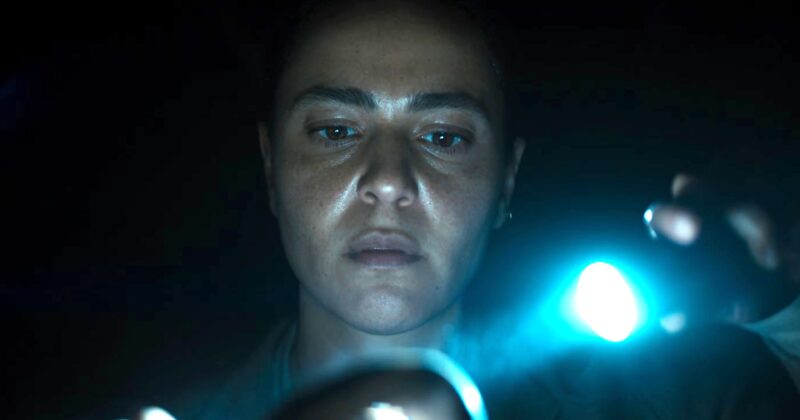
Early advanced screenings generated buzz for the film’s frightening and immersive scares, setting a high standard for visceral horror in a property historically known for adventure and suspense. The inclusion of standout talents such as May Calamawy, known for her compelling work in hit series like Moon Knight, adds further depth to the ensemble, highlighting a commitment to grounded performances amidst supernatural chaos.
The film’s 136-minute runtime allows for a slow-building terror and complex family drama intermixed with jaw-dropping horror set pieces, creating an experience that promises to engage and disturb in equal measure.
Lee Cronin’s Vision Beyond The Mummy
Looking ahead, Cronin reveals ongoing creative projects that showcase his affinity for intimate, psychological horror. Among them is ‘Box of Bones,’ a project combining ghostly hauntings and human relationships, which he began developing after his debut feature, The Hole in the Ground. Cronin’s trajectory reflects a distinct voice in the horror domain, blending character-driven stories with supernatural elements in innovative ways.
As the genre continues evolving, collaborations like that of Wan and Cronin signal a vibrant future for horror franchises—one where reinvention and respect for the source material coexist, paving the way for new classics to emerge.