How Netflix’s Dark Redefines Time with One Powerful Opening Line

A Sci-Fi Journey That Shatters Linear Time
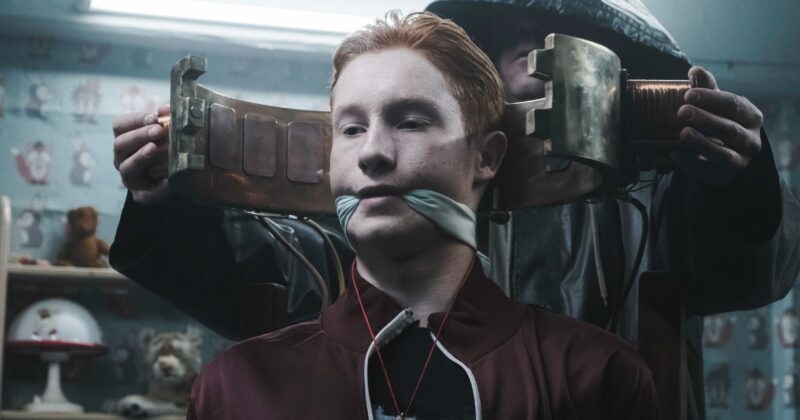
Netflix’s Dark stands out as one of the most compelling science fiction series ever produced. Across its three tightly woven seasons, it challenges the very fabric of how we perceive time. The show doesn’t just dabble in sci-fi clichés; it masterfully reconstructs them to create an emotional and intellectually gripping narrative. From the very first episode, Dark flips the conventional understanding of time on its head with one transformative line: We trust that time is linear. This simple phrase sets the stage for a series that explores time in a way few others dare to.
Reimagining Time Beyond Linearity
On the surface, television itself follows a linear progression — episodes air sequentially, just as we experience moments moving forward in time. Yet Dark deliberately disrupts this expectation, inviting viewers to question the reliability of their temporal instincts. The opening narration unveils a radical concept: past, present, and future are not discrete, chronologically ordered events but parts of an unending circle, eternally intertwined.
«Yesterday, today, and tomorrow are not consecutive, they are connected in a never-ending circle. Everything is connected.» This idea resonates with philosophical and scientific musings that challenge the traditional linear model—a perspective famously echoed by Albert Einstein, who described the distinction between past, present, and future as «a stubbornly persistent illusion.» Dark’s narrative embraces this concept fully, weaving it into every layer of its plot and character arcs.
A Rich Tapestry of Science, Philosophy, and Human Emotions
What elevates Dark is how it fuses intricate scientific theories with deeply human stories. Beyond the mind-bending time loops and paradoxes, the series is a profound meditation on loss, love, and acceptance. The characters grapple with the inevitability of fate as their lives entangle over decades, revealing how cause and effect are inseparable in the fabric of destiny.
Dark’s storytelling is further enhanced by its atmospheric cinematography and a haunting score by Ben Frost, which together create a brooding, immersive mood. This aesthetic perfectly mirrors the series’ themes of uncertainty and cyclical time. Furthermore, the casting is exceptional, with actors convincingly portraying younger and older versions of characters across timelines, enhancing the realism of the show’s complex family dynamics.
Time Travel Like No Other: A Precise and Poetic Execution
Unlike many time travel stories that fall into plot holes or overcomplicate the narrative, Dark executes its timeline with precision and clarity, despite the complexity. Each twist and revelation feels earned, underscoring the overarching meditation on determinism and free will. The show walks a delicate balance: it acknowledges the deterministic universe where past, present, and future coexist, yet it gives space for the characters’ emotional journeys — their choices, regrets, and acceptance.
Moreover, Dark’s creators had the fortune of concluding the story on their own terms. The three-season arc allows the narrative to unravel fully without succumbing to the rushed endings or unresolved threads that plague many ambitious sci-fi projects. This complete vision rewards viewers with a satisfying and thought-provoking experience, a rarity in modern serialized storytelling.
Why Dark Remains an Unmatched Sci-Fi Milestone
In a streaming landscape crowded with sci-fi shows, Dark distinguishes itself by never compromising on depth or complexity. It intertwines scientific concepts, philosophical insights, and emotional resonance seamlessly. The small-town setting juxtaposed with cosmic-scale ideas makes the story accessible yet profound.
The show’s legacy lies in its ability to inspire viewers to rethink their own understanding of time and existence. Dark doesn’t just entertain; it invites a reconsideration of what it means to live through moments that are part of an endless loop, challenging us to find meaning beyond linear cause and effect.