Darth Maul’s Resurgence and the Missing Iconic Weapon
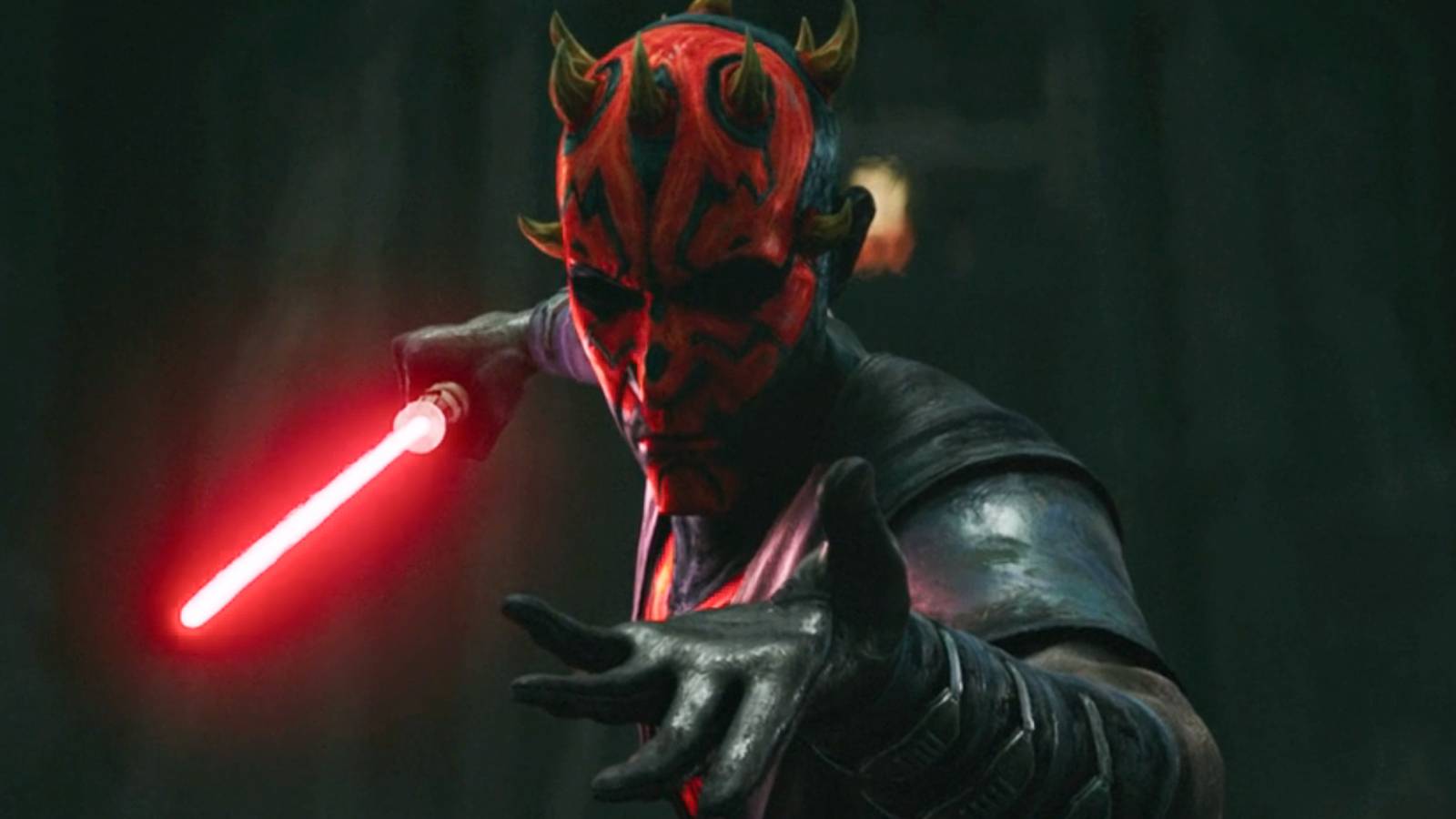
With the captivating new animated series focusing on Darth Maul’s complex path during the early years of the Galactic Empire, fans are enthralled by his cunning and ambition. The show vividly captures Maul’s efforts to reclaim power within the shadowy underworld and train a new apprentice in the dark side of the Force. However, amidst the tension and intrigue, a glaring question persists regarding the conspicuous absence of the legendary Darksaber, an iconic Mandalorian weapon tied to Maul’s legacy.
The Significance of the Darksaber in Star Wars Lore
The Darksaber is not just any lightsaber; it’s a unique, ancient blade crafted by Tarre Vizsla, the galaxy’s first Mandalorian-Jedi. Symbolizing ultimate authority among Mandalorians, it holds immense cultural and political power. Within the established canon timeline, Maul claimed the Darksaber in a duel during the Clone Wars by defeating Pre Vizsla, the leader of the Death Watch faction. This victory solidified his control over Mandalore and its people, using the saber as both a weapon and a potent symbol of leadership.
Although Maul’s prominence waned after his capture and the rise of the Empire, canonical sources affirm he maintained possession of the Darksaber well beyond the Clone Wars, including pivotal moments such as the Siege of Mandalore. Later series depict Sabine Wren retrieving the weapon from Maul on Dathomir and bequeathing it to Bo-Katan Kryze, who famously used it to unite her people.
Why Has the Darksaber Been Absent in the New Series?
This brings us to the puzzling gap the new series presents. Despite Maul’s central role and his Mandalorian followers, the Darksaber has been notably absent through the first six episodes. The narrative highlights tensions within Maul’s ranks due to unpaid mercenaries and the looming threat of the Empire. In such a context, the symbolic weight of the Darksaber could naturally reinforce Maul’s leadership and rally his allies, yet the blade remains unseen.
Instead, Maul wields his signature double-bladed red lightsaber, a formidable weapon that underscores his lethal combat prowess. However, from a storytelling and lore perspective, one wonders why Maul would sideline the Darksaber, especially as questions about his authority and loyalty arise within his faction.
Looking Ahead: Potential Revelations and the Role of the Darksaber
The series has already confirmed a second season, opening possibilities for further exploration of Maul’s complex character and his legendary armaments. Fans and lore enthusiasts anticipate the eventual emergence of the Darksaber, either as a dramatic focal point or a symbol reasserting Maul’s dominance amid the galactic upheaval.
Moreover, the Darksaber’s presence often signals pivotal shifts in Mandalorian leadership and politics. Its inclusion could enrich the narrative layers of the show, especially considering the internal divisions among Maul’s followers and the encroaching imperial forces. Given Maul’s deep connections to Mandalorian culture through Death Watch and his enduring legacy as a Sith master, the Darksaber remains a crucial plot element awaiting full utilization.
The Broader Context of Darth Maul’s Weaponry and Influence
Maul’s double-bladed lightsaber has become emblematic of his character since his debut, representing ferocity and relentless resolve. This weapon alone defines many of his battles and duels across the Star Wars franchise. Yet the Darksaber carries a gravitas different from any other saber – it weaves in Mandalorian destiny and symbolizes leadership accepted by a hardened warrior culture resistant to outside influence.
As the series progresses, the interplay between Maul’s personal vendettas, his dark side mastery, and his control over Mandalorian factions will likely unfold with greater detail. Incorporating the Darksaber would enhance these themes, tying together threads from earlier expanded universe stories and recent popular Mandalorian-centric tales.