Blue Heron: An Unforgettable Journey Through Memory and Family Bonds

Immersed in a Singular Memory Drama
Cinema often speaks in whispers, relying on its characters to convey emotions and stories. But occasionally, a film emerges that doesn’t just communicate — it speaks fluently in its own cinematic language. Blue Heron, the compelling feature debut from director Sophy Romvari, is one such film. From its opening frames, it establishes a distinct voice that remains unwavering, inviting audiences into an intimate exploration of memory, identity, and family.
A Subtle Storytelling Masterclass
At its core, Blue Heron is about memory, yet this simplistic summary belies the film’s profound depth. Romvari chooses not to spell out every detail; instead, she envelops viewers in a sensory experience that mirrors the nature of reminiscence itself. The narrative unfolds like a puzzle, inviting the audience to assemble fragments of time, language, and emotion.
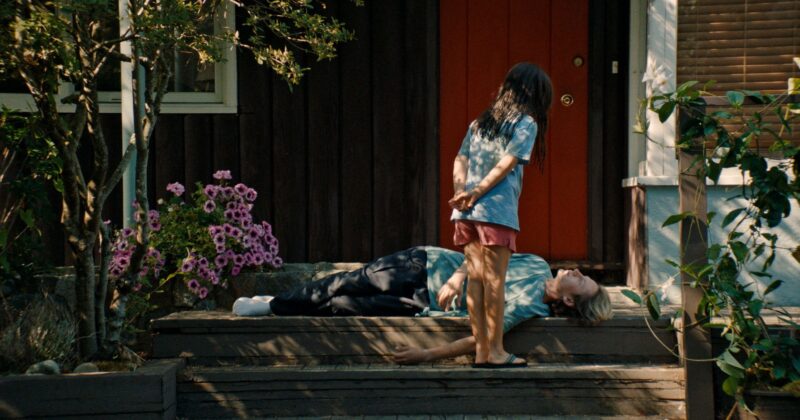
The film opens with a delicate voiceover, setting a reflective tone before transporting us to a family settling into a new home on Vancouver Island in the late 1990s. Through authentic touches—such as the parents’ snippets of Hungarian crossed with English and the visible contrast in accents among the children—we discern the immigrant journey that underpins the family’s story. The focus quickly narrows to young Sasha (played by Eylul Guven), around eight years old, whose perspective anchors our understanding of the family’s dynamics and struggles.
Fragments of a Complex Past
What sets Blue Heron apart is Romvari’s treatment of memory not as a straightforward narrative but as a textured, multi-layered experience. Adult Sasha (Amy Zimmer), now a filmmaker herself, revisits the past, attempting to decode her relationship with her older brother Jeremy (Edik Beddoes), whose behavior remains an enigma throughout the film. This structure—shifting between childhood and adulthood—masterfully captures the ambiguity of memory, highlighting the invisible threads that connect the past and the present.
The cinematography plays a pivotal role in this emotional landscape. The camera is never a passive observer; instead, it adopts a consciousness that expands and contracts with Sasha’s recollections. Scenes vibrate with rich sensory detail: the sounds of a lively household, the textures of the family’s new environment, and the nuanced expressions of her parents, portrayed with subtle brilliance by Iringó Réti and Ádám Tompa, who embody the quiet anxiety and resilience of immigrant life.
Empathy Over Understanding
What truly elevates Blue Heron is its refusal to offer easy answers. Jeremy’s character defies full comprehension—symbolizing the complexities that often lie at the heart of family histories and personal traumas. Romvari’s semi-autobiographical insight presents memory as inherently fragmented and subjective, and yet offers a powerful alternative to understanding: empathy.
This cinematic empathy is crafted not only through heartfelt performances but also through innovative creative choices that crescendo in the film’s breathtaking final act. Without giving away spoilers, these moments distill the film’s themes with elegant simplicity, breaking emotional barriers and inviting viewers to feel alongside the characters rather than simply observe. It’s a rare feat that leaves an indelible impact long after the credits roll.
A Must-See for 2026
Runtime sits comfortably at 91 minutes, making Blue Heron a concise yet deeply immersive experience. Sophy Romvari’s ability to blend intimate storytelling with profound cinematic language marks her as a distinctive voice reminiscent of visionary directors like David Lynch and Céline Sciamma. This film stands among the year’s finest offerings, showcasing how the art of filmmaking can unlock memories, invite reflection, and foster compassion.
The film began its New York theatrical release in April, with subsequent showings in Los Angeles and nationwide. For those captivated by thoughtful dramas that delve beneath the surface, Blue Heron offers an unforgettable meditation on family, memory, and the elusive threads that tie us to our pasts.