How Clint Eastwood’s Unforgiven Redefined the Western Genre Forever
The Rise and Fall of the Classic Western
In the mid-20th century, Western films were the cinematic superheroes of their era. The genre dominated theaters, captivating audiences with tales of rugged frontiersmen and justice seekers like John Wayne, Henry Fonda, and Randolph Scott. These films painted a romantic vision of the Old West, filled with clear-cut heroes and villains, epic showdowns, and sweeping landscapes. However, changing social and political climates—marked by the Kennedy assassination, the Vietnam War, and the Nixon presidency—began to erode public faith in these traditional myths. The idealized American Dream once celebrated by Westerns became clouded by a growing sense of disillusionment.
As a response, the genre evolved from simplistic narratives into darker, morally complex stories during the late ’60s and ’70s. Films like The Wild Bunch, McCabe & Mrs. Miller, and Sergio Leone’s Once Upon a Time in the West introduced what came to be known as the «revisionist Western.» These movies shattered the easy morality of earlier Westerns, instead laying bare the brutality, ambiguity, and violence that truly marked the American frontier. Despite these bold reinterpretations, the genre gradually faded from mainstream prominence as audiences’ tastes shifted toward new cinematic movements.
Eastwood’s Legacy: From Iconic Actor to Visionary Director
Within the Western canon, two towering figures emerge: John Wayne and Clint Eastwood, often likened to Batman and Superman for their pivotal roles in shaping the genre. Wayne embodied the archetypal clean-cut hero, always standing unwaveringly on the side of justice. In contrast, Eastwood redefined the Western hero as the morally ambiguous antihero—often a bounty hunter or outlaw haunted by his past.
Beyond his career as an actor, Eastwood distinguished himself as one of the genre’s greatest directors, with masterpieces such as Pale Rider, High Plains Drifter, and The Outlaw Josey Wales. His directorial style brought an undeniable grit and emotional depth to Western storytelling, highlighting complexity over caricature.
Unforgiven: A Genre-Defining Swan Song
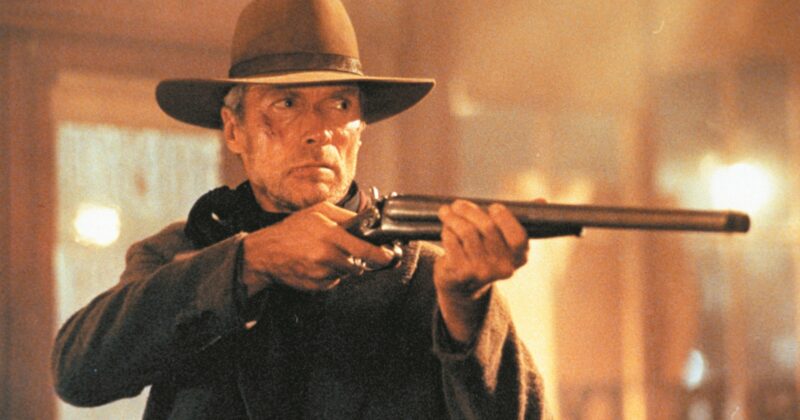
In Eastwood’s 1992 film Unforgiven, the Western genre reached a pivotal moment. Serving as both a homage and critique of the very myths Eastwood helped popularize, Unforgiven challenged audiences to reconsider the romanticism associated with the Old West.
The film opens with a brutal act: a sex worker’s face is disfigured by a cowboy, and the paltry consequences incite a bounty on the perpetrator’s head. This setup introduces William Munny (played by Eastwood himself), a retired bounty hunter desperately trying to abandon his violent past and care for his children on a failing hog farm. Lured back into violence by financial desperation, Munny’s reluctant quest raises profound questions about redemption, justice, and the cost of survival.
Deconstructing the Western Hero
Eastwood’s Munny is a far cry from the idealized heroes of classic Westerns. This character embodies the emotional and moral toll of a lifetime marked by violence. Unlike the invincible, steely-eyed gunfighters of earlier films, Munny is haunted, weary, and complex. His journey reflects the evolution of the genre itself—a move away from clear binaries toward moral ambiguity and psychological realism.
The movie’s climax—a violent showdown with the ruthless sheriff Little Bill, portrayed masterfully by Gene Hackman—delivers satisfying justice but also leaves an unsettling aftertaste. Munny remains an unrepentant killer beneath his facade of redemption, challenging audiences to reconsider the true nature of heroism in this unforgiving world.
Exposing the Dark Reality Behind the Myth
Unforgiven further dismantles the legend of the Western hero by confronting the myth of righteous violence. The film illustrates how those who resort to lethal force at a moment’s notice are far from noble figures; often, they bear deep personal scars and moral contradictions.
Contrasted with Munny’s grim pragmatism is the self-styled «Schofield Kid,» a braggart bounty hunter who falters when actual bloodshed arises. This juxtaposition strips away the glamor of gunfighting and exposes it as brutal, unforgiving, and, often, cowardly. In doing so, Eastwood provides a sobering commentary on the nature of violence and the lingering shadows it casts on those who wield it.
The Lasting Impact of Unforgiven on Cinema
Earning critical acclaim and multiple Academy Awards—including Best Picture and Best Director—Unforgiven stands as a towering achievement in film history. It not only marked a high point in Eastwood’s illustrious career but also crafted a profound farewell to the Western genre’s heyday.
While the Western genre has experienced sporadic revivals with films like Quentin Tarantino’s Django Unchained and Jane Campion’s The Power of the Dog, no modern work has quite matched the holistic reinvention and evocative power of Unforgiven. Eastwood’s deeply human portrayal and directorial finesse continue to influence filmmakers and storytellers exploring the genre’s complex legacy.
The film’s nuanced approach to themes such as violence, redemption, and the fading mythology of the West ensures Unforgiven remains essential viewing not just for Western aficionados, but for anyone interested in the evolution of cinematic storytelling itself.