A Visual Celebration of a French Icon
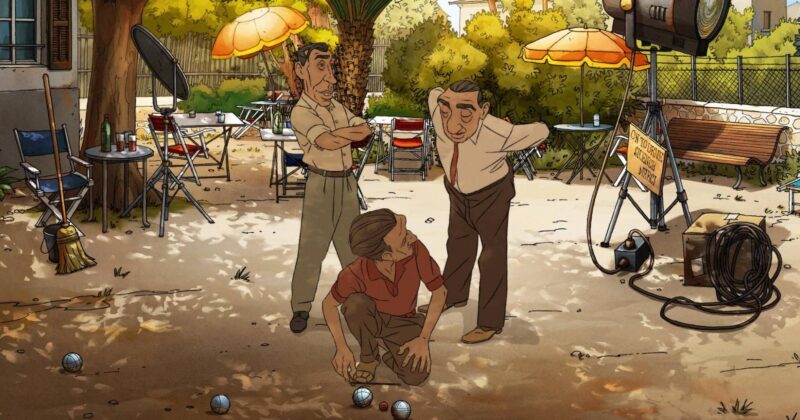
A Magnificent Life, an animated feature masterfully helmed by Sylvain Chomet, pays heartfelt tribute to one of France’s most influential storytellers—Marcel Pagnol. Chomet, globally acclaimed for The Triplets of Belleville and The Illusionist, once again crafts a universe where animation becomes a conduit for nostalgia, creative memory, and the bittersweet passage of time. This film stands as both a visual feast and a reflective journey through the legendary figure’s life, but it doesn’t strive to be a comprehensive biography. Instead, it moves with the unpredictable rhythm of recollection, blending truth, exaggeration, and wistful invention.
Chomet’s Animation: Memories Distorted and Reimagined
The movie’s animation is unapologetically whimsical, echoing the elasticity and subjectivity of memory itself. When Pagnol, portrayed as a world-weary 61-year-old in 1950s Paris, revisits his past, Chomet visualizes these fragments in taffy-like, exaggerated forms. A simple train ride to Paris blurs into a surreal labyrinth; character traits become larger-than-life, sometimes literally, with oversized features amplifying their emotional tone. This style marks a clever departure from traditional biopic realism, reinforcing just how personal and malleable our recollections become over time.
Between Nostalgia and Disconnection: The Creative Struggles of Pagnol
Pagnol’s journey is depicted as a tapestry of successes and private doubts. As Parisian society pivots away from his brand of provincial storytelling, the film’s protagonist grapples with feelings of irrelevance. The Suez Oil Crisis hovers as social backdrop, but it’s really the shifts in public taste and artistic fashion that weigh on Pagnol, much as the global streaming revolution challenges traditional content creators today. An Elle Magazine editor encourages him to pen his memoirs, sparking a creative standoff between the aging writer and his own younger self—a literal apparition in the film—who prods him toward introspection and, ultimately, toward telling his story anew.
Homage or Hagiography?
A Magnificent Life doesn’t dive deeply into the full complexity of Pagnol’s artistry, nor does it dwell on the nuances of the class tensions between Marseille’s sunbaked sensibility and Paris’s cosmopolitan froideur. Some context, like the accent-based classism, is skimmed over, hinting at deeper animosities without fully exploring them. Instead, the film leans into broad emotional resonance, favoring affectionate depiction over analytical critique—a creative choice that feels at home within Chomet’s body of work but leaves some viewers craving sharper insight.
An Animated Primer for Pagnol’s World
For those unacquainted with Pagnol, this film serves not as a definitive introduction but as an invitation to explore his universe. By emphasizing his restless innovation across film, literature, and theater, Chomet affirms the enduring appeal of a creator who brought everyday life to the edge of the mythic. And in one clever sequence, when an old-school theater producer scoffs at ‘talkies’ as a passing fad, Chomet winks at the cyclical nature of innovation—a nod sure to resonate with anyone who follows evolving trends in animation, streaming, or narrative art today.
The Loneliness of Creation
There’s a quietly moving thread woven throughout the movie: the tension between public acclaim and personal solitude. Chomet’s Pagnol is surrounded by family, colleagues, and admirers, yet remains substantially isolated—underscoring the peculiar loneliness that often shadows even the most celebrated creators. In the most poetic moments, the film posits that the true audience, the one that always matters most, is the artist’s own inner child, still craving the magic of a ‘magnificent life’ not yet lived, but eternally imagined.
Technical Team and Cast
The film’s production shines with the contributions of a seasoned creative ensemble. Laurent Lafitte brings a nuanced voice performance as adult Marcel Pagnol, supported by Géraldine Pailhas as Augustine Pagnol, weaving depth into their animated counterparts. The screenplay, co-written by Chomet alongside Nicolas Pagnol, Ashargin Poiré, and Valérie Puech, further secures the movie’s roots in French literary tradition while chasing the universality of memory and aspiration. From the direction to the nostalgic, accordion-infused soundtrack, every detail crafts a layered sensory experience.
Why Animation and Biographical Storytelling Still Matter
A Magnificent Life stands as a testament to the resilience and adaptability of animation as a medium for personal, historical, and cultural storytelling. It vibrates with the question familiar to many creators and cinephiles: how do you narrate a life without reducing it to mere facts? Chomet’s approach, blending affectionate caricature and unapologetic sentimentality, ensures that even those fleeting or surface-level moments vibrate with emotional truth.