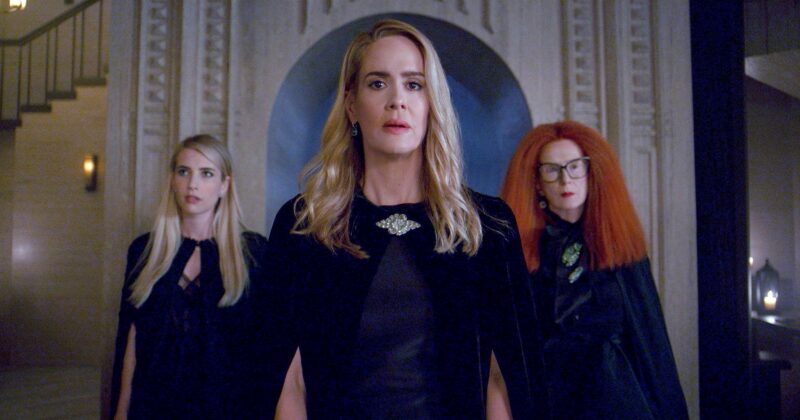
American Horror Story Season 13: Unraveling the Biggest Unanswered Mysteries of the Witch Saga

The Return of Fiona Goode: Resurrection and Power Dynamics
The announcement of American Horror Story season 13 has ignited immense anticipation, particularly because it promises to reconnect with the much-loved witch storyline spanning Coven and Apocalypse. Among the season’s most electrifying elements is the comeback of Jessica Lange’s Fiona Goode, whose character arc had a definitive and iconic end. Fiona’s demise and eternal damnation in Hell were not only thematically poignant but also integral to Coven’s lore since her death paved the way for Cordelia to ascend as the new Supreme.
Her anticipated return begs the question: how does resurrecting Fiona affect the established hierarchy? If she regains her full powers, Fiona could destabilize Cordelia’s supremacy, challenging the supernatural rules that the show meticulously built. The narrative could explore Fiona’s comeback in a weakened or transformed state—adding layers to the complex Supreme succession or unraveling the mystical framework altogether. This storyline holds the potential for rich drama exploring the tension between legacy, power, and destiny within the coven.
Resolving Madison Montgomery’s Hellish Fate
Emma Roberts’ Madison Montgomery remains one of the series’ most frustrating unresolved threads. While Apocalypse briefly offered hope with her rescue from Hell by Mallory’s intervention, the subsequent timeline manipulation erased that salvation. Notably, the show’s internal logic acknowledges Mallory’s intention to save Madison, but the recovery of Madison’s physical body poses a major obstacle since it was hidden by Spaulding after her death in Coven.
Season 13 faces the challenge of bridging these narrative gaps: how can Madison be retrieved when her physical remains are lost? For fans, this presents an opportunity to finally deliver a long-awaited closure to Madison’s torment, which could also deepen the show’s exploration of redemption, sacrifice, and the manipulation of supernatural laws concerning life and death.
The Enigmatic New Antichrist: Devan’s Dark Origins
The chilling twist at the end of Apocalypse, introducing Devan Campbell—the new Antichrist—injects a fresh layer of mythology ripe for exploration. Unlike Michael Langdon, whose origin was closely tied to the Murder House’s spectral history, Devan’s backstory remains cryptic. His unexplainable connection to demonic forces and his parents’ obliviousness to his malevolence open intriguing questions about the nature of evil in American Horror Story.
Season 13 has the opportunity to clarify whether Devan’s introduction was a thematic nod to evil’s cyclical presence or the foundation of a deeper narrative arc. This development could expand the sinister world of witches, exploring the persistent threat of darkness and the ever-evolving battle for power within the supernatural community.
The Complex Consequences of Mallory’s Time Travel
One of the most game-changing moments in American Horror Story came from Mallory’s time-traveling act during Apocalypse, where she kills Michael Langdon before he rises. This re-writing of history precluded the apocalypse, yet Mallory chooses to live quietly in the past, hiding the truth of her intervention. This secrecy creates fascinating ethical and psychological questions: what motivates Mallory to conceal such a monumental secret from her allies, especially Cordelia? And how does bearing the awareness of an erased timeline affect her role and psyche?
The upcoming season holds immense narrative potential in exploring time travel’s ripple effects—not only on the coven’s internal dynamics but also on the fabric of reality within the show’s multiverse. It could delve into the burdens of power, the isolation of knowledge, and the paradoxes that arise when rewriting time itself.
The Paradox of Two Supremes: Mallory and Cordelia
Season 13 also confronts the unique phenomenon of having two Supremes concurrently—Mallory in the original timeline and Cordelia continuing her reign in the rewritten past. This anomaly clashes head-on with the coven’s established rules, which dictate there can only be one Supreme at any time. The nuances here are rich for exploration: Are both Supremes operating at full strength? Does this temporal overlap impose hidden consequences like power dilution, shortened lifespans, or unforeseen vulnerabilities?
Furthermore, the complex mentor-student dynamic between Cordelia and Mallory is fertile ground for tension and growth. The series can use this storyline to redefine supremacy’s meaning and suggest that power within the witch world is more fluid and unpredictable than previously thought.
The Undone Stories of Murder House: Revisiting Lost Closure
Mallory’s time travel, while heroic, erased significant emotional closures from Murder House, arguably one of the show’s darkest and most beloved settings. Madison’s previous efforts to pacify the trapped spirits of Violet and Tate, and even Constance’s death—which brought some sense of finality—are now cast into uncertainty.
This raises poignant narrative possibilities: will season 13 revisit these storylines to reestablish closure, or will the show treat these events as remnants of a ‘lost’ timeline existing only in memory? Revisiting Murder House scenes could enrich the story, reconnecting characters and addressing traumatic arcs anew. However, it risks diminishing the weight of past resolutions.
Whatever direction the show takes, the impact of Mallory’s timeline alteration extends far beyond simply halting an apocalypse—it challenges the permanence of events, the meaning of closure, and the nature of fate itself within the American Horror Story universe.