The Meteoric Rise and Enduring Legacy of Battlestar Galactica
Few science fiction series have left as indelible a mark on television as Battlestar Galactica. Born from Glen A. Larson’s original 1978 concept—a Star Wars-inspired space opera—Battlestar quickly gathered a passionate cult following despite an early and turbulent broadcast history. The high production costs and variable ratings led to its initial cancellation before it ever achieved mainstream dominance. Still, the fire hadn’t gone out, not in the hearts of fans nor within the larger ecosystem of genre television.
The Reinvention of a Classic: A Bold 21st Century Revival
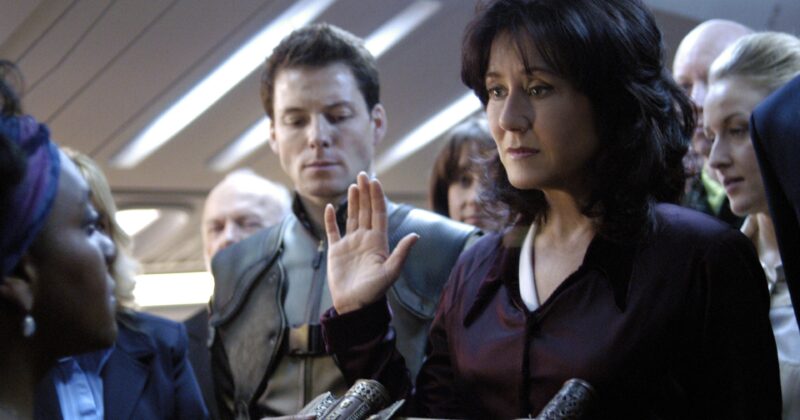
No sci-fi fan could have predicted just how monumental the 2004 reboot would be. With Ronald D. Moore at the creative helm, and Glen A. Larson receiving a consultant credit, the reimagining wasn’t just a nostalgic nod—it was a high-stakes gamble that redefined serialized science fiction. Bringing back much of the core cast, including Edward James Olmos as William Adama and Mary McDonnell as Laura Roslin, the modern Battlestar Galactica didn’t shy away from heavy themes. Warfare, betrayal, spirituality, and artificial intelligence all became vital narrative threads, woven with unprecedented sophistication and a gritty, authentic feel that set the bar for future genre storytelling.
An Unforgettable Finale and Its Lasting Impact
The finale, a three-part epic titled ‘Daybreak,’ remains one of television’s most discussed endings. It brought the war between the Colonies and the Cylons to a shocking conclusion, taking the kind of creative risk that separates classics from mere cult favorites. One of the boldest moves involved the survivors abandoning advanced technology in favor of a new, primitive existence—an allegory on cyclical human history that resonated far beyond the usual sci-fi trappings. The final time jump, which hinted at our own world as the distant echo of this interstellar saga, sparked endless debates and ensured that the show lived on in fan theories and academic studies alike.
The Ongoing Universe: Spin-Offs and Expanding Stories
“Daybreak” did not close the door on the universe. The mythos expanded with projects like Battlestar Galactica: The Plan, which provided a behind-the-scenes glimpse into Cylon strategy, and Caprica, a prequel that delved deep into the birth of artificial intelligence and societal fragmentation. Additionally, Battlestar Galactica: Blood & Chrome pushed the boundaries in web series format, living proof that the franchise could continually reinvent itself across platforms, including comics and digital media.
What Made Battlestar Galactica a Sci-Fi Game Changer?
Battlestar Galactica’s strength has always been its human focus. While starships, AI rebellion, and interplanetary wars offered spectacle, it was the complex, emotionally rich characters and their moral dilemmas that captured viewers. Audiences watched characters like Adama, Roslin, and Starbuck evolve under pressure, making choices that felt raw and real—a rarity not just in science fiction but on television overall. This psychological realism inspired an entire wave of genre shows that followed, from The Expanse to Westworld, all drawing foundational lessons from Battlestar’s fearless narrative ambition.
The Show’s Core Creative Team and Recognition
The success of the series cannot be separated from the vision of its directors and writers, including Wayne Rose, Michael Nankin, Rod Hardy, and Ronald D. Moore himself. Writers like Jane Espenson and David Weddle helped maintain the tone of introspective, character-driven drama, which garnered universal critical acclaim. Multiple seasons maintained high viewer ratings, a testament to the blend of spectacular sci-fi action and deep philosophical inquiry that characterized each episode.
A Benchmark for Modern Sci-Fi and Pop Culture
In an era increasingly defined by streaming services and franchise-building, Battlestar Galactica stands as a masterclass in serialized storytelling, world-building, and thematic boldness. For new fans or returning viewers, the franchise remains widely accessible, with episodes available on major streaming platforms and novels, comics, and even board games furthering its legacy. The impact of Battlestar Galactica runs deeper than nostalgia—it exemplifies how science fiction can ask hard questions about technology, society, and the very nature of humanity.